Ray-Ban Meta Glasses Explained: Useful Or Risky?
Ray-Ban Meta glasses mix camera, audio and AI in ordinary-looking frames. Here is what they do, where they help, and why privacy matters.

Smart glasses are no longer a strange idea from a technology demo. Ray-Ban Meta glasses look close enough to normal eyewear that people may not always realise they include a camera, speakers, microphones and AI features. That is why Ray-Ban Meta glasses are useful, and why they make some people uneasy.
The Short Version
Key Takeaways
- Ray-Ban Meta glasses put a camera, open-ear audio, microphones and Meta AI into familiar frames.
- The best use cases are hands-free photos, calls, music, quick questions and moments when holding a phone is awkward.
- The privacy issue is not only what Meta stores. It is also whether people nearby know what the device is doing.
- Ray-Ban Meta glasses make most sense as a convenience device, not as a phone replacement or a discreet camera.
What Ray-Ban Meta Glasses Actually Are
Ray-Ban Meta glasses are smart glasses made by Meta and EssilorLuxottica under the Ray-Ban brand. They are not full augmented reality glasses with maps, apps or messages floating over your view. They are closer to a wearable camera and Bluetooth headset, with voice controls and Meta AI added through the companion app.
That distinction matters. Cristoniq’s guide to augmented reality explains why many products called AR are really stepping stones, not full visual computing devices. The product sits in that middle ground. It is more capable than ordinary eyewear, but not a private computer on your face.
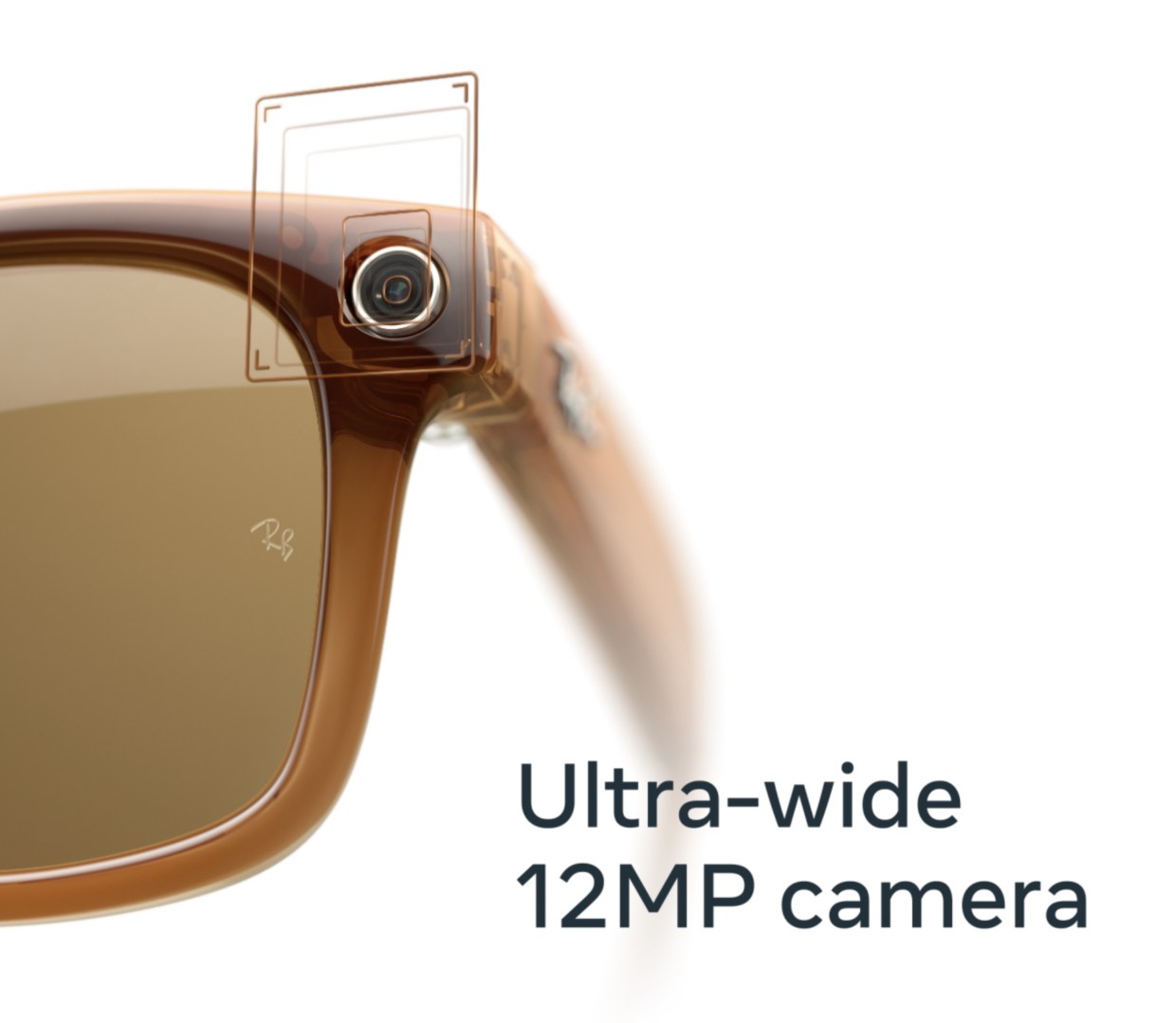
According to Meta’s launch notes, the current line includes an ultra-wide 12 MP camera, 1080p video capture, open-ear audio and a five-microphone array. Ray-Ban’s UK support page says the glasses use the Meta AI app for setup, media import, settings and privacy controls. In plain terms, the phone still does much of the heavy lifting.
What Ray-Ban Meta Glasses Are Useful For
The obvious appeal is hands-free capture. If you are cycling, cooking, travelling or carrying shopping, pressing a button or using a voice command can be easier than pulling out a phone. The footage also comes from your eye line. It feels more like what you saw than what you stopped to film.
The second useful feature is audio. Open-ear speakers mean you can listen to music, podcasts, calls or message read-outs while still hearing the world around you. That suits walking through town better than shutting yourself off with earbuds. It can leak sound in quiet places if the volume is too high.
The AI features are the part most people will notice in marketing. Meta says UK users can ask the glasses about what they are seeing. Live translation features have been rolling out for some languages. That can help with labels, signs and quick explanations.
The AI side also makes the privacy question sharper, because the camera becomes part of an analysis tool. The convenience is real, but so is the trade-off.
Where The Privacy Concern Comes From
The privacy concern is easy to exaggerate and easy to dismiss. It is not accurate to say every pair is secretly recording all the time. It is also not enough to say there is a capture light, so everyone is informed. The reality sits in the middle.
Ray-Ban’s UK FAQ says the external capture LED signals when the glasses are recording photos, videos or livestreams to the gallery. It also says newer models may use camera-based AI features without the LED, when the result is not content meant for sharing. Ray-Ban says photos and videos used for AI features are not saved in the Meta AI conversation history. The company also says no facial recognition technology is used.
Those are meaningful guardrails, but they do not solve every social issue. A person nearby may not know what the LED means. They may not notice it in daylight. They may not realise an AI question is using the camera.
Even when the data handling works as described, this kind of device feels different from a phone. People do not always see the moment when recording starts.
The UK Angle On Recording People
For ordinary personal use, the key rule is common sense before legal theory. People in the UK are already filmed by phones, doorbells, dashcams and CCTV. That does not mean every recording is polite, fair or wise. If you are using camera glasses in a home, workplace, gym, school, clinic or event, ask whether people would reasonably expect it.
The Information Commissioner’s Office guidance for organisations says businesses using CCTV should think about privacy and tell people when it is in operation. They should also avoid recording more than they need. The guidance is aimed at organisations, but the principle still helps. Record only with a clear reason, minimise what you capture and be transparent.
That is why Ray-Ban Meta glasses are more comfortable in some settings than others. A bike ride, a city walk or a hands-free call with family is one thing. Quietly filming customers, colleagues, pupils, patients or strangers in close conversation is another.
What Can Still Go Wrong
The first risk is accidental capture. Because the glasses sit on your face, they point wherever you look. That can catch computer screens, car number plates, children’s faces, private papers and other details you did not mean to record.
The second risk is account and cloud exposure. Any device that moves photos, videos and voice interactions through an app depends on account security. If you use smart glasses, your Meta account and phone security matter. Cristoniq’s guides to password managers and two-factor authentication are worth reading before adding a camera-connected device to your life.
The third risk is social misuse. A wearable camera can make it easier to film people without a clear signal of intent. That does not make the product bad by default. It does mean the etiquette has to be stricter than the marketing.
A Worked Example
Imagine you run a small coffee shop and buy Ray-Ban Meta glasses for behind-the-scenes clips. Used thoughtfully, they could help. You might record yourself preparing a new drink before opening. You could capture a supplier delivery with permission or take a quick point-of-view clip of latte art for social media.
The same device becomes a problem if it captures customers at tables, payment screens, staff conversations or private stockroom notes. Treat the glasses like any other camera. Decide what you are filming, tell staff and avoid customers unless they have clearly agreed.
Review footage before posting. If the glasses make filming so easy that you stop thinking about consent, the convenience has become the problem.
What This Means For You
If you are thinking of buying Ray-Ban Meta glasses, start with the job you actually want them to do. If you want hands-free photos, audio, calls and quick visual questions, they may be useful. If you want a private computer on your face, they are not that. If you want a discreet way to record people, you should not buy them.
The practical test is simple. Would you be comfortable telling someone nearby what the glasses are doing? Would you be happy if another person used them the same way around you? If either answer is no, treat that moment as a stop sign.
In Plain English
Ray-Ban Meta glasses are glasses with a camera, speakers, microphones and Meta AI. They are useful when your hands are busy and you want to capture, listen, call or ask a quick question.
The privacy issue is not only whether Meta has controls. It is whether people around you understand when a camera on your face is being used.
Use them openly. Avoid private settings. Do not let convenience outrun consent.