Augmented reality: what it is and where you will actually encounter it
AR is already part of everyday apps. Here is where you are actually encountering it and what is genuinely worth your time right now.
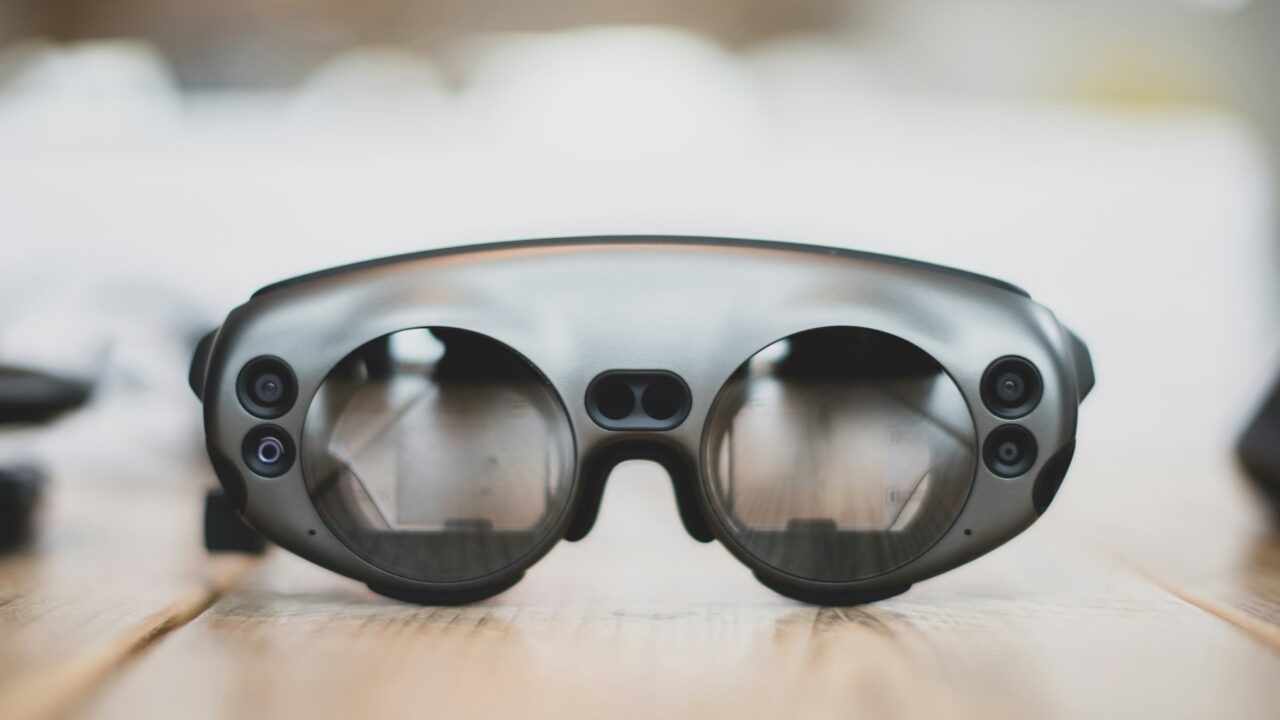
The phrase gets used a lot in tech conversations, and it tends to conjure up images of futuristic glasses or science fiction displays. Augmented reality is neither as exotic as the marketing makes it sound, nor as far off as you might think. You have probably already used it, possibly today, without calling it that.
Augmented reality is the technology that layers digital information on top of the real world you can see. This is different from virtual reality, which replaces what you see entirely with a digital environment. AR adds to your actual view — a text label, a virtual object, a coloured filter, a piece of navigation information — without replacing it. The hardware processing all of this is, for most people, the phone in their pocket.
The most straightforward way to experience it right now is through your phone’s camera. When you open Snapchat or Instagram and use a face filter that adds sunglasses or changes your hair colour, you are using augmented reality. The camera identifies your face in real time, and the software overlays a digital element onto it precisely and smoothly enough that it tracks your movements. It has become so unremarkable that most people no longer think of it as technology at all. That normalisation is a good sign: it means the underlying systems have matured to the point where they work without fuss.
IKEA Place is another example that is worth knowing about if you have not come across it. It is a free app that lets you point your phone at a space in your home and see how a piece of furniture would look there before you commit to buying it. You choose a sofa, a bookcase, or a lamp from the catalogue, and the app places a three-dimensional model of it in your room at the correct scale. The model moves and rescales as you walk around it, so you can check it from different angles. No specialist hardware required. It runs on a standard iPhone or Android with a reasonably modern camera, and it is genuinely useful rather than a gimmick, especially before spending several hundred pounds on something that might look completely wrong in a particular corner.
Google Maps has had an AR walking mode for a few years that does not get the attention it deserves. Instead of staring at a flat map and trying to translate it to the street in front of you, you hold your phone up and large directional arrows appear overlaid on your actual view, pointing you left or right. Labels appear over buildings to help with landmarks. In busy city centres where it is easy to emerge from a Tube station facing the wrong direction, this turns out to be more helpful than a traditional map view.
Retailers have been building AR into the buying experience too. Glasses companies including Specsavers and Warby Parker offer virtual try-on tools through their websites and apps, where your live camera feed shows you wearing different frames. Cosmetics brands including Charlotte Tilbury and L’Oreal do the same with lipstick and foundation shades. These tools have improved substantially over the past couple of years and are now accurate enough to be useful rather than just a novelty that makes you look slightly wrong on screen.
In warehousing and logistics, AR is being used in ways that are less visible to consumers but represent some of the most practical applications of the technology. Workers at distribution centres have trialled smart glasses that display picking instructions directly in their line of sight, removing the need to look at a handheld scanner. Technicians doing maintenance on complex equipment use AR overlays to see step-by-step instructions positioned directly on the component they are working on. The productivity gains in these settings are measurable, which is why this area has attracted serious investment from companies that are not in the business of experimenting for its own sake.
The headsets and glasses category is where most of the future speculation sits, and it is also where the gap between the marketing and the current reality is widest. Meta has invested heavily in its Ray-Ban smart glasses and the Quest mixed reality headset. Apple launched the Vision Pro in 2024 at a price that, in the UK, put it well above three thousand pounds. Both represent genuinely impressive technology. Neither has found a mass audience. The price, the social awkwardness of wearing a visible computing device in public, and the shortage of applications that justify the cost have all slowed adoption. These are devices for developers and early adopters at this stage, not for people who simply want to get things done more easily.
The smartphone will remain the primary way most people encounter AR for several more years. The frameworks that Apple and Google have built into their platforms, ARKit and ARCore, have made it straightforward for developers to add AR features to ordinary apps, which is why the technology has spread quietly into a wide range of tools without most people registering that they are using it.
What is worth your attention today is the practical end of all this. If you are making a significant furniture purchase and have not tried an AR placement app, that is twenty minutes well spent before handing over money. If you use Google Maps on foot in unfamiliar places, the AR walking mode is worth turning on once to see whether it suits how you navigate. If you need to buy glasses or try cosmetics online, most major retailers now have try-on tools that actually work.
The more ambitious version of augmented reality, persistent digital layers over the world around you accessed through glasses you wear all day without thinking about it, is coming in some form. The technology is real, the investment behind it is substantial, and the trajectory is clear enough. The question is simply when it becomes comfortable, affordable, and compelling enough that wearing a small computer on your face feels as natural as carrying a large one in your pocket. That shift has not happened yet. But the distance to it is shorter than it was, and the everyday version of AR is already more present in your life than you may have noticed.