What is Cardano, and why does it matter?
What is Cardano? Plain English guide to the ADA blockchain, how proof of stake works, what the project does well, and where it falls short.
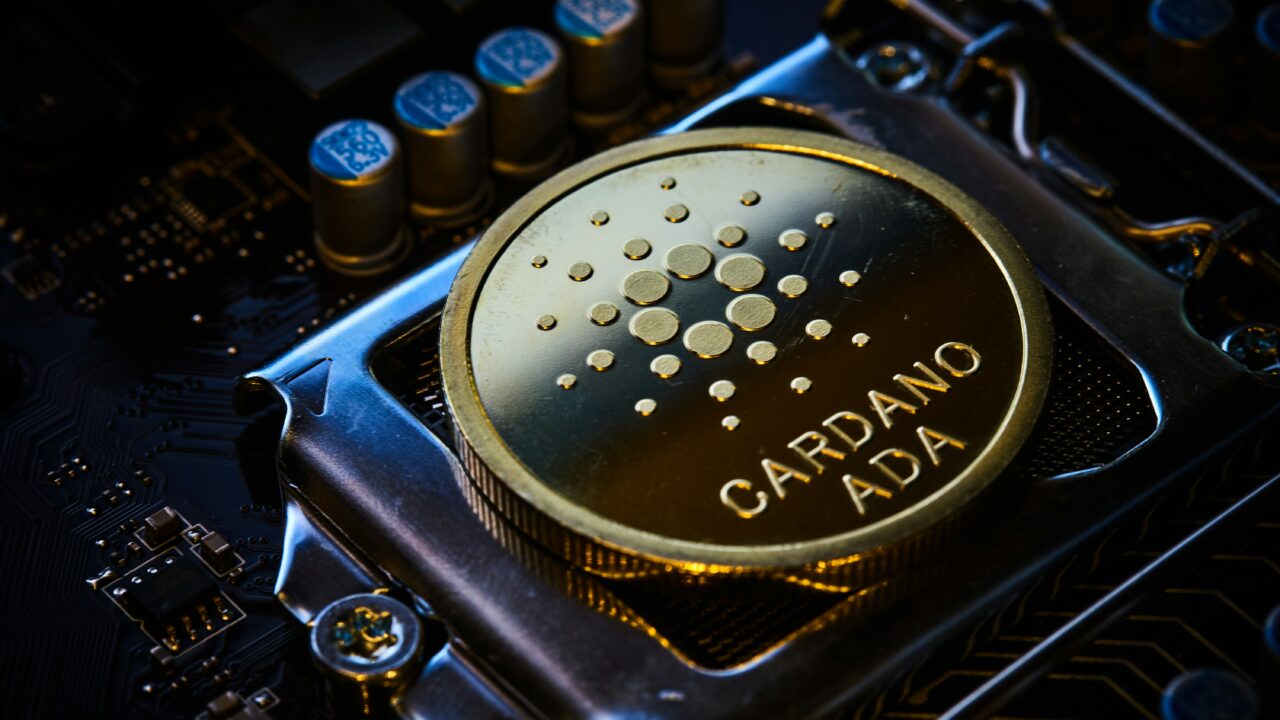
Cardano is one of crypto’s most polarising projects. Some praise it as the most carefully engineered blockchain on the market. Others dismiss it as a slow moving experiment outpaced by faster rivals. The truth is somewhere in between, and worth understanding before you decide what to make of it.
The Short Version
- What is Cardano? A Layer 1 blockchain launched in 2017 by Charles Hoskinson, one of Ethereum’s original co-founders.
- Its native cryptocurrency is ADA, named after the 19th century mathematician Ada Lovelace.
- Cardano uses a proof of stake system called Ouroboros. It is far more energy efficient than Bitcoin’s proof of work.
- Development happens in five planned eras, and progress has been deliberately slow. Every major change is peer reviewed before it ships.
- Smart contracts went live in 2021. Cardano’s app ecosystem remains much smaller than Ethereum’s or Solana’s.
Where Cardano came from
To answer what is Cardano in one sentence, it is a peer reviewed proof of stake blockchain. Its origin story starts inside Ethereum. Charles Hoskinson was one of Ethereum’s eight original co-founders before leaving in 2014. The split came down to whether the project should be a for profit company or a non profit.
He went on to co-found IOHK, now Input Output Global or IOG. That company has led most of Cardano’s technical development since.
Cardano itself launched in September 2017. Three organisations are responsible for keeping it running. IOG builds the core technology, the Cardano Foundation looks after standards and community, and EMURGO funds commercial adoption.
ADA, the network’s token, raised more than $60 million in a presale held between 2015 and 2017. Most of those tokens were sold to investors in Japan and elsewhere in Asia.
From the start, Cardano was pitched as a slower, more rigorous alternative to the chains that had come before. Its design papers are written by academics and peer reviewed in journals before code is written. Supporters call this a sign of seriousness. Critics call it a marketing line for a project that takes too long to ship anything.
What is Cardano’s design philosophy
Asking what is Cardano really asks two questions. What does the network do, and how does the team behind it choose to build it. The technical answer is that Cardano is a Layer 1 smart contract platform. The cultural answer is that it is a project run by people who believe peer reviewed research should lead engineering, not follow it.
That belief shapes every decision. Features are first specified in academic papers. Those papers are then implemented in a strongly typed functional language called Haskell. Only after that are they released to the network.
The trade off is obvious. Cardano ships slowly. The benefit, in theory, is that what does ship is harder to break.
How Cardano actually works
The mechanical answer to what is Cardano comes down to consensus. Cardano uses proof of stake, not proof of work. There are no miners burning electricity to compete for blocks. The network is secured by stake pools instead.
Operators lock up ADA and validate transactions in return for newly issued ADA as a reward.
The specific system Cardano uses is called Ouroboros. It splits time into slots and epochs. The protocol randomly selects which stake pool produces each block, based on how much ADA has been delegated to it. Anyone holding ADA can delegate it to a pool without giving up custody.
That non custodial design is one reason staking rates on Cardano are unusually high. By 2026, more than 60 percent of the circulating ADA supply is staked in this way.
The practical effect is that Cardano uses a tiny fraction of the energy that Bitcoin does. The University of Cambridge’s electricity index puts Bitcoin’s annual power use in the range of a medium sized country. Cardano’s, by comparison, is closer to that of a few thousand homes.
The five eras of Cardano
Cardano’s roadmap is split into five eras. Each is named after a famous figure from literature or computing. The eras are how the Cardano team explains progress to the wider world. Understanding what is Cardano shipping at any moment usually means knowing which era it is in.
Byron, the first era, covered the initial launch in 2017 and the basics of moving ADA around. Shelley, in 2020, introduced decentralised stake pools and made the network truly community run. Goguen, in 2021, was the big one: it brought smart contracts to Cardano using a language called Plutus.
Basho, the current era, focuses on scaling, including a layer 2 system called Hydra. Voltaire, the final planned era, is rolling out on chain governance. ADA holders vote on protocol changes and on how the project’s treasury is spent.
Each era has shipped years later than originally promised. That has hurt Cardano’s reputation in some quarters. The structure does mean the network has avoided most of the dramatic failures that have hit faster moving chains.
What ADA actually does on Cardano
To understand what is Cardano’s token for, start with ADA’s three main roles. It pays for transactions on the network, with fees that are usually a fraction of a penny. It is the asset that stake pool operators and delegators put up to secure the network. And it is the unit of governance: ADA holders use it to vote on proposals and on how the project treasury is spent.
That treasury is worth noting. A small percentage of every transaction fee, plus a slice of newly minted ADA, goes into a community pot. The community votes on how to spend it.
By 2026 the treasury holds the equivalent of hundreds of millions of pounds. It is intended to fund Cardano’s long term development without relying on any single company.
Where Cardano is being used
To see what is Cardano doing in the real world, look first at Ethiopia. IOG signed an agreement with the Ministry of Education to put student and teacher identity records onto Cardano. The system, called Atala PRISM, has been used to register millions of students. It is intended to give them a portable, tamper resistant digital identity.
Beyond that, Cardano has a working ecosystem of decentralised exchanges, lending apps, stablecoins and NFT marketplaces. The total value locked in its DeFi protocols remains a small fraction of Ethereum’s. Smart contract activity on Cardano tends to grow steadily rather than in the spectacular surges other chains have produced.
The criticisms of Cardano worth knowing
The honest case against Cardano is straightforward. Its smart contract ecosystem is years behind Ethereum’s and significantly smaller than Solana’s. That is despite ADA often sitting in the top ten cryptocurrencies by market value. Some of its most heavily anticipated features arrived long after they were promised.
The gap between the academic ambition of its papers and the daily reality of its apps has frustrated many users. On the other side of the ledger, Cardano has avoided the bridge hacks, outages and exchange collapses that have damaged some of its rivals.
Whether that justifies the slower pace is a judgement call, and a fair one to disagree on. For UK readers in particular, the FCA’s guidance on cryptoassets is the right framing. ADA is a high risk asset, and any holding should be sized accordingly.
A Worked Example
Imagine you buy £200 of ADA on a UK exchange. You move it into a Cardano wallet such as Daedalus or Yoroi. From there, you can delegate it to a stake pool with a few clicks. Your ADA never leaves your wallet, and you do not lose access to it.
The pool uses your delegated stake to increase its chances of being chosen to produce a block. Any rewards it earns are shared out automatically, usually every five days.
Annual staking yields on Cardano have typically sat in the 2 to 4 percent range. So £200 of ADA delegated for a year might earn you somewhere between £4 and £8 worth of additional ADA. Rewards are paid in ADA rather than pounds.
The price of ADA itself can move far more than that in either direction. That movement, not the staking yield, is what determines whether the overall position is up or down in pound terms.
What This Means For You
For UK readers, what is Cardano in practical terms? It is one of the easier non Bitcoin, non Ethereum coins to access on FCA registered exchanges. It is also one of the few where staking is straightforward and non custodial. That makes Cardano interesting if you want a proof of stake Layer 1, without taking on smaller, less liquid tokens.
It is not a low risk asset. ADA’s price has fallen by more than 80 percent from its previous peaks on more than one occasion. Anyone considering ADA should treat it as a speculative position, not a substitute for a savings account, and size it accordingly.
Dollar cost averaging, or DCA, is one way some readers choose to spread that risk over time. It does not change the underlying volatility of the asset. It does take some of the timing pressure off any single decision.
In Plain English
So, what is Cardano in plain English? It is a slower, more methodical cousin of Ethereum. The team behind it values academic review over speed of release. Its token, ADA, is used to pay fees, secure the network through staking and vote on the project’s future.
Cardano is more energy efficient than Bitcoin, more cautious than Solana and less widely used than either. Whether that combination appeals to you is the question worth thinking about.
Related Reads
- What is Ethereum, and how is it different from Bitcoin?
- What is Solana and why does it matter?
- What is proof of stake and how is it different from proof of work?
- Layer 1 and Layer 2: what they are and why they exist
- What is a smart contract?
Disclaimer: Cryptocurrency investments are highly volatile and speculative. Their value can rise and fall sharply, and you could lose all of your investment. This article is for informational and educational purposes only and does not constitute financial advice. Always do your own research before making any investment decision.