What is a Meme Coin
Meme coins like Dogecoin and Shiba Inu are worth billions yet started as jokes. Here is what they are, why people buy them, and what the risks actually look like.
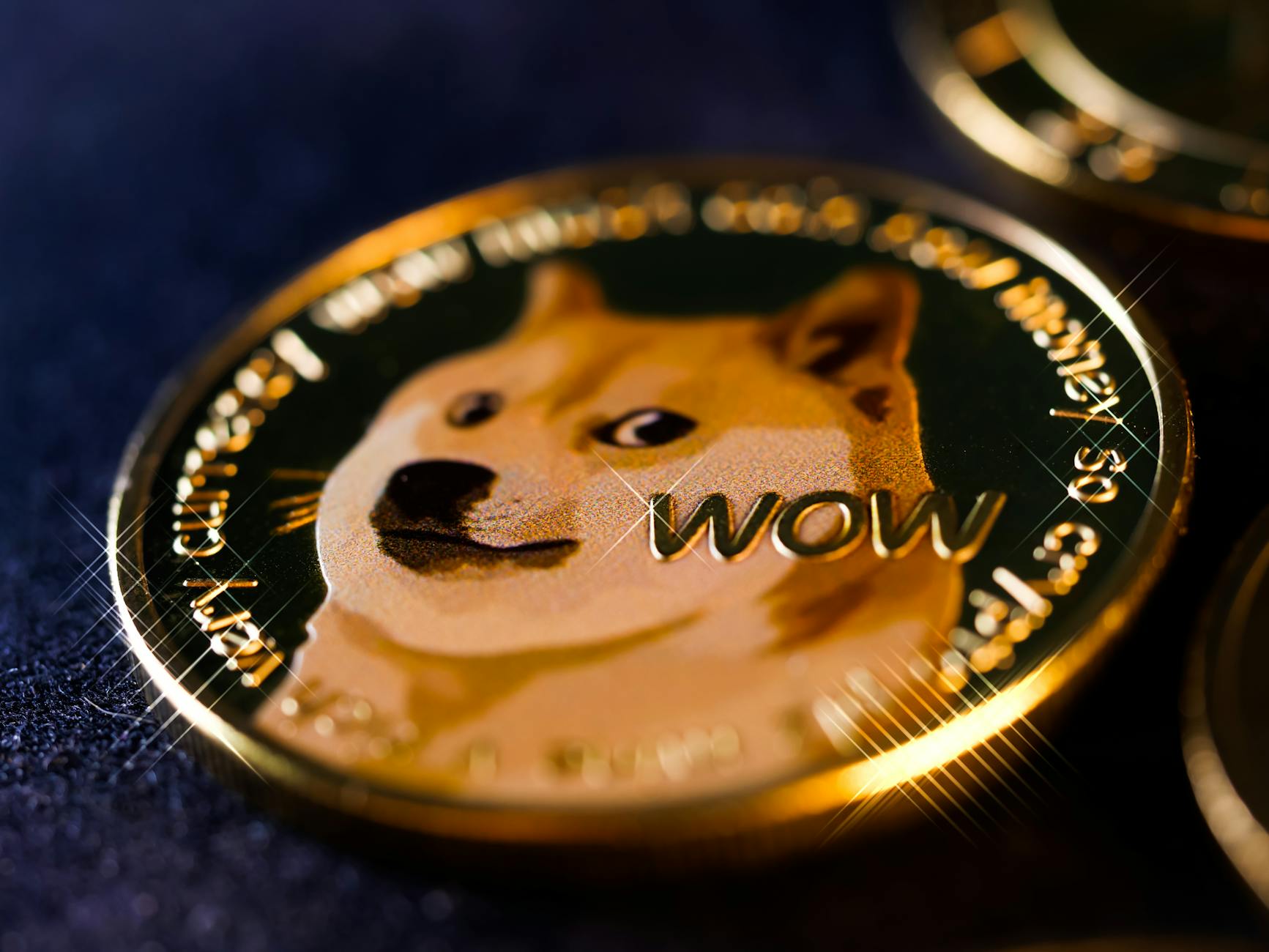
Meme coins are cryptocurrencies built on attention rather than technology. They can rise thousands of percent in days. They can fall just as fast. Here is what they are, how they work, and why so many people lose money on them.
Where meme coins came from
The story starts in December 2013. Two software engineers, Billy Markus and Jackson Palmer, built Dogecoin as a joke. They took a popular internet meme featuring a Shiba Inu dog and copied open-source Bitcoin code. They launched it expecting the world to laugh.
The world did not move on. A genuine community formed. Redditors used the coin to tip each other for good posts. People donated it to charity and funded a NASCAR driver.
They helped send the Jamaican bobsled team to the 2014 Winter Olympics. For years, Dogecoin was the internet’s joke that worked too well.
This type of cryptocurrency draws its value from cultural momentum and social media attention. It does not come from technology or a business model. The name refers to internet memes: images and phrases that spread fast online.
Most have no roadmap and no experienced development team. They have no clear purpose beyond the fact that people decided to buy them.
Shiba Inu arrived in 2020, billing itself as the Dogecoin killer. It launched anonymously with no formal backing. Within a year it reached a market cap of tens of billions of pounds. Understanding how cryptocurrency works helps explain why these assets behave so differently from anything with underlying utility.
Why people buy them
Normal investment logic does not apply here. Most asset purchases involve a thesis: this company will grow, this property is undervalued, this currency will strengthen.
Buyers of these assets often operate on a completely different basis.
Some are drawn by community. The Dogecoin forum has millions of members, and being part of something that feels like a movement has genuine appeal. Some use lottery-ticket logic, reasoning that a fifty-pound stake could theoretically turn into something significant if the coin catches fire.
Elon Musk played an outsized role in Dogecoin’s price history. A single tweet from him in early 2021 pushed the price up more than 50 per cent in a day. He appeared on Saturday Night Live in a sketch that holders expected to send the price higher. Instead the price dropped sharply during the broadcast.
That episode shows something important about how meme coins behave. They are extremely sensitive to attention, and attention is unpredictable. What rises on a tweet can fall just as fast when the next tweet lands or the poster moves on.
The risks are more serious than they look
The risks attached to this type of asset are more severe than almost any other investment category. Prices are driven by sentiment, not fundamentals. That means there is no floor. When the crowd’s attention disappears, there is often nothing left to support the price.
When a conventional company’s share price falls, analysts point to cash reserves and revenue. They can argue for recovery. When a meme coin loses momentum, there is nothing equivalent to point to. The decline can be total and permanent.
The vast majority launched each year disappear within months. Some vanish within weeks. Communities scatter, developers move on, and the coin becomes worthless.
The Financial Conduct Authority warns that crypto assets carry a high risk of total loss. They are not protected by the Financial Services Compensation Scheme.
The broader crypto market varies significantly in risk profile. Reading about how altcoins differ from Bitcoin puts this into useful context.
Pump-and-dump schemes
A coordinated pump-and-dump scheme works like this. A small group of well-funded buyers accumulates a large position in an obscure asset cheaply. Then they promote it aggressively on social media, creating artificial excitement. Retail buyers pile in as the price rises.
The original buyers then sell their entire position at the inflated price, pocketing the profit. The late arrivals are left holding something that collapses immediately after. This pattern exists in other markets, but this category is particularly vulnerable because valuations have no anchor in reality.
There is no revenue figure or asset base that signals when the price has gone too far. By the time most retail buyers realise what happened, the organisers have already moved on to the next coin.
What Dogecoin’s survival actually means
Dogecoin has survived longer than almost any sceptic predicted, and that longevity has given it credibility by default. It is accepted as payment by some retailers. It trades on every major exchange. Its community has stayed active for over a decade. That makes it an outlier.
For every Dogecoin there are thousands of coins that launched with identical energy and ended as cautionary tales. The name recognition and ten-year track record it has built cannot be assumed to exist for anything arriving with similar hype today. New entrants appear every week. Almost none will still exist in two years.
Newcomers often look at Dogecoin’s history and conclude the sector has upside worth chasing. They do not. Its survival reflects a specific combination of timing, celebrity attention, and genuine community that formed when the space was new. That combination is not replicable on demand.
The contrast with how Bitcoin established its value over fifteen years is instructive. Bitcoin’s price is supported by a fixed supply, deep liquidity, and network effects built over a long time. Most new entrants share none of those properties.
What this means for you
Some people will decide to put a small amount into this category after reading all of this. That is a personal decision. The problems arrive when people treat these assets like conventional investments. Putting in more than you can afford to lose is the most common mistake.
Meme coins move fast in both directions. Gains that look life-changing on a Monday can disappear entirely by Wednesday. The speed is part of what makes them feel exciting. It is also what makes them genuinely dangerous.
Assuming that past price movements predict future ones is the second mistake. Holding on in hope of a recovery that may never come is the third. Meme coins are not investments in the conventional sense.
They are closer to a bet on what the internet will care about next week. That is a fundamentally different proposition. Most people do not realise this until after they have already bought in.
That is harder to predict than most people realise. The coins that made early buyers rich caught a specific cultural moment. Identifying those moments in advance is not reliably possible.
They can only be recognised in hindsight. By then the window has already closed.
If you are considering this type of investment, set a hard limit before you buy. Decide exactly how much you are prepared to lose entirely. Do not increase that limit because the price moves in your favour. Do not hold any of them as a long-term position without accepting that they may end at zero.
Disclaimer: Cryptocurrency investments are highly volatile and speculative. Their value can rise and fall sharply, and you could lose all of your investment. This article is for informational and educational purposes only and does not constitute financial advice. Always do your own research before making any investment decision.