A Weekly Update Structure for Clearer Project Status Reports
Learn how to write a weekly project status update that leads with status, separates outcomes from next steps and makes risks and requests clear.
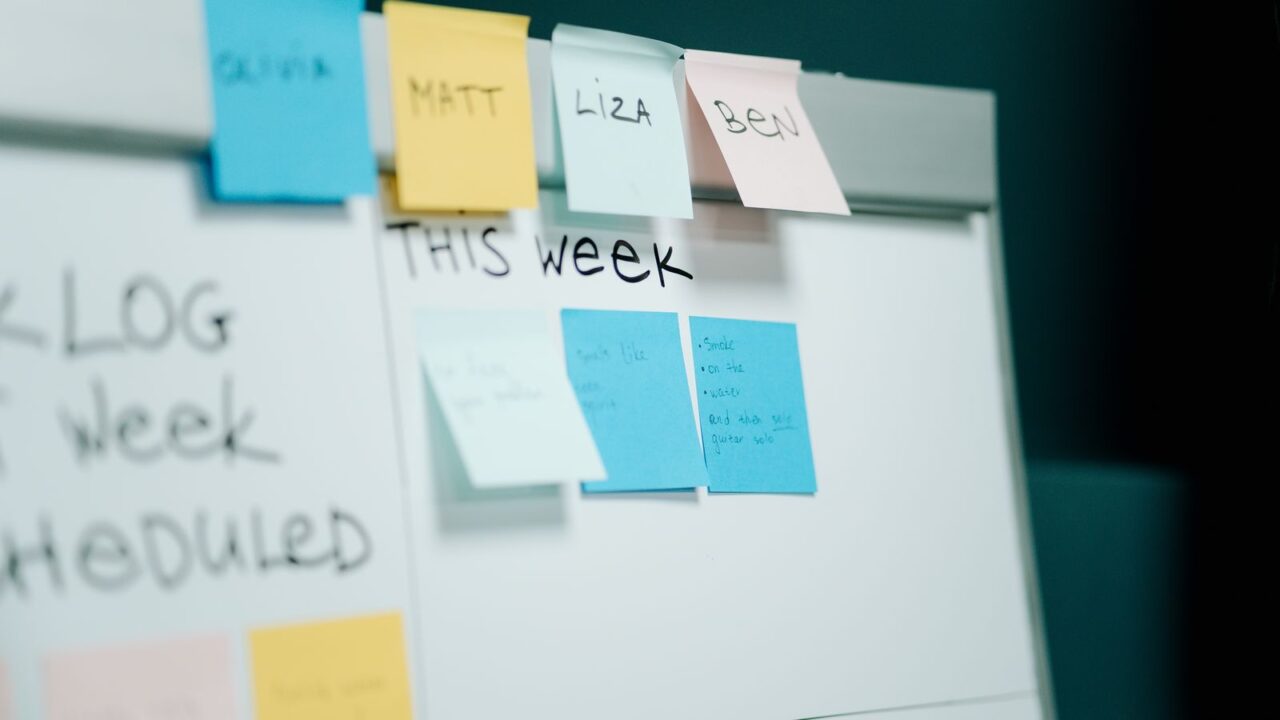
A useful weekly project status update lets a busy reader understand the state of the work before their attention moves elsewhere.
A weekly project update should quickly answer four questions: where the work stands, what changed, what happens next and whether anyone needs to act. Vague progress language can hide the information that matters. The approach below is designed for project status communication, with a separate observation about written weekly CEO communication. It is not a universal template, and it does not guarantee that more people will read or understand an update.
The Short Version
- Open with a direct project status sentence.
- Separate completed outcomes from next steps.
- State material problems plainly.
- Make each request specific and give it a deadline.
What This Means For You
Your first job is to make the project status unmistakable. For project status reports, one specialist recommendation is to open with a direct sentence that tells the reader whether concern or intervention is warranted. A reader should not have to decode phrases such as “positive momentum” or “ongoing alignment” to discover that delivery is late. Put the practical truth first, then provide the detail that explains it.
A useful opening might say that the project remains on track for a stated delivery date, that it is behind but recoverable, or that it is blocked pending a decision. The sentence should describe the present position rather than celebrate activity. It should also avoid false precision when the position is uncertain. If the delivery date is genuinely unknown, saying so is clearer than presenting an optimistic date as settled.
The opening is also a test of relevance. If the reader sees only that sentence on a phone notification, it should still convey the basic state of the work. Context can follow, but the core message should not depend on a long introduction. This is especially important when the update asks a senior colleague to make a time-sensitive decision.
How to Structure a Weekly Project Update
After the opening, distinguish results from intentions. For project status reports, specialist advice recommends separating completed outcomes from next week’s intended work and expressing each concisely. “Completed” should describe something that actually changed, such as a review being approved, a test being finished or a customer-facing change being released. Meetings held, emails exchanged and hours spent may be relevant context, but they are not automatically outcomes.
Next steps serve a different purpose. They tell the reader what the team intends to move forward during the coming week, without pretending that future work is already complete. Keep ownership visible when it is known, especially where several people or teams depend on one another. A line such as “Priya will complete the accessibility review by Thursday” is easier to act on than “Accessibility will be progressed.” If ownership is unsettled, present that gap as a decision or risk instead of implying that somebody has accepted the work.
Risks deserve equally direct treatment. A material problem is one that can affect delivery, cost, scope or a decision the reader must make. For project status reports, specialist advice recommends stating material problems plainly and making any request specific, including its deadline. Do not bury a delay beneath a general description of “challenges”, and do not ask readers to infer what help is required.
A specific request identifies the decision or contribution needed, the responsible recipient where appropriate, and the latest useful time for a response. “Please approve option B by 3pm on Thursday so procurement can place the order” gives the reader a clear action. “Feedback welcome” does not reveal whether a response is optional, urgent or tied to another task. When no action is required, say that too, so readers do not waste time searching for a hidden ask.
Finish with a realistic delivery date, or acknowledge that the date is not yet known. This separates a current forecast from an aspiration. A date should reflect the state of the work, not the desire to sound reassuring. If a dependency could change it, name that dependency beside the date.
The suggested order is status, outcomes, next steps, risks, requests and delivery. The amount of detail within each part should depend on the audience and the decision at hand. A small operational team may need more detail about dependencies than a leadership group overseeing several projects. Include enough context to support understanding and action, then remove anything that serves neither purpose.
In Plain English
Think of the project update as a road sign, not a travel diary. The sign says where the work is now, what hazard lies ahead and which turn someone must take. A diary may record every conversation and task, but a reader seeking one decision can still get lost. Put the sign first. Add only the journey details needed to trust it.
A Practical Weekly Update Example
Consider a fictional team preparing a customer account migration. On Friday afternoon, its notes include a completed data rehearsal, an unresolved supplier issue, a planned support briefing and a decision needed from the operations director. These details demonstrate the project-status structure without suggesting that it is the only workable format. Each line has a different job.
Unhelpful version
“The migration programme continued to make good progress this week, with multiple stakeholders collaborating across key workstreams. The team remains focused on maintaining momentum and addressing emerging dependencies. Further alignment may be required in relation to the supplier approach, while readiness activity will continue next week. Stakeholder input would be appreciated.”
This version sounds calm, but it does not tell the reader whether the migration is on track. “Good progress” is not tied to a completed result, and “emerging dependencies” does not identify the problem. The request has neither an owner nor a deadline. A reader must ask follow-up questions before deciding what to do.
Clearer version
Status: The account migration remains on track for 18 September, but the supplier decision must be made by Tuesday to protect that date.
Outcomes: We completed the full data rehearsal and confirmed that all 2,400 test records transferred. The service desk also approved the customer escalation route.
Next steps: Marta will brief the support team on Monday. Lewis will run the final access check by Wednesday.
Risk: The current supplier cannot confirm weekend engineering cover. Without confirmed cover, the team cannot use the preferred migration window.
Ask: Operations director: approve the alternative supplier by 2pm on Tuesday. Procurement needs the decision that afternoon to secure the engineers.
Delivery: The current delivery date is 18 September, provided the supplier decision is made by Tuesday.
The first sentence gives both the status and the condition that could change it. The outcomes report completed changes, while the next steps describe future work and retain named owners. The risk states the operational consequence instead of using a euphemism. The ask identifies a decision, a recipient and a deadline, and the delivery line makes its dependency explicit.
Notice what the clearer version leaves out. It does not recount every meeting, thank every contributor or describe the team’s method in detail. Those facts might belong elsewhere if readers need them, but they do not improve this particular decision. Concision comes from selecting information by purpose, not merely shortening every sentence.
Edit for Accuracy and Clarity
Once the information is in the right order, edit it as a factual record. Check names, dates, quantities and ownership against current project records before sending. A polished sentence can still be wrong. Read every deadline beside the dependency it affects, and confirm that a named owner has actually accepted the work. Do not turn partial work into a completed outcome simply to make the message sound stronger.
Next, read each statement without its heading. An outcome should say what became true during the week. A risk should identify what is wrong or uncertain and explain why it matters. A request should still reveal who needs to do what, the latest useful response time and the known consequence of delay. If the meaning disappears without the label, the sentence needs more substance.
Use a final language pass to remove padding. Delete claims such as “excellent momentum” unless they add a defined meaning that the factual status does not already provide. Prefer a concrete verb and object: approved the design, completed the rehearsal, delayed the release. Avoid dramatic language, but do not soften a material problem until it disappears. The aim is an accurate message with a lower reading burden, not a falsely harsh or reassuring tone.
The same language discipline appears in advice on how to stop AI word salad before sending, particularly the need to cut empty professional-sounding phrases. It also fits the approach to building work presentations that say something. In both settings, concrete facts and clear decisions matter more than polished filler.
Choose Detail for the Audience
A weekly project update for close collaborators may include operational dependencies that senior leaders do not need. A leadership note may concentrate on delivery, cost, major risk and requested decisions. Neither approach makes more or less detail universally better. The useful test is whether a detail changes understanding, confidence or action for that specific reader.
Different readers may also need different explanations of the same fact. A delivery team might need to know which access check failed and who is investigating it. A decision-maker might need only the consequence, the available choice and the last useful decision time. This is not an invitation to conceal detail. It is a reason to put each fact where the people responsible for acting on it can find it.
Written updates may serve an additional purpose in weekly CEO communication. Friday describes how a written leadership update can be read when recipients have time and retained for later reference. That observation concerns CEO communication, so it should not be treated as a promise about every workplace update. The fuller discussion appears on Friday’s weekly CEO update page.
A retained series of CEO messages can provide context for new colleagues and help leadership look back over earlier decisions. A project report has a narrower operational purpose and may need different information. Company-wide perspective and personal communication can belong in a CEO message without belonging in every project report. Format and purpose need to stay aligned.
The project-status approach is described in more detail in Thecrankypm’s status update guide. Its recommendations are practical, not a measured guarantee of readership, comprehension, response rates or decision quality. The phrase “people actually read” is therefore an aim for clearer communication rather than a promised result.
No single word count, channel, send time or layout is right for every weekly project update. A brief message may suit a stable project, while a high-risk delivery may require more context. Email, a shared workspace or another established channel can all carry the same information. Choose the presentation that fits the readers, while keeping the status and required decisions easy to find.
Your Pre-Send Checklist
- Can the opening be understood without the rest of the message?
- Are names, dates, quantities and owners accurate?
- Are completed results kept separate from future work?
- Does each material risk explain its consequence?
- Does every required action name the request and deadline?
- Is the delivery date realistic, conditional or explicitly unknown?
- Has unnecessary background or vague language been removed?
- Has a person checked the final wording against current facts?
This is a quality-control pass rather than another drafting stage. Read the update once as the sender and once as the person expected to decide. Look especially for omissions created by familiarity. The sender may believe the reason for a deadline is obvious, while a reader joining the issue for the first time may not know what the date protects. One short sentence explaining the dependency can make the request understandable.
Do not treat the presence of every label as proof that the update works. A message can contain status, outcome, risk and request headings while remaining evasive or stale. If a reader still cannot identify the current position or required action, return to the underlying facts and rewrite the affected line.
Putting the Approach Into Practice
For the next project update, collect the current facts before drafting and sort them under status, outcomes, next steps, risks, requests and delivery. Treat the labels as a way to expose missing information. If the status cannot be written plainly, identify what is preventing a reliable assessment. If an important next step has no accepted owner, make that unresolved ownership visible.
As the routine becomes familiar, keep the order stable enough for readers to scan, but do not preserve a section that has no useful content. “No action required” can be valuable when it prevents unnecessary searching. “No material risks identified” can also be clear, provided that it is accurate. Consistency should support meaning rather than become empty ceremony.
Compare one weekly update with the next when continuity matters. Make a changed date, risk or owner visible instead of silently replacing the previous position. If a reported problem has been resolved, state that outcome briefly. This gives the reader enough continuity to understand the current position without turning the report into a diary of the entire project.
The reporting habit should also fit the way people already work. The principles in choosing an AI workflow that will actually stick provide broader context for making a routine usable. Begin with a clear information order, decide where readers will encounter it, and adapt the presentation without hiding the status or required decisions.
Before sending, preserve uncertainty where certainty does not exist and retain enough context for the recipient to make the decision in front of them. A sound weekly project status update is neither a performance nor a ceremonial record of activity. It is an honest account of the present position, the work that changed, the problem that matters and the action that is now needed.