Investing Basics

Duration risk: the bond concept that explains why prices can swing
Duration risk explains why some bonds move much more than others when interest rates change. Here is the plain-English version…

How index funds work: a plain-English guide for first-time investors
A plain-English guide to how index funds work, why costs and diversification matter, and how first-time investors can compare them…

Tax-loss harvesting in a UK ISA: when it works and when it does not
Tax-loss harvesting is a useful idea in the right place. In a UK ISA it usually is not the right…
What a Total Expense Ratio Really Leaves Out
A plain-English guide to what a total expense ratio includes, which fund costs sit outside it and what ordinary investors…
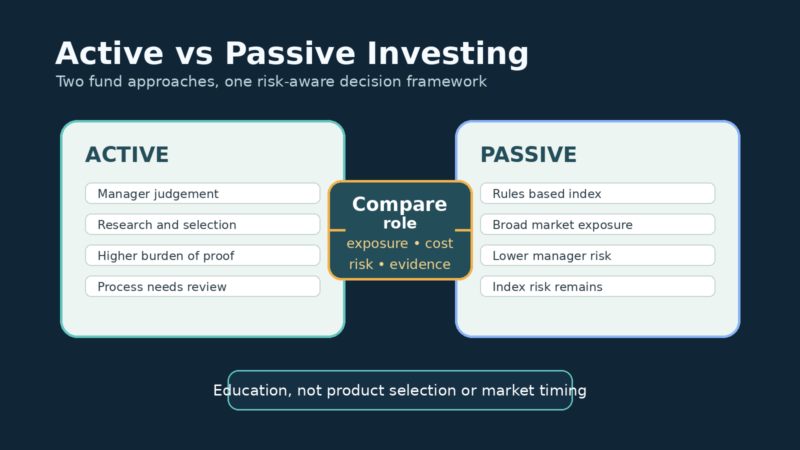
Active vs Passive Investing: The Honest Version
Active vs passive investing is really a choice about cost, judgement and portfolio role. Learn how UK beginners can compare…

Dividend reinvestment: why automatic plans quietly outpace manual reinvesting
Dividend reinvestment keeps cash compounding with less delay and friction. Learn when automatic plans beat manual reinvesting for investors.
Platform Fee: Percentage vs Flat Fees Explained Simply
Wondering which platform fee suits your portfolio? This UK guide covers percentage and flat fees, with a worked example and…
Diversification myths: why owning more funds does not always mean less risk
Diversification is about correlation, not count. Learn why more funds do not always mean less risk, and what a better…

Time Horizon in Investing: Why Money You Need Soon Should Stay Out of Shares
Time horizon investing starts with one question: when will you need the money? That answer should shape whether it sits…

Why Sitting in Cash Can Quietly Cost You: Inflation and Long-Term Investing Risk
Cash feels safe, but inflation can quietly erode what it buys. Here is how to think about that risk as…