Why is crypto so volatile?

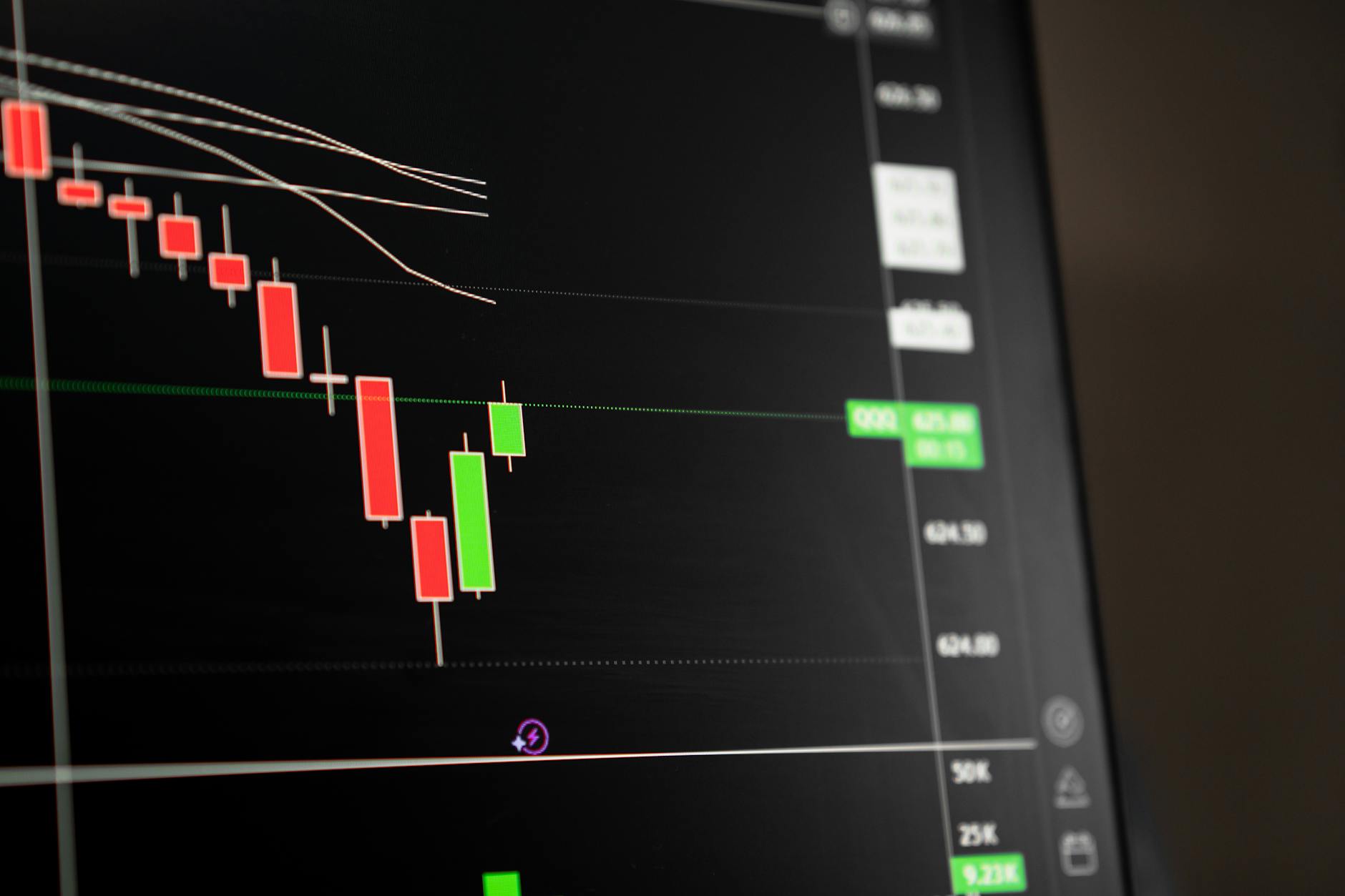
Bitcoin dropping thirty percent in a month is described as a correction. Dropping eighty percent over a year is called a bear market. Doubling in six weeks is a bull run. In traditional finance, any of these moves would trigger emergency meetings at central banks.
In crypto, they are routine. Crypto volatility is not a bug or a temporary phase. It is a structural feature of how these markets work. Understanding why is the first step to deciding how much of your own money to put near it.
Why crypto markets are so small
The first and most structural cause of crypto volatility is market size. Even at its peak, Bitcoin’s total market capitalisation was around one point three trillion dollars. The US stock market alone is worth over forty trillion. Apple as a single company has been worth more than the entire crypto market at times.
In a small market, large buyers and sellers have an outsized effect on price. The total value of all UK pension assets dwarfs the value of Bitcoin. A whale, the informal term for a holder with a very large position, can move the market visibly by deciding to sell. There is not enough depth on the other side to absorb a large trade without a price shock.
This dynamic is not a temporary limitation. Until crypto markets grow significantly in total value, this structural driver of crypto volatility will remain. Small markets react fast, in both directions.
No fundamentals anchor
A company’s share price is ultimately tethered to something real: earnings, assets, dividends, growth prospects, cash flow. Analysts can build models around those numbers. There is a floor below which a profitable company becomes obviously cheap. Cryptocurrency has no such anchor.
Bitcoin generates no cash flows. It does not pay a dividend. Its value is entirely a function of what the next buyer is prepared to pay. This makes it far more susceptible to sentiment swings than almost any other asset you could name.
When confidence is high, the price runs. When confidence drops, there is nothing underneath it to catch the fall. This absence of a fundamentals floor is a defining feature of crypto volatility, and it applies to almost every coin and token, not just Bitcoin. If you want to understand the basic structure of what cryptocurrency actually is, that post covers the foundations.
Leverage amplifies every move
Crypto markets offer extraordinarily high leverage, often hidden behind offshore exchanges that are lightly regulated. Traders can borrow ten, fifty, even a hundred times their capital to place bets. In a rising market, this amplifies gains spectacularly. The people talking loudest on social media tend to be those who bet big and got lucky.
In a falling market, the same mechanism creates cascading liquidations. Prices fall, leveraged positions get closed automatically by the exchange, and assets are dumped back on the market. Prices fall further, triggering more liquidations. This feedback loop is why crypto crashes can be so sudden and so severe.
They often happen overnight while most UK investors are asleep. Leverage is not unique to crypto, but the scale of it in these markets is unlike anything in mainstream finance. The Financial Conduct Authority has warned that high leverage in crypto significantly increases the risk of total loss for retail investors. That warning is worth taking seriously.
Narrative and sentiment drive prices
Few markets are as sensitive to storytelling as crypto. This is another structural source of crypto volatility. Because there are no fundamentals to anchor to, the market responds to stories, fear, excitement and regulatory signals with unusual sensitivity.
A single tweet from Elon Musk moved Dogecoin by double digits on multiple occasions. Regulatory announcements from China, once a major source of Bitcoin mining, triggered market-wide crashes. The approval of a Bitcoin ETF in the United States drove prices to new highs.
In traditional markets, a rumour can move a share price a few percent. In crypto, a convincing rumour can move a whole asset class ten percent before breakfast. Crypto volatility is partly self-reinforcing: the more people expect a crash, the more selling happens. And the crash arrives on schedule.
The Bitcoin halving cycle
One cause of crypto volatility is specific to Bitcoin. Every roughly four years, the supply of new Bitcoin created per block is cut in half in a preprogrammed event called the halving. Historically, each halving has been followed by a significant bull run. A reduced flow of new coins meets sustained or growing demand, and prices tend to rise.
This four-year cycle has become a widely watched pattern. It partly explains why crypto tends to move in waves rather than steadily. Many market participants actively position around it, which reinforces the cycle itself. The halving does not guarantee a bull run, but it reduces the rate at which new supply enters the market.
In a market already prone to crypto volatility, that supply shock matters more than in most other asset classes. The mechanism is simple: less new supply, same demand, higher price pressure. Whether that translates into a sustained rally or a flash spike depends on everything else in the market at that moment.
What crypto volatility means for UK investors
A common misconception is that crypto volatility is a temporary flaw that will settle down as the market matures. There is some truth in that. Bitcoin is less volatile today than it was in 2013 or 2017.
But it is still dramatically more volatile than any blue-chip equity in the FTSE 100. It is likely to stay that way as long as the market remains small, unanchored to fundamentals, and driven by leverage and sentiment. Maturation will soften the extremes over time. It will not make crypto behave like a gilt.
Volatility is not necessarily bad. For long-term holders who can stomach large paper losses without panicking, crypto volatility has often created buying opportunities at prices that later looked absurdly cheap. For short-term traders, or anyone who puts in money they cannot afford to lose, it has created financial disasters.
The UK is full of people who bought at the top of a cycle. They watched their position fall by three quarters, sold in despair, and missed the subsequent recovery. The asset class did not change. Their time horizon and temperament did not match it.
The practical question to ask before investing is not whether you can handle the upside. It is whether you can handle waking up to find your investment worth half of what it was yesterday, and still choosing to hold. Only you know the honest answer. It is worth being truthful about it before you commit real money.
If the answer is no, there is nothing wrong with staying out. If the answer is yes, position sizing and a long time horizon matter most. A willingness to ignore the noise is the other essential tool. Understanding how to store crypto safely matters too, but only once you have decided to hold any at all.
This article is for informational purposes only and does not constitute financial advice. Cryptocurrency investments carry significant risk. Always do your own research before making any financial decisions.