What is crypto inheritance, and what happens to your coins when you die?
If you hold cryptocurrency and haven't planned for what happens when you die, your coins could be lost forever. Here's how crypto inheritance works in the UK.
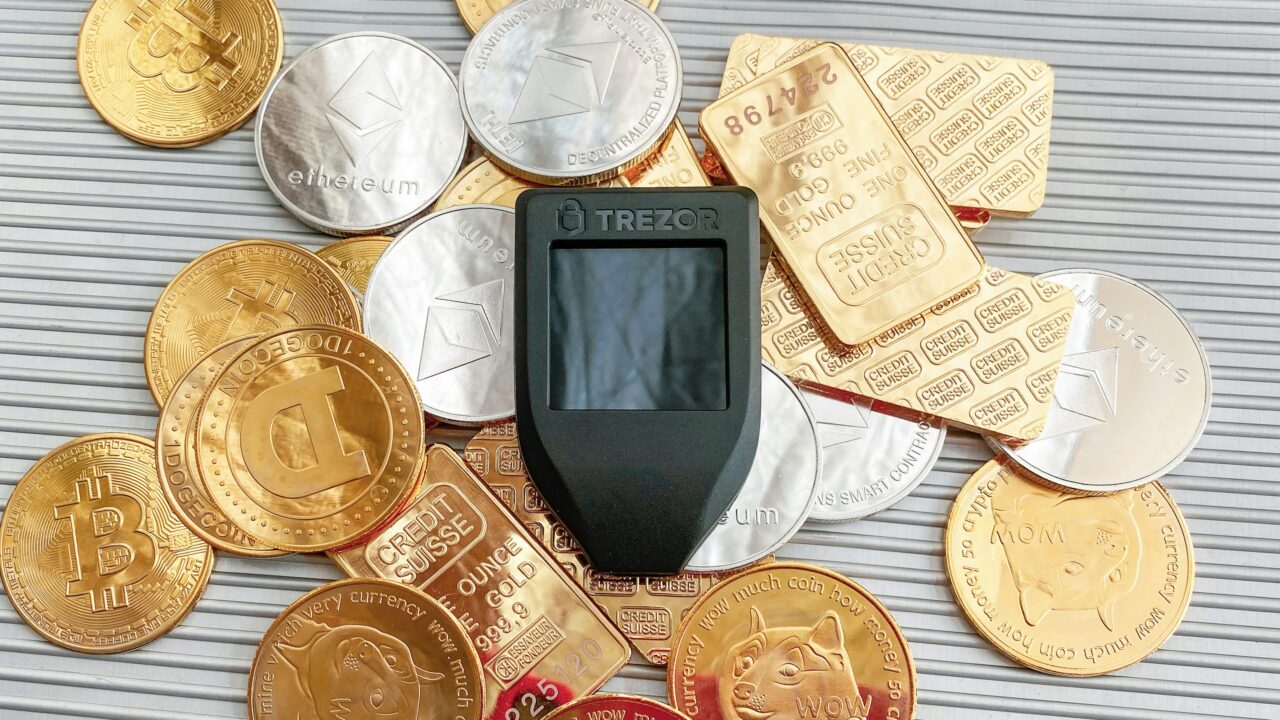
Most people with savings or investments have thought, at least vaguely, about what happens to their money when they die. With crypto, that question has a different kind of urgency — because unlike a bank account, there is no customer services team to call, no account recovery process, and no authority that can unlock funds on behalf of a grieving family. What you leave behind depends almost entirely on what you planned ahead of time.
The uncomfortable truth about cryptocurrency is that it does not behave like any other asset in your estate. A bank can be contacted by a solicitor or executor. Shares can be transferred through a registrar. A house has a title that can be reregistered. Crypto, by contrast, is controlled entirely by private keys — long strings of cryptographic data that prove ownership. Whoever holds the keys holds the coins. And if those keys are lost, the coins are gone, permanently, regardless of who was supposed to inherit them.
This is not a theoretical problem. Billions of pounds worth of cryptocurrency is estimated to be locked in wallets whose owners have died without leaving any trace of how to access them. Some of these funds will never be recovered. The blockchain will carry on recording their existence indefinitely, immovably, inaccessibly.
In the UK, cryptocurrency is treated as property for legal purposes, which means it can be inherited. HMRC has made clear that crypto assets form part of a deceased person’s estate for inheritance tax purposes, just as physical property or investments would. If the total value of your estate exceeds the current inheritance tax threshold, crypto holdings above that threshold will be taxed at 40 per cent, the same as everything else. The fact that crypto sits on a decentralised network rather than in a regulated account makes no difference to HMRC’s view of what is owed.
What makes crypto different is not the legal position but the practical one. Your solicitor can draft a perfectly valid will leaving your Bitcoin to your children. The probate court can confirm that it belongs to them. Your executor can be appointed to gather your assets. But if none of those people can find your private key or seed phrase, the coins remain exactly where they are: locked in a wallet that no one can open.
A seed phrase is the master key to a self-custody crypto wallet. It is usually a sequence of twelve or twenty-four words, generated when the wallet is first set up, that can be used to reconstruct access to all the funds in that wallet from any compatible device. Anyone who has the seed phrase has complete and irrevocable access to the funds. Anyone who does not cannot access them at all. There is no middle ground, no override, no appeal process.
This creates an unusual estate planning challenge. You need your seed phrase to be findable by the right person at the right time, but not findable by the wrong person at any time before or after that. Simply writing it on a piece of paper and putting it in your desk drawer is not a plan — it is a vulnerability. Storing it digitally on your phone or in a document on your computer creates its own risks. Encrypting it and storing the decryption key elsewhere adds complexity that could leave an executor going in circles during an already difficult time.
Some people use a layered approach. The seed phrase is written on paper or engraved on metal, placed in a sealed envelope inside a fireproof safe, with instructions to the executor held separately — perhaps with a solicitor — that describe where the safe is and how to open it. The key point is that the instructions must be clear enough for someone who may know nothing about crypto to follow without error. A seed phrase copied incorrectly is as useless as one that was never written down.
If your crypto is held on an exchange rather than in a self-custody wallet, the situation is somewhat easier. Exchanges such as Coinbase, Kraken or Gemini hold your assets on your behalf and maintain their own records. In principle, an executor can contact the exchange with a death certificate and grant of probate and request that the funds be transferred to the estate. In practice, this process can be slow, requires documentation, and depends on the exchange’s own policies and whether it is still operating. Exchanges can be hacked, go insolvent, or exit the market. The crypto industry has seen enough of that to make diversification and self-custody worth understanding.
A practical first step for anyone who holds crypto is to write a letter of wishes — a document separate from your will that explains, in plain terms, what crypto you hold, where it is held, whether it is on an exchange or in a self-custody wallet, and where the access information can be found. This document should not contain your seed phrase or passwords directly, but should give your executor a clear map of where to look. It should be reviewed regularly, because wallet addresses, exchanges, and holdings change.
Your solicitor needs to know that you hold crypto. This sounds obvious, but many people treat their crypto holdings as separate from their financial life in a way they would never treat a savings account. If your solicitor does not know crypto exists, it will not be handled correctly in your will, and your executor may not know to look for it. A solicitor with experience in digital assets can help you structure things properly, though they are still a relatively rare breed — most high street practices are still catching up with what it means to leave a private key to a beneficiary.
It is also worth thinking about what you actually want your beneficiaries to do with any crypto they inherit. If they have no understanding of how to manage a wallet securely, inheriting self-custody crypto without guidance could expose them to risks they are not equipped to handle. Some people include basic instructions in their letter of wishes, or arrange for a trusted person who understands crypto to help guide the process.
None of this is especially complicated once you sit down and think it through, but almost nobody does. Crypto inheritance is one of those things that feels urgent only in retrospect, when the person who knew the passwords is no longer around to ask. The planning conversation is worth having now, not because anything bad is going to happen, but because the alternative is a situation that no probate court, no solicitor, and no exchange can fix.
Disclaimer: Cryptocurrency investments are highly volatile and speculative. Their value can rise and fall sharply, and you could lose all of your investment. This article is for informational and educational purposes only and does not constitute financial advice. Always do your own research before making any investment decision.