19 June 2026 Close: Asia gets a cautious handoff
Bitcoin closed near $62,900 on Friday evening as crypto steadied into the Asian open, but Extreme Fear still showed confidence was missing.

Crypto goes into the Asian open with Bitcoin near $62,960, which is a steadier finish than the afternoon wobble suggested, but not a finish that settles the argument. Friday did not end with panic. It also did not end with the kind of broad late-session buying that would make traders trust the handoff.
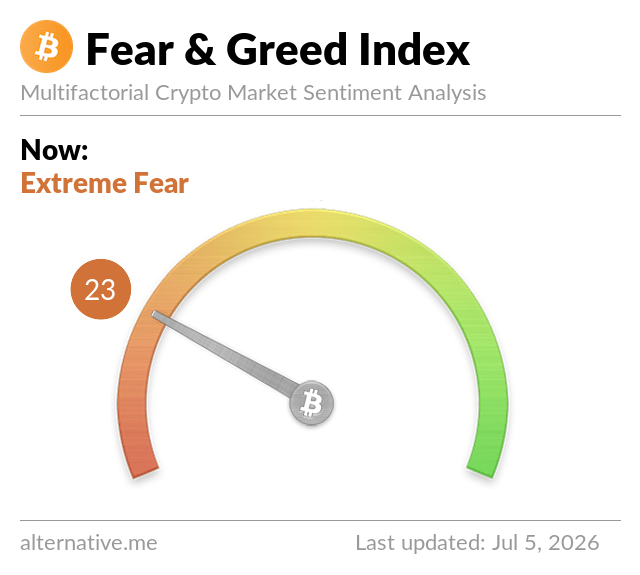
Friday’s close was orderly, not convincing. Total crypto market capitalisation is about $2.27 trillion, while 24 hour turnover is roughly $95.2 billion. Bitcoin dominance, the share of total crypto value sitting in Bitcoin rather than the rest of the market, is around 55.51%, which tells you capital is still clustering around the benchmark instead of spreading freely into smaller assets. The Fear and Greed Index remains at 14 (Extreme Fear), and that reading measures mood through volatility, momentum and participation rather than predicting the next move. Readers who want the mechanics can use Cristoniq’s guide to the crypto Fear and Greed Index as the clean background.
| Timeframe | Regime | What it means |
|---|---|---|
| 1 hour | Neutral | Bitcoin is flat into the handoff, which points to stabilisation rather than a decisive late push higher. |
| 4 hours | Neutral | The afternoon weakness stopped spreading, but the market still did not produce the kind of follow-through that changes tone. |
| Daily | Neutral | The 24 hour move is close enough to flat that the close reads as a holding pattern rather than a directional signal. |
| Weekly | Bearish | The weekly picture is still fragile, which means traders are treating each steady session as a test rather than a resolution. |
| Monthly | Neutral | A cautious market with Extreme Fear still needs stronger breadth before confidence can travel from Bitcoin to the rest of the complex. |
Bitcoin is trading around $62,960, with a 24 hour move of roughly -0.2%, and the useful evening detail is that it held up without turning into a fresh risk-on signal. The PM post, 19 June 2026 PM: Regulators ask while crypto waits, framed the afternoon around a market waiting on conviction while regulatory plumbing stayed in the background. The close is distinct from that piece because the market did manage a steadier handoff. It is not leaning on a fresh intraday low. But it is also still too narrow to claim that Friday repaired confidence.
Bitcoin dominance helps explain the difference between stability and belief. A reading above 55.5% says capital is still preferring the asset that looks most defensive inside crypto rather than rotating aggressively through the rest of the complex. That is exactly why Bitcoin dominance matters on quiet closes. A steady benchmark with elevated dominance often means caution has been postponed rather than solved. Cristoniq’s guide to what Bitcoin is remains the clean baseline, but the practical point tonight is simpler: Bitcoin found a floor, and the market still has not built much trust on top of it.
If Bitcoin can keep holding the low $62,000s to low $63,000s through the Asian session, Friday’s close will look constructive. If it slips back under that zone quickly, the evening steadiness will look more like a pause than a base.
So what: Bitcoin stopped the afternoon from getting worse, but it still did not give the market the stronger close that usually changes sentiment for the next session.
Ethereum and the larger altcoins ended the day calmer than they looked in the weaker patches, but they still behaved more like passengers than leaders. Ethereum is around $1,699.66, Solana near $68.89, XRP about $1.1300, BNB near $578.40, and Dogecoin around $0.0828. None of those numbers on their own are the story. The story is that they steadied without producing the broader participation that would make Bitcoin’s hold feel more durable.
Ethereum matters most because it is often the first large-cap asset that shows whether risk appetite is spreading beyond Bitcoin’s defensive core. A close near $1,700 with a 24 hour move of -0.7% is not a collapse. It is also not a leadership signal. Solana and XRP send the same message. They avoided a late washout, but neither printed the sort of catch-up move that tells readers the market has moved from caution to confidence. Cristoniq’s explainers on what Ethereum is and why XRP still matters help frame why those names are often read as participation gauges rather than isolated stories.
BNB and Dogecoin complete the picture. They are stable enough to stop the market from looking disorderly, but not strong enough to suggest speculative appetite has properly returned. That leaves Friday’s finish in an awkward middle ground: the damage looks contained, yet the breadth still looks thin.
So what: the large-cap altcoin complex finished in better order than the afternoon threatened, but it still did not deliver the wider risk appetite that would make the close feel sturdy.
The theme worth carrying into the weekend is that market structure is still doing more work than excitement. The SEC and CFTC’s public comment process around derivatives definitions and swap market reporting is still the clearest policy backdrop in view. That is not a direct price catalyst for the close. It matters because crypto now trades alongside a growing web of regulated venues, listed products and institutional access points, and confidence often improves only when the rails look clearer. Friday’s close looked exactly like that kind of market: not afraid enough to dump, not convinced enough to chase.
That is also why UK readers should keep regulation in the frame without overstating its immediate effect. Cristoniq’s guide to how crypto is regulated in the UK remains useful because rule changes often influence behaviour before they produce a dramatic headline move. The same goes for access products. Crypto ETFs still matter because they shape who can enter the market and how stable that demand may be. Tonight’s close did not produce a new narrative. It reinforced the older one: the market is trying to rebuild trust through structure and patience rather than through a single loud burst of momentum.
If that sounds dry, it is because confidence usually is rebuilt in dry stages. Cristoniq’s explainer on crypto confirmations covers the operational side of trust. The market version of that same idea is what Friday just showed, a session that wants more proof before it starts acting bold again.
So what: the market closed as if clearer rules and steadier structure still matter more than a quick burst of optimism, which is why the next session still needs to earn trust.
The Asia open checklist is fairly clear. First, Bitcoin needs to stay above roughly $62,500, because losing that area soon after the handoff would make the evening stability look cosmetic. Second, Ethereum needs to defend the high $1,600s, because another slip there would confirm that breadth is still narrowing rather than quietly improving. Third, readers should watch whether Solana can keep the upper $60s and whether XRP can hold around $1.12 to $1.13, because those are the kind of levels that show whether participation is surviving outside Bitcoin. Fourth, the next Fear and Greed print matters because a market that stays near 14 in Extreme Fear even after a steadier close is telling you that traders still doubt the bounce.
The final point is about continuity. This morning’s AM post, 19 June 2026: Bitcoin slips as the rebound loses force, opened the day with a rebound already under strain. The PM update tracked a market that was waiting for conviction. This evening piece closes the loop. Friday ends with steadier prices and a cleaner handoff, but not with the broader participation that would make the market feel repaired. Asia gets a cautious market, and it still needs to prove it can do more than hold the line.
Crypto Daily is Cristoniq’s evening market close summary for cryptocurrency, published nightly for informational purposes only. Nothing here is financial advice. Always do your own research before making any investment decisions.