5 June 2026 PM: Bitcoin slips before payrolls
Bitcoin slipped toward $62,024 on Friday afternoon as traders awaited US payrolls, with Extreme Fear and weaker altcoins keeping sentiment fragile.

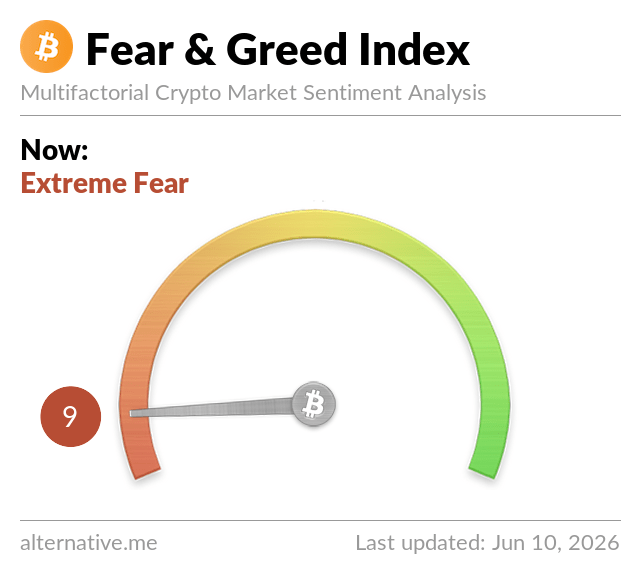
Bitcoin has weakened again into Friday lunchtime, slipping from this morning’s steadier tone to trade near $62,024 as crypto investors wait for the United States payrolls report due at 1:30 p.m. UK time on 5 June 2026. The mood is still defensive rather than panicked, but with Fear and Greed stuck at 12, the market is behaving like it wants confirmation from macro data before taking on risk again.
Crypto is entering the afternoon with prices softer, not because a fresh crypto specific shock has landed, but because traders are still unwilling to front run a major macro release while sentiment is this fragile. CoinGecko’s global snapshot puts total crypto market capitalisation at about $2.22 trillion, down roughly 3.4% over the past 24 hours, while Bitcoin dominance is around 56.0%. That combination matters because it says money is leaving the asset class overall, yet the largest coin is still holding market share better than most of the field. Alternative.me’s Fear and Greed Index remains at 12, labelled Extreme Fear, which is a gauge of market mood built from volatility, momentum and participation rather than a signal that predicts what comes next.
| Timeframe | Regime | What it means |
|---|---|---|
| 1 hour | Neutral | Bitcoin is moving in a tight range just before a major macro release, so the latest price should be read as a pause rather than a settled direction. |
| 4 hours | Bearish | The intraday trend has leaned lower since the morning update, which shows sellers still have control of the short session. |
| Daily | Bearish | Bitcoin is lower over 24 hours and has not recovered enough to argue that the broader daily pressure is over. |
| Weekly | Bearish | The wider trend still points lower, which means any bounce would need confirmation before readers treat it as a reset. |
| Monthly | Neutral | The bigger picture is mixed rather than broken outright, but it remains dependent on whether macro stress begins to ease. |
Bitcoin is trading around $62,024, down about 0.7% over the past 24 hours, and the more important point is that it has lost ground since Cristoniq’s morning update rather than building on it. The AM post tracked Bitcoin near $63,377, so the afternoon move tells us the market did not use the quiet morning to repair confidence. Instead, traders have taken a wait and see stance before the labour market numbers, which is common when crypto is trading in step with broader risk assets rather than on its own internal narrative.
The structure under the surface still looks defensive. CoinGecko’s latest global data shows 24 hour trading volume near $135 billion, up from the morning snapshot, which suggests activity has picked up again as the payrolls release approaches. More activity is not automatically bullish. In a cautious market it can simply mean participants are adjusting exposure rather than buying conviction. For readers who want the bigger framework, Cristoniq’s explainer on Bitcoin dominance remains useful because dominance often rises when investors would rather concentrate risk than spread it across smaller coins.
There is also a practical lesson in how Bitcoin is behaving now. When the largest asset cannot regain lost ground even with no fresh sector specific panic, it usually means traders are waiting for an outside event to reset expectations. Cristoniq’s guide to what Bitcoin is explains why the asset still sets the reference price for much of the market, and this afternoon is another example of that role in practice.
So what: Bitcoin is still the clearest read on market confidence, and that confidence has softened rather than improved since this morning.
Altcoins are following the same cautious script, but with less resilience than Bitcoin and more evidence that traders still prefer relative safety to a broad rebound. Ethereum is around $1,660.33, down about 4.9% over 24 hours, which is a much heavier move than Bitcoin’s. Solana is near $65.82, down roughly 4.2%, while XRP is close to $1.12 and Binance Coin is near $589. Cardano remains one of the weakest large names, slipping to about $0.162 after another double digit fall over the same period.
That spread matters because it tells you the market is not rotating into a fresh altcoin trade. It is still trimming risk. Ethereum’s underperformance points to a market that is comfortable owning less beta, not more, and Cardano’s weakness adds to that reading rather than contradicting it. Readers who want context for why price moves can become exaggerated once liquidity thins may find Cristoniq’s pieces on what Ethereum is and crypto slippage helpful, because stressful sessions often expose where support is most fragile.
The afternoon picture is also different from a simple price roundup. If smaller tokens were bouncing harder than Bitcoin, that would point to returning appetite for risk. The opposite is happening. Bitcoin is falling, but many altcoins are falling faster, which usually means traders are protecting capital first and looking for opportunity second.
So what: the broader market still looks selective and defensive, not ready for a clean risk on turn.
The next clear catalyst is still macro, but regulation has not disappeared from the background and that matters for how investors judge the sector’s medium term outlook. The US Bureau of Labor Statistics has the May 2026 Employment Situation report scheduled for Friday, 5 June 2026 at 8:30 a.m. Eastern Time, which is 1:30 p.m. in the UK, only minutes after this PM update. In practical terms, that means the next meaningful market move could come from interest rate expectations rather than from a crypto headline. A stronger than expected labour market reading could support the view that policy stays tighter for longer, which has often pressured risk assets this year.
There is also a regulatory watchpoint in Europe. Reuters reported on 28 May that France’s markets regulator warned crypto companies without the licences required under the EU’s MiCA framework that they could face prosecution if they keep serving customers beyond the end of June. That is not the reason prices are weaker this afternoon, and it is not a same day market catalyst, but it does add to the sense that the operating environment remains demanding even when the immediate trading focus is elsewhere.
So what: crypto is still trading like a macro sensitive asset, with regulatory pressure adding context rather than driving today’s move.
What to watch next is specific rather than mysterious. First, Bitcoin needs to show it can recover the $62,000 area quickly after the payrolls release, because staying below that level would suggest afternoon weakness was more than simple pre data caution. Second, Ethereum holding near $1,650 matters, since another leg lower there would reinforce the view that traders still do not want broad exposure beyond Bitcoin. Third, the immediate market reaction to the 1:30 p.m. UK payrolls release matters more than the headline number alone, because crypto has been reacting to what the data means for rates and the dollar, not just to whether job growth is up or down. Finally, the Fear and Greed Index is worth watching into the US session close: if it stays pinned at 12 even after the payrolls event, the market may have more stabilisation work to do before any rebound looks durable.
Crypto Daily is Cristoniq’s afternoon update on cryptocurrency markets, published every weekday for informational purposes only. Nothing here is financial advice. Always do your own research before making any investment decisions.