18 May 2026: ETF Exits and Rate Hike Fears Cap a Difficult Day for Crypto
Bitcoin closes the UK day near $76,300 as $635m ETF outflows and rate hike fears weigh on markets. Ethereum drops 4%, XRP holds above $1.30.

UK markets closed on Monday with Bitcoin slipping to around $76,300 as cautious optimism gave way to growing conviction that the Federal Reserve has little room to cut rates this year. Ethereum fell harder through the afternoon session, Solana extended its weekly losses, and a significant Senate vote shifted the picture for XRP. This is where things stand as Asian markets open.
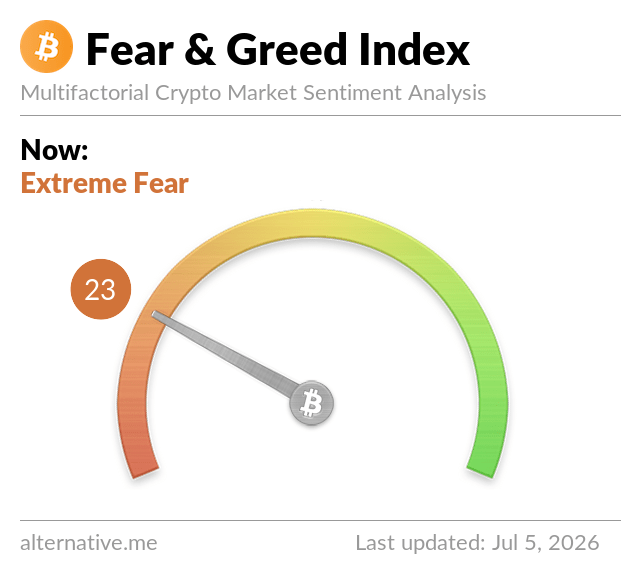
The total cryptocurrency market capitalisation ended the UK day at approximately $2.62 trillion, down around 2.4% in 24 hours. Bitcoin’s share of that total held at 58.2%, with altcoins continuing to cede ground to the leading coin even as both fell. The Fear and Greed Index, which aggregates signals including price momentum, social media activity, and survey data into a score from 0 to 100, registered 28 this evening, one point above yesterday’s 27. Both readings sit in Fear territory. The index is a measure of current sentiment, not a forecast of where prices are heading.
| Timeframe | Regime | What it means |
|---|---|---|
| 1 hour | Neutral | Bitcoin stabilised near session lows as selling pressure eased late in the European afternoon |
| 4 hours | Bearish | The dominant direction through the day was lower, with recovery attempts fading quickly |
| Daily | Bearish | Bitcoin closed roughly 2.3% lower, unable to hold gains made early in the session |
| Weekly | Bearish | A decline of around 6.4% over seven days reflects the repricing of rate expectations since last week’s inflation data |
| Monthly | Neutral | Bitcoin is roughly flat over 30 days, up around 0.5%, suggesting the longer-term trend has not decisively broken lower |
Bitcoin fell to a session low of $76,055 (roughly £56,700) before settling at around $76,300 (approximately £56,900) by the UK close, with an intraday high of $78,419 suggesting early buyers were active but could not sustain the move.
The day’s weakness is the continuation of a shift that began with last week’s inflation data. April’s Consumer Price Index came in at 3.8% in the United States, and the Producer Price Index surged to 6%, its highest reading since December 2022. Those figures, combined with the confirmation of Kevin Warsh as Federal Reserve Chair, pushed the probability of a 2026 rate hike to approximately 39% on prediction markets. Broader estimates place the odds of zero rate cuts at 62% for the year.
The effect on institutional Bitcoin flows was direct. US spot Bitcoin exchange-traded funds recorded net outflows of approximately $635 million last week, their worst weekly performance since late January. The funds had pulled in a combined $3.29 billion across March and April, and that reversal removed a significant support mechanism. Bitcoin had rallied from around $66,000 in mid-April to the $82,000 level it reached last week. When institutional buyers step back through the ETF channel, the underlying bid weakens, and Monday’s session reflected exactly that dynamic. As noted in today’s afternoon Cristoniq Crypto Daily, Bitcoin dominance remained elevated even as prices fell, suggesting capital is consolidating around the largest asset rather than exiting the sector entirely.
Ethereum fell around 4.3% on the day to approximately $2,089 (around £1,557), underperforming Bitcoin and extending a week in which it has shed more than 10% of its value.
The steeper decline reflects Ethereum’s position in a risk-off environment. Bitcoin’s market capitalisation is roughly six times Ethereum’s, and when investors are reducing exposure rather than rotating between assets, they tend to exit Ethereum earlier and more aggressively. The 10.4% weekly fall for Ethereum against Bitcoin’s 6.4% illustrates that gap. Ethereum also lost a near-term catalyst this week when the Glamsterdam protocol upgrade was pushed from its original first-half 2026 target to Q3. The upgrade aims to raise the network’s gas limit from approximately 60 million to 200 million per block, roughly tripling the transaction volume the base layer can process. The delay is driven by testnet validation requirements and removes a concrete milestone at a moment when the market is short of positive signals.
XRP held at around $1.37, down approximately 2.9% on the day, closing a week in which it briefly reached $1.54 before the broader sell-off pulled it back.
The brief rally to $1.54 earlier in the week followed a significant development in Washington. On 14 May, the US Senate Banking Committee advanced the CLARITY Act by 15 votes to 9, with two Democrats, Ruben Gallego of Arizona and Angela Alsobrooks of Maryland, crossing to vote with all Republicans on the panel. The CLARITY Act, if enacted, would establish a legal framework for digital assets, resolving longstanding uncertainty about how tokens are classified under US securities law. Citi has estimated that full passage could trigger $15 billion in additional crypto exchange-traded fund inflows. The path to a full Senate vote is not straightforward: the bill must be merged with a separate Senate Agriculture Committee version, it requires at least 60 votes on the floor, and a conflict-of-interest provision remains unresolved. A vote before the Memorial Day recess looks unlikely, pushing the timeline into June at the earliest. XRP’s current price reflects the committee vote as a positive signal, not as a completed outcome.
Solana traded at around $83.82 (roughly £62.49), down approximately 2.8% on the day, though the more significant figure is its 14.3% fall over the past seven days, the sharpest weekly decline among the major assets.
Solana’s steeper weekly loss reflects its higher volatility relative to Bitcoin and Ethereum. It tends to amplify market moves in both directions, and the current environment is one in which speculative positions built during earlier rallies are being unwound. As our explainer on bull and bear markets in crypto covers, higher-volatility assets tend to lose more ground during risk-off periods. On the protocol side, the Alpenglow consensus upgrade entered community testing on 11 May, targeting block finality of 100 to 150 milliseconds, an 87-fold improvement on current confirmation times. Near-term price direction is responding to the macro environment rather than to protocol progress.
The theme that ties Monday’s session together is the repricing of rate expectations. Bitcoin’s spring rally from $66,000 to $82,000 was built on the assumption that the Federal Reserve would ease policy as growth slowed. That assumption is now being unwound. A CPI reading of 3.8% and a PPI figure of 6% have moved rate-cut odds sharply, with prediction markets now pricing a 39% probability of a 2026 hike and a 62% chance of zero cuts this year.
The reason this matters more than it once might have for crypto is structural. The US spot Bitcoin ETFs created a direct channel between institutional appetite and crypto prices, and that channel is visible in real time. Last week’s $635 million in ETF outflows is not an estimate; it is a measured signal of institutions reducing exposure to risk assets as the macro backdrop shifted. When rate expectations were supportive, the same channel delivered $3.29 billion in inflows over two months. The mechanism works in both directions, and Monday’s session is a clear illustration of the downside version.
The immediate level to watch for Bitcoin overnight is $76,055, the intraday low from today’s session. A break below that figure in early Asian trading, particularly if volumes increase, would put the $74,000 area in focus, the range that provided support in late April. Holding above the session low would suggest orderly selling rather than a more disruptive unwinding.
For XRP, the critical variable is the Senate timeline. If the CLARITY Act reaches a full Senate floor vote before the White House’s informal 4 July deadline, and the seven additional Democratic votes can be found, the regulatory catalyst would become more concrete. Any delay from the unresolved conflict-of-interest provision would push that catalyst further out, capping XRP’s upside even in a recovering market.
Ethereum’s Q3 Glamsterdam timeline is the next development milestone to monitor. If testnet data becomes publicly available and shows the upgrade progressing smoothly, it would restore some confidence in the revised schedule. A further slip would add to the sense that Ethereum’s base-layer capacity story is moving more slowly than initially planned.
Finally, Federal Reserve communication this week is worth tracking. Any signal that officials view the inflation data as consistent with eventual easing would give risk assets, including crypto, some room to stabilise. Hawkish language, or another strong data print, would add to the pressure that has characterised the past week of trading.
Crypto Daily is Cristoniq’s evening market close summary for cryptocurrency, published nightly for informational purposes only. Nothing here is financial advice. Always do your own research before making any investment decisions.