12 May 2026 Evening: Solana and XRP Lead Tuesday’s Retreat as Bitcoin Settles Above $80,500
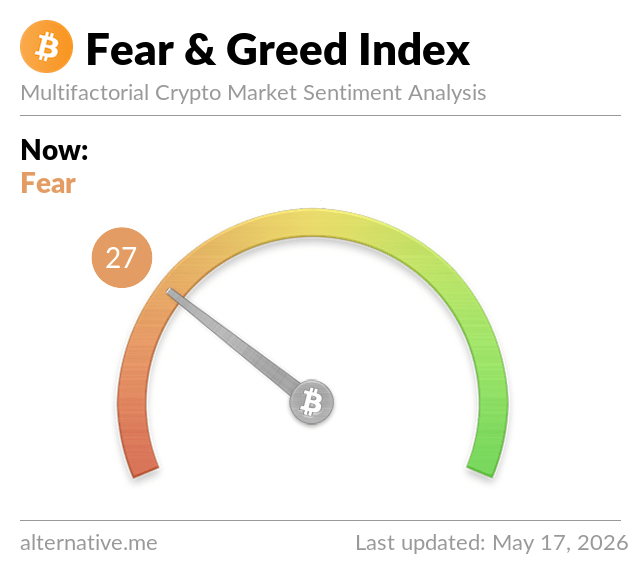
Bitcoin closes Tuesday above $80,500 as Solana drops 3.2% and XRP falls 2.9%. BTC dominance holds at 58.3% with Fear and Greed at Neutral 49.

Tuesday closes with the market settling lower across the board, Solana and XRP absorbing the sharpest losses of the session as Bitcoin held its floor above $80,500 and BTC dominance remained locked at 58.3%, signalling that capital stayed within crypto but rotated toward relative safety.
Total market capitalisation sits at approximately $2.76 trillion, down around 1.7% over the past 24 hours. Bitcoin’s share of that total remained firm at 58.3%, a level it has held consistently through a period when altcoins have generally underperformed. The Fear and Greed Index, which measures market sentiment by combining data including price momentum, social media volume, and survey responses, held at 49, squarely in Neutral territory. That reading barely shifted from the morning session, which is itself telling: a flat sentiment score on a broadly lower day suggests the selling has been orderly rather than panic-driven.
| Timeframe | Regime | What it means |
|---|---|---|
| 1 hour | Bearish | Bitcoin has drifted lower through the afternoon and into the evening session, continuing the pattern of the PM update |
| 4 hours | Bearish | The four-hour trend has been consistently lower since the European morning, with no sustained recovery attempts |
| Daily | Neutral | Down roughly 1.8% on the day, Bitcoin remains above the $80,000 level that has acted as support in recent sessions |
| Weekly | Neutral | BTC is off less than 1% over seven days, suggesting the broader trend has not broken and Tuesday’s move is a single-day drift |
| Monthly | Neutral | Bitcoin has traded in a wide range over the past month without establishing a clear directional trend |
Bitcoin is trading at approximately $80,500, down around 1.8% over the past 24 hours and off the 24-hour high of $82,027 reached during the overnight Asian session. The full shape of Tuesday’s session tells a coherent story. Prices peaked near $82,000 before easing into the European open. By the time UK markets opened, Bitcoin sat around $81,200, and it drifted lower through the afternoon, testing $79,880 intraday before recovering to its current level. For UK investors, the asset is priced at approximately £59,500. Over seven days, Bitcoin is down less than 1%, meaning the week’s broader trend remains essentially flat: Tuesday’s movement is a day-long drift, not a trend reversal. The relative resilience, holding above the $80,000 level that has served as support in recent weeks, is the key takeaway from today’s close. That floor was tested once during the afternoon and it held. It continues to hold into the evening.
Ethereum closed the day at approximately $2,279, down around 2.6% over the past 24 hours, with the seven-day loss now standing at roughly 3.7%. Ethereum’s pattern on Tuesday amplified Bitcoin’s move, as it has done consistently in recent months. Where Bitcoin fell around 1.8%, Ethereum declined from its 24-hour high of $2,343 to a session low of $2,258 before settling at current levels. In sterling terms, Ethereum is priced at approximately £1,684. The seven-day underperformance relative to Bitcoin reflects a pattern that has been visible for some time: Ethereum tends to fall faster than Bitcoin in risk-off conditions. There is no Ethereum-specific development driving today’s move. The pressure is macro in origin and is expressed more sharply in ETH because of where it sits on the risk spectrum relative to Bitcoin.
Solana was the weakest performer among the major coins on Tuesday, falling approximately 3.2% to around $94.50 by the day’s close. The morning session told a different story: Solana was briefly the relative outperformer during the flat European open. The reversal through the afternoon and into the evening leaves it as the session’s clearest underperformer. At approximately £69.80 for UK investors, Solana remains above the lows it visited earlier in the year but has given back the day’s early gains and extended lower. The 3.2% decline is within the coin’s typical daily volatility range and there is no Solana-specific catalyst attached to the move. The interpretation is straightforward: Solana carried more downside sensitivity than Bitcoin on a risk-off day, and that sensitivity was realised.
XRP fell approximately 2.9% over the past 24 hours to trade at around $1.43, or roughly £1.06 in sterling terms. XRP has tracked broader market sentiment through Tuesday’s session rather than moving on coin-specific news. The regulatory picture has been comparatively stable for XRP in recent months, and in the absence of new developments the price action is driven by overall risk appetite. Tuesday’s decline takes XRP back toward the lower end of its recent trading range but does not represent a structural break. The move is consistent with XRP’s pattern of amplifying broader market selling days while benefiting proportionally less than Bitcoin from recovery sessions.
BNB ended Tuesday down less than 0.5%, at approximately $659, making it the most resilient major coin on a broadly red day. In sterling terms, BNB closed around £487. The near-flat performance against a market losing 1.7% reflects BNB’s consistent pattern of lower volatility relative to Ethereum, Solana, and XRP. No significant Binance-related news emerged through Tuesday’s session, and the comparative resilience reads as an absence of selling pressure rather than active demand. BNB’s market capitalisation sits at approximately $89 billion, and its relative outperformance on a down day is more consistent with defensive positioning than any specific bullish catalyst.
The clearest signal from Tuesday’s session is not the level at which Bitcoin closed, but the way the selling distributed itself across the market. BTC fell around 1.8%. ETH fell 2.6%. XRP fell 2.9%. Solana fell 3.2%. That descending order of losses, tracking broadly with each asset’s distance from Bitcoin on the institutional familiarity and liquidity spectrum, is a recognisable pattern for a risk-off day in crypto, a dynamic that also played out during Monday’s evening session.
The mechanism is worth understanding. When sentiment turns cautious, investors tend to reduce exposure to assets they view as higher-risk first. In crypto terms, that typically means altcoins give ground before Bitcoin does. Bitcoin is held by a broader range of institutional participants with longer time horizons, and it carries deeper liquidity, meaning it can absorb selling pressure more readily. Assets like Solana and XRP have a higher proportion of shorter-term retail holders who are more sensitive to intraday price moves.
The fact that BTC dominance held at 58.3% through the session, unchanged from the morning, confirms this reading. Dominance rising during a sell-off would suggest money flowing from altcoins into Bitcoin for safety. Dominance holding flat while everything falls suggests a broadly orderly reduction in overall crypto exposure. Neither reading signals alarm. Both are consistent with a measured, low-conviction market rather than a forced or panic-driven sell-off, similar to the conditions tracked in Monday’s morning update.
Bitcoin’s ability to hold the $80,000 level through the overnight Asian session is the first thing to watch. Tuesday’s 24-hour low was $79,880, meaning the market tested and held that level once already. A sustained break below $80,000 in Asian trading would change the short-term picture and likely accelerate altcoin losses. A hold at current levels sets up a potentially flat to modestly positive European open on Wednesday.
The US macro calendar is the external variable with the most potential to move markets this week. Any Federal Reserve commentary or inflation data released in the coming days will be read directly by crypto markets. A higher than expected inflation print typically puts pressure on risk assets including Bitcoin. A lower reading tends to support them. Crypto has proved sensitive to that relationship throughout the past year.
ETH/BTC as a ratio is worth monitoring through Wednesday. Ethereum’s seven-day underperformance of roughly 2.8 percentage points relative to Bitcoin is not yet a signal of structural breakdown, but if it continues for a further few sessions it will begin to raise questions about Ethereum’s relative positioning. A recovery in the ratio would require either an ETH-specific positive catalyst or a general return of risk appetite across the altcoin market. BTC dominance above 58% has held for several consecutive sessions. A break below 57.5% would suggest money beginning to rotate back into altcoins, which historically coincides with the early stages of a broader market recovery.
Crypto Daily is Cristoniq’s evening market close summary for cryptocurrency, published nightly for informational purposes only. Nothing here is financial advice. Always do your own research before making any investment decisions.