Bitcoin Retests $76K as Iran Ceasefire Wobbles — 21 Apr 2026
Bitcoin pushes back through $75,000 as US-Iran ceasefire deadline passes. Four straight ETF inflow days signal institutional support at $74K.
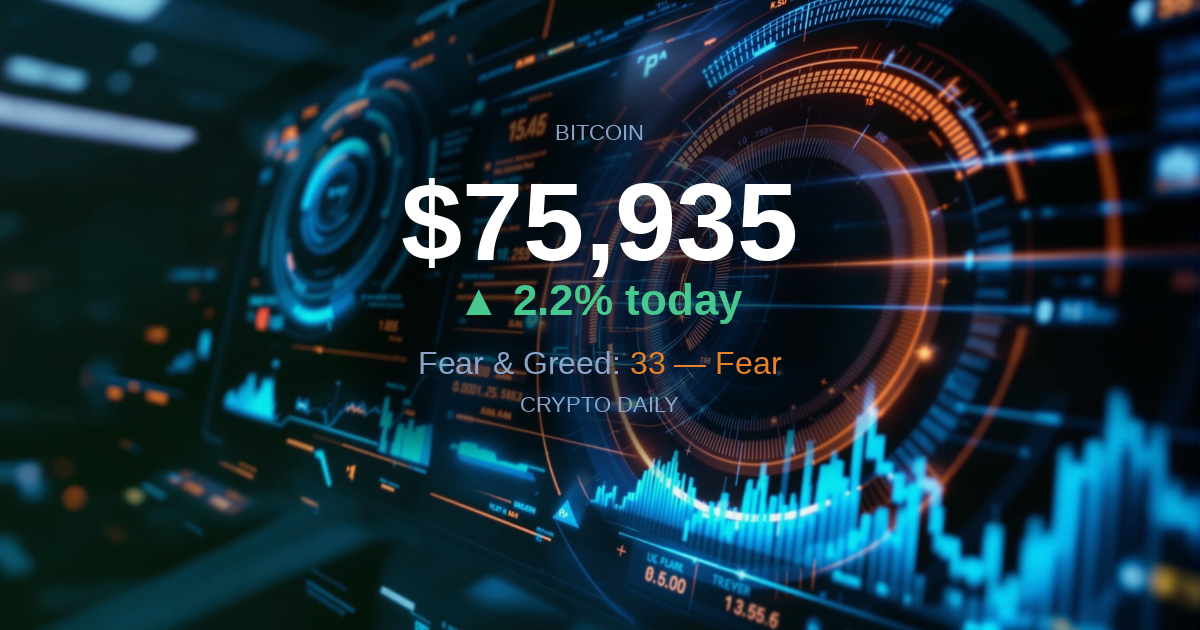
Bitcoin is pushing back through $75,000 this morning after US-Iranian maritime clashes over the weekend dragged the price toward $73,000 before institutional buyers stepped back in. A critical Iran ceasefire deadline passes today, prediction markets are giving an extension a 90% probability, and four straight sessions of positive spot ETF inflows are underpinning the recovery. The case for this being a shakeout rather than a breakdown is strengthening.
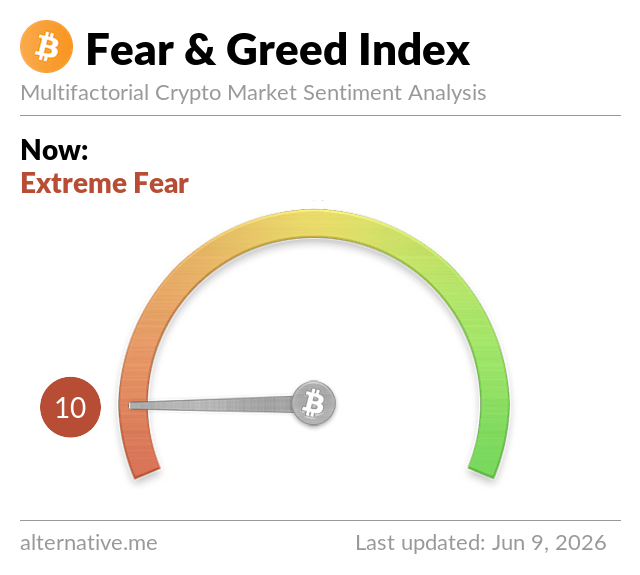
Total market capitalisation sits at $2.64 trillion, with Bitcoin commanding 57.6% of that total. Bitcoin dominance, the share of the entire crypto market’s value that sits in Bitcoin rather than altcoins, remains elevated. That concentration reflects investors staying close to the largest and most liquid asset rather than spreading risk across the sector. The Fear and Greed Index, a sentiment gauge running from 0 (Extreme Fear) to 100 (Extreme Greed), reads 33 today. Fear territory does not mean a falling market. It means positioning is defensive, short interest is high, and any credible positive catalyst can produce sharp moves higher.
| Timeframe | Regime | What it means |
|---|---|---|
| 1 hour | Neutral | Price gaining modestly in the last hour with no clear directional conviction yet |
| 4 hours | Bullish | Recovery from weekend lows near $73,000 is holding, with higher lows forming through the session |
| Daily | Bullish | A 2.2% daily gain puts Bitcoin back on the front foot after two consecutive down sessions |
| Weekly | Neutral | A net weekly gain under 2% masks violent swings between $73,000 and $78,000. No clear trend yet. |
| Monthly | Bullish | A 9.5% monthly gain reflects a genuine recovery from early April lows near $69,000 |
Bitcoin trades at $75,935 (£56,168), up 2.2% in the past 24 hours. The overnight range stretched from $74,181 to $76,483, a swing of roughly $2,300 that captures exactly how reactive this market remains to news from the Persian Gulf. When Iran briefly reopened the Strait of Hormuz on April 17, Bitcoin surged to a local high of $78,384 as traders covered short positions and risk appetite returned. That rally lasted fewer than 48 hours. Over the weekend, Iranian forces fired on vessels attempting to transit the strait and the US Navy seized an Iranian-flagged tanker. Bitcoin fell back to $73,000 by Sunday, surrendering nearly all of the ceasefire rally in under two days.
What changed since Sunday is the flow picture. Spot ETF inflows have been positive for four consecutive trading sessions, with institutional buyers treating the $74,000 area as a floor worth defending. The average ETF cost basis sits close to that level, meaning a substantial pool of capital has a direct incentive to support price at that support zone. When the price retreated toward $73,000 over the weekend, it failed to breach that range with conviction. That non-confirmation matters more than the headline move.
The so-what: $75,000 is still the number that counts. Bitcoin has tested and failed to hold above the $76,000 area multiple times since mid-April. A clean daily close above $76,500 on meaningful volume would be the first genuine signal that the range is breaking higher. Until then, geopolitical news remains the swing factor.
Ethereum trades at $2,319 (£1,715), up 2.1% over 24 hours, closely mirroring Bitcoin’s recovery rather than setting its own agenda. That correlation has defined Ethereum’s behaviour throughout April. On a 14-day view, Ethereum has underperformed Bitcoin sharply: Bitcoin is up 10.4%, while Ethereum has gained less than half a percent over the same window. That divergence reflects ongoing uncertainty about Ethereum’s positioning relative to Bitcoin’s increasingly clear institutional narrative. The so-what: Ethereum’s price is being decided by macro right now, not by anything happening on the network itself.
Solana trades at $85.76 (£63.44), up 1.6% over 24 hours. That modest gain is the smallest among the major coins in today’s recovery session. Solana had briefly traded above $90 when the Strait of Hormuz reopened last week, and the inability to hold that level reflects how quickly conditions shifted. On a 30-day basis, Solana is up 13.2%, and its one-year gain of 38% puts it ahead of most of the large-cap market. The so-what: Solana is consolidating a meaningful base and will likely be among the higher-beta beneficiaries if Bitcoin breaks $76,500 with conviction.
XRP trades at $1.43 (£1.059), up 1.9% on the day, broadly in line with the broader recovery rather than any Ripple-specific catalyst. The token’s 7-day performance is negative at down 2.6%, which captures the pattern of XRP spiking toward $1.53 on Iran peace signals before surrendering those gains. On a one-year basis, XRP is up 28%, a respectable performance given conditions. The so-what: XRP remains a macro risk-on trade. The clearest signal for XRP will come from a sustained move higher in Bitcoin, not from Ripple’s own pipeline.
The story underneath today’s price action is the changing relationship between geopolitics and institutional crypto behaviour. The pattern of April 2026 has been notable. When Bitcoin fell toward $73,000 on Iran headline risk, institutional buyers did not reduce exposure. They added to it. Four consecutive days of positive spot ETF inflows during the worst of the geopolitical turbulence suggests the conviction built through 2025 has not been shaken by naval confrontation in the Gulf. In previous crypto cycles, macro shocks reliably produced institutional exits. What this cycle is demonstrating is a more mature response: hold the position, buy the dip, treat the cost basis as the line worth defending.
Against that backdrop, Deutsche Borse’s $200 million investment into Kraken is worth keeping in view. One of Europe’s largest regulated exchange operators making a nine-figure commitment to crypto market infrastructure is not a tactical trade. It is a structural statement about where European regulated finance expects the sector to be. Whatever happens in the Strait of Hormuz this week, that direction of travel does not reverse on a naval incident.
Watch the $76,500 level closely. Three attempts to close above it in the past week have failed. A daily close above that level on above-average volume would open the path toward $80,000. A fourth failure, particularly alongside a negative headline from the Gulf, would put $72,000 back in view. The Iran ceasefire extension sits at 90% probability on Polymarket, but a 10% tail risk carries outsized price impact. Any confirmed escalation in the Strait of Hormuz would reprice risk across all asset classes quickly, and crypto would not be insulated. Tesla’s earnings this week also matter indirectly: with Bitcoin’s correlation to the S&P 500 running at 84%, any material equity surprise could set the directional tone for crypto through the rest of April. The token unlock calendar carries $117 million in scheduled unlocks across the ecosystem this week. Most fall in mid-cap DeFi tokens rather than the majors, but a large unlock into a thin book during a geopolitical flare-up can amplify altcoin moves sharply.
Crypto Daily is Cristoniq’s daily guide to cryptocurrency markets — published every morning for informational purposes only. Nothing here is financial advice. Always do your own research before making any investment decisions.