Bitcoin Holds $74K; Kelp DAO Hack Shakes DeFi — 20 Apr 2026
Bitcoin holds at $74,340 as the $292M Kelp DAO exploit rattles DeFi markets and Iran fully reopens the Strait of Hormuz to shipping.
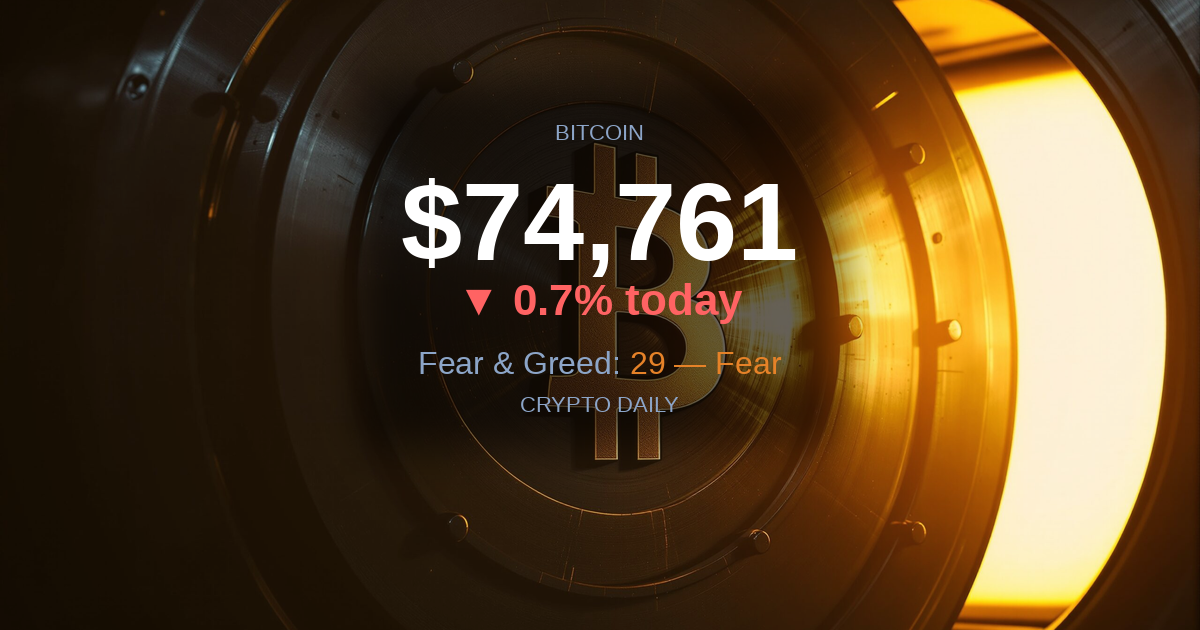
Bitcoin came into Monday morning nursing a bruise it did not entirely deserve. At $74,340, or roughly £58,700 for UK investors, the market’s anchor coin is down 1.6% over the past 24 hours, pulling back from a short-lived relief rally triggered by Iran’s decision to fully reopen the Strait of Hormuz. That geopolitical de-escalation briefly lifted risk assets on Sunday, wiping out an estimated $593 million in bearish short positions across crypto. But the mood has since curdled. The $292 million Kelp DAO exploit, the biggest decentralised finance hack of 2026 so far, is now spreading contagion through the sector, draining liquidity and pushing the Fear and Greed Index to 29 out of 100. Bitcoin is holding up better than most. The rest of the market is not.
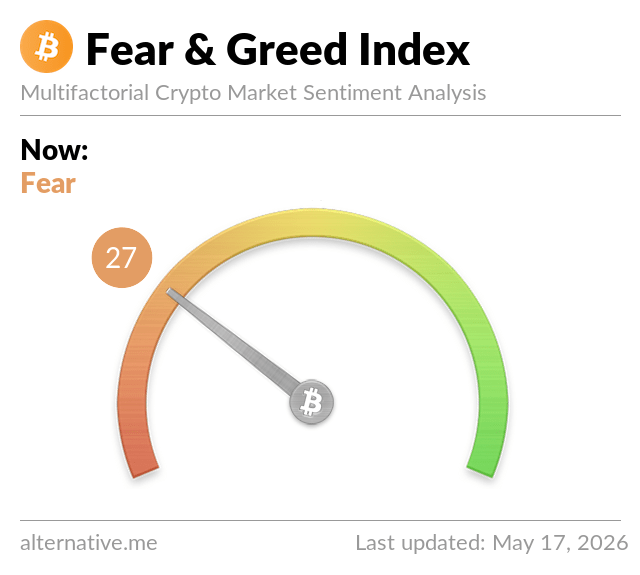
The total cryptocurrency market capitalisation stands at $2.59 trillion this morning, with Bitcoin accounting for 57.4% of that figure. When Bitcoin dominance climbs during a downturn, it typically signals that investors are rotating out of smaller, riskier tokens and back toward the market’s most liquid asset. The Fear and Greed Index, which condenses market sentiment into a single number between 0 (extreme fear) and 100 (extreme greed), reads 29 today. That places the market firmly in Fear territory, reflecting a rational reassessment of cross-chain risk following the Kelp hack rather than any fundamental deterioration in Bitcoin’s position.
| Timeframe | Regime | What it means |
|---|---|---|
| 1 hour | Bearish | Selling pressure has continued through the early session, with Bitcoin slipping a further 0.4% in the past hour |
| 4 hours | Neutral | The four-hour trend is essentially flat, suggesting neither buyers nor sellers are in control at current levels |
| Daily | Bearish | The 24-hour candle is clearly negative, with Bitcoin down 1.6% as Kelp contagion weighs on risk appetite |
| Weekly | Neutral | Over seven days Bitcoin is up just 0.2%, a trendless read that reflects ongoing consolidation around $74,000 |
| Monthly | Bullish | The 30-day picture remains constructive, with Bitcoin up 8.2% from its levels a month ago |
Bitcoin is trading at $74,340, roughly £58,700, and the tension in the price action is visible across timeframes. The monthly trend remains positive at plus 8.2% over 30 days, but the short-term picture is bearish, with both the hourly and daily candles pointing lower. The Iran/Hormuz relief trade that briefly cleared $75,000 on Sunday has already been reversed. The key levels from here are $75,000 to the upside, where a cluster of short positions would face forced liquidation and accelerate any renewed move, and $72,000 to the downside, where last week’s support held. With Bitcoin dominance at 57.4%, the message is clear: the market is treating BTC as a relative haven within crypto. That is a compliment of sorts, but it also means Bitcoin is not going to run hard while confidence in the broader sector is being reset.
Ethereum is trading at $2,273, down 2.5% in 24 hours, and it is feeling the Kelp DAO fallout more directly than Bitcoin. Aave, the largest lending protocol on Ethereum, saw $6 billion in deposits withdrawn in the past 48 hours as investors pulled liquidity in response to the hack. Kelp DAO lost $292 million after an attacker exploited a flaw in its cross-chain vault system, leaving wrapped ether stranded across 20 different blockchain networks. Cross-chain vaults work by locking original assets and issuing synthetic equivalents on other networks, and the code that handles this process has become the most reliably targeted element of DeFi infrastructure. The question for Ethereum now is whether the contagion is contained to Kelp and directly exposed protocols, or whether it triggers a broader reassessment of DeFi risk. The 2.5% move today suggests the market has not yet reached a verdict.
Solana is trading at $84.43, down 1.3% on the day, and the headline number understates a meaningful development in its ecosystem. XRP has launched as a wrapped asset on Solana, meaning Ripple token holders can now deploy XRP in Solana’s decentralised exchanges, lending markets, and yield protocols. Wrapped tokens work by locking the original asset in custody and issuing a redeemable equivalent on the destination chain, effectively porting liquidity from one ecosystem to another. This matters for Solana because it brings fresh capital into the network at a time when it is competing hard for DeFi market share. Crucially, Solana’s architecture is structurally different from the cross-chain bridge model that was exploited at Kelp, which means the Kelp fallout is more of a sentiment headwind for Solana than a fundamental one. Today’s 1.3% drop is macro, not Solana-specific.
XRP is trading at $1.41, down 1.9%, a muted reaction to what is genuinely positive infrastructure news. The wrapped XRP launch on Solana expands the token’s usable ecosystem beyond the XRP Ledger and centralised exchanges, addressing one of the more substantive criticisms of the asset: that its utility is narrow. But individual positive catalysts are difficult to trade on days when the broader market is selling, and XRP is following macro pressure lower today. XRP has consistently shown that expanding utility and regulatory clarity drive its price over weeks and months, not hours. The 1.9% move is noise.
The Kelp DAO exploit is worth understanding properly rather than reducing to another number in a long list of protocol failures. Kelp was not a new or untested project. It had substantial total value locked, operated across multiple chains, and offered a product, liquid staking tokens that earn yield while remaining deployable in DeFi, that was genuinely useful. The attacker exploited a vulnerability in the cross-chain vault mechanism, draining $292 million and leaving assets stranded across 20 networks. Recovery is unlikely.
The broader implication is one the industry has been slow to confront. Every time an asset crosses from one blockchain to another, it passes through code that holds custody of the original. That code is a target. Bridges and cross-chain vaults have been the most consistently exploited element of decentralised finance for three years running, and the architectural problem has not been solved. Aave losing $6 billion in deposits in 48 hours is not a vote against Aave. It is a rational withdrawal from cross-chain bridge exposure.
Meanwhile, UK investors have their own regulatory development to track. The Financial Conduct Authority has published its sweeping crypto asset framework for final consultation this week. Industry analysts are flagging what they call the 24-hour trap: provisions that could require firms to give clients a full day’s notice before taking significant account actions. The rule is designed to prevent impulsive trading, but in a market that moves in minutes, it risks disadvantaging UK users against their counterparts in the US and Europe. The consultation is open now, and the response from crypto operators is expected to be forceful.
Three specific things worth watching closely. First, $75,000 in Bitcoin. That level opened briefly on Sunday and closed before holding. A sustained move above it would force liquidations of short positions and could accelerate a renewed rally. A second rejection would confirm Bitcoin is range-bound between $72,000 and $75,000 for now. Second, Aave’s total value locked over the next 72 hours. If deposits stabilise and start returning, the Kelp contagion is likely contained. If Aave continues losing capital, broader DeFi confidence may be resetting to a lower baseline, with direct implications for Ethereum’s price performance. Third, the FCA consultation. The provisions around client notice periods and asset classification will determine how competitive UK crypto operators can be going forward. The regulator’s willingness to accommodate industry feedback will set the tone for UK crypto market access for years.
Crypto Daily is Cristoniq’s daily guide to cryptocurrency markets, published every morning for informational purposes only. Nothing here is financial advice. Always do your own research before making any investment decisions.