22 May 2026: Trump Delays AI Order as Spotify Goes All-In on AI (AM)
Trump delays a US AI security executive order, Spotify and Universal agree an AI music deal, and Anthropic forecasts its first profitable quarter.

Friday morning brings a policy U-turn in Washington, a landmark licensing deal that could reshape AI music, and fresh figures showing Anthropic is closing fast on OpenAI in the revenue race. Here is what happened overnight and why it matters.
President Trump pulled back from signing a major AI executive order hours before the ceremony, saying he didn’t like the language. The White House cancelled a planned Thursday signing for a new order covering AI security and cybersecurity. The order had been expected to require pre-release government security reviews for advanced AI models before public release. Trump told reporters “I didn’t like certain aspects of it” and that the language “could have been a blocker” for US competitiveness.
For businesses deploying AI, the short-term effect is that a significant new compliance requirement has not arrived. But the delay signals something more important: even the US administration is struggling to write AI rules that tighten security without slowing the industry it wants to lead over China. UK and EU regulators watching Washington for cues on model review frameworks will note that the US itself cannot yet agree on what those rules should look like. The revised order is expected to return before the end of May, and its treatment of pre-release security reviews will be the clause to watch.
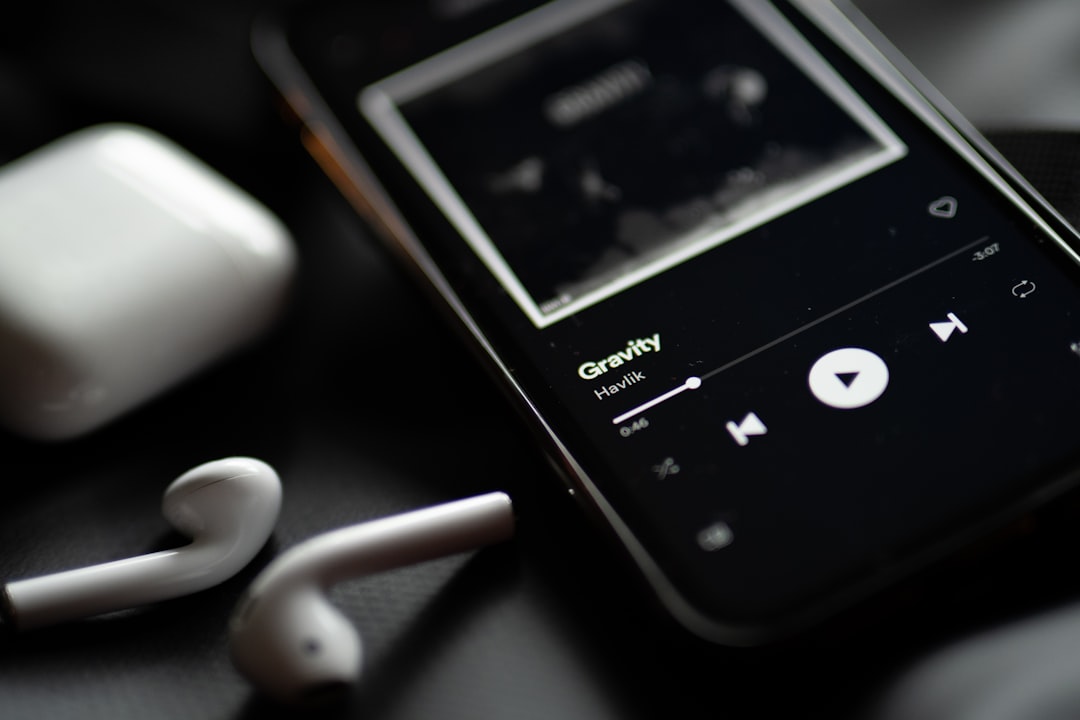
Spotify used its Investor Day to announce it is weaving AI through its entire product range, sending shares up more than 13% in one of its best trading sessions on record. The headline deal was a landmark licensing agreement with Universal Music Group allowing Spotify Premium subscribers to create AI-generated covers and remixes of songs by participating UMG artists, with streaming revenue shared back to the original creators. It is the first major licensing deal that makes AI music creation both legal and commercially fair to artists, and it provides a template other streaming services and publishers are likely to follow.
Spotify also launched Studio, a desktop research-preview app that generates personalised audio briefings from a listener’s history, uploaded articles, and podcast feeds. It is a direct rival to Google’s NotebookLM, applied to audio. A third product, built with voice AI company ElevenLabs, lets any author submit a manuscript and receive a narrated audiobook. The UK was not confirmed as a launch market for Studio. The AI remix feature has no release date yet. Still, the combination of a licensing framework, a new AI app, and an audiobooks tool announced in a single day represents a significant shift in how streaming platforms are positioning themselves around AI.
New figures showed OpenAI generated around $5.7 billion in revenue in the first quarter of 2026, while Anthropic expects to post $10.9 billion in revenue in Q2 and turn its first ever operating profit. The figures, reported by The Information and the Wall Street Journal respectively, show OpenAI roughly $1 billion ahead of Anthropic in Q1, but with an adjusted operating margin of -122%, meaning it is spending far more than it earns. ChatGPT user growth has also stalled. Anthropic’s Q2 forecast of $10.9 billion would represent 127% growth from its Q1 result, and a projected $559 million operating profit would be its first profitable quarter.
For anyone deciding which AI platform to commit to for work, these numbers matter. A company moving toward profitability is more likely to maintain consistent pricing and invest in reliability. Anthropic’s growth is being driven by enterprise contracts, including a $200 million partnership with the Gates Foundation announced earlier this month. Our guide to the AI tools worth paying for right now covers what each platform actually offers at different price points.
A secretive AI startup called Hark announced a $700 million Series A round to build what it describes as a “universal” AI interface that sits across existing apps and services. The company plans to release multimodal AI models this summer before following up with dedicated hardware. At a Series A stage, a $700 million raise implies a valuation well into the billions. Investor conviction appears to be that the next consumer AI wave will be a cross-app interface layer rather than a new standalone model. For a grounded look at how AI agents are being used today, see our explainer on what AI agents can actually do today.
A new AI therapy startup called The Path claimed its model scored 95 out of 100 on Vera-MH, a safety benchmark designed specifically for mental health AI, compared to a top score of 65 for leading consumer AI chatbots. The Path was founded by alumni of Tony Robbins’ organisation and meditation app Calm. The Vera-MH benchmark measures whether an AI system responds appropriately when a user signals distress, including whether it escalates to a human clinician. A score of 95 does not guarantee safety in every situation, but the use of a publicly verifiable benchmark score provides more transparency than most AI wellness tools have offered. For UK users, the key question remains whether any AI therapy tool holds appropriate NHS or CQC approvals before clinical use.
Worth Watching
Best for: Personalised AI audio briefings from your own sources
NotebookLM-style AI that turns your listening history into a daily audio brief.
Best for: Business writing, research, and complex tasks
Anthropic’s flagship AI, approaching its first profitable quarter after strong enterprise growth.
Best for: General-purpose AI tasks and consumer use cases
Still the largest AI platform by revenue, with Q1 figures now public for the first time.
Here is everything else worth knowing from this morning’s AI news.
- AdventHealth partners with OpenAI on ChatGPT for Healthcare: The Florida hospital network is using ChatGPT to reduce admin burden and free up clinical time. [21 May]
- US awards $2 billion in quantum computing grants with equity stakes: IBM gets $1 billion to build America’s first dedicated quantum chip foundry. Quantum computing underpins the next generation of AI hardware. [21 May]
- Spotify launches ElevenLabs-powered audiobook self-publishing tool: Authors can submit a manuscript and receive a narrated audiobook. Spotify’s audiobook service has now passed one million paid subscriptions. [21 May]
- Google pitches AI agent ecosystem at I/O but analysts are sceptical: The vision of AI agents managing tasks across the web was compelling in demo, but mainstream adoption faces real friction. [21 May]
- Six alternatives to AI-heavy Google Search worth trying: With AI Overview rolling out broadly, TechCrunch rounded up options including Kagi and Perplexity for users who prefer search without AI summaries. [21 May]
- Runtime (YC P26) launches sandboxed coding agents for whole teams: Non-engineers as well as developers can now run AI coding agents in isolated environments, lowering the barrier to AI-assisted development. [21 May]
- Samsung chip workers set for average $340,000 bonus as AI profits surge: A sign of how far AI hardware profits have spread through the semiconductor supply chain. [21 May]
The executive order story is the one to track most closely this week. A revised version is expected before the end of May, and its treatment of pre-release security reviews for frontier AI models will set a precedent that both UK and EU regulators are actively watching as they finalise their own approaches to governing the most powerful AI systems.
This is a daily news update for informational purposes only. AI products and policies change rapidly. Verify details directly with providers before making decisions. Nothing here is financial or legal advice.
AI Daily is Cristoniq’s daily guide to developments in artificial intelligence, published every morning.