25 April 2026: Google Commits $40 Billion to Anthropic as the AI Compute Race Enters a New Scale
Google pledges up to $40B to Anthropic at a $350B valuation. Plus: Mac mini AI shortages, ComfyUI hits $500M, and DeepSeek closes the gap.

Google’s $40 billion commitment to Anthropic values the AI safety company at $350 billion and cements a new reality: in the AI race, compute capacity and investment scale have become inseparable.
Google has committed up to $40 billion to Anthropic in what is now the largest single investment in an AI company, pushing the startup to a $350 billion valuation. The deal, reported by TechCrunch on Friday, includes $10 billion paid immediately with a further $30 billion contingent on Anthropic meeting performance milestones. Alongside the cash, Google Cloud will supply five gigawatts of computing capacity over the next five years. That is not just a financial commitment. It is an infrastructure guarantee that few companies in the world could match.
The scale becomes clearer when you consider Anthropic’s existing arrangements. Amazon has already committed $5 billion in investment alongside a broader spending arrangement for compute capacity. A separate deal with Google and Broadcom unlocks 3.5 gigawatts of TPU-based computing from 2027. These agreements together give Anthropic a level of infrastructure security that positions it alongside OpenAI and Google DeepMind at the very top of the frontier AI field.
Adding context to the timing, Anthropic has recently released Mythos, described internally as its most capable model to date, with a focus on cybersecurity applications. Access has been restricted to a limited group of partners due to misuse concerns. Reports suggest Mythos has already been accessed by unauthorised users, which will intensify scrutiny of how closed AI partnerships are managed. For Google, the investment is a statement that it intends to back both its own Gemini models and Anthropic’s Claude as parallel bets on where AI capability is heading.
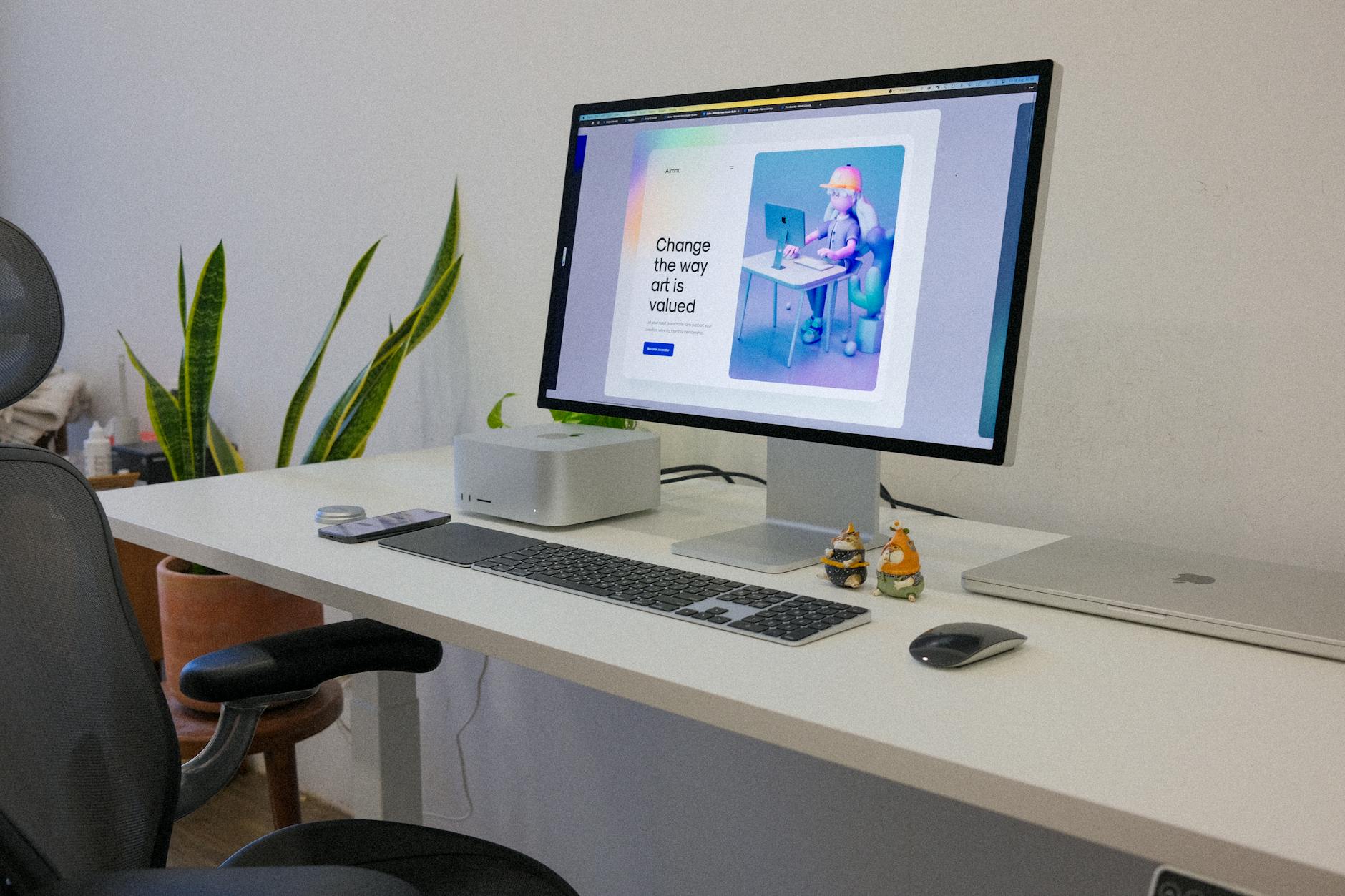
Apple’s M4 Mac mini is sold out for the first time, with the base $599 model backordered and higher-spec configurations unavailable until June, driven by surging demand from people wanting to run AI models locally. The M4 Mac mini, which ships with 16GB of RAM and a neural engine optimised for on-device AI tasks, has become the go-to choice for developers and AI hobbyists who want to run models like those from Anthropic and OpenAI, or open-source alternatives, without paying cloud API costs. That demand has emptied Apple’s inventory.
The secondary market has reacted predictably. Open-box units are appearing on eBay for between $715 and $795, against a retail price of $599. Refurbished models are listing above $900. For small businesses or individuals who have been planning to experiment with local AI, the practical advice is to wait for Apple’s next hardware refresh rather than pay a premium now. The shortage reflects both strong demand and a broader memory crunch affecting chip supply globally, with high-RAM configurations particularly constrained.
Running AI locally matters for a specific but growing audience: people who want to keep data on their own machine, developers who need a fast iteration loop without API costs, and anyone outside regions well-served by low-latency cloud AI. The Mac mini’s price point and performance make it unusually good value for these use cases. A sustained shortage delays adoption for exactly the audience that stands to benefit most.
ComfyUI, the open-source node-based interface for AI image, video, and audio generation, has raised $30 million at a $500 million valuation, reflecting strong commercial demand for tools that give creators precise control over generative output. Unlike consumer AI image tools where you describe what you want and accept whatever arrives, ComfyUI lets users construct custom workflows by connecting processing nodes, selecting specific models, and controlling each step in the pipeline. That flexibility has made it the tool of choice in professional animation, game development, and advertising.
The $500 million valuation is a meaningful signal about where the creator AI market is heading. The companies that win long-term in this space may not be the ones with the most impressive text-to-image demos, but the ones that give professionals the control and reproducibility they need for real production work. ComfyUI’s open-source roots have built a large and active community of developers who extend the platform with custom nodes, making it technically difficult for a proprietary alternative to replicate the breadth of capability available.
Google has published a practical guide to using Gemini for household and digital organisation, including cleaning schedules, inbox management, and seasonal chore planning, aimed directly at everyday users who have not yet adopted AI assistants. The guide walks through specific prompts for generating room-by-room cleaning plans, sorting email by sender or priority, and structuring weekly task lists. None of it requires any technical background.
If you or your team have been watching AI tools from the sidelines, this is a sensible place to start. Gemini is available free via Google’s apps on Android and iOS, and the spring-cleaning prompts translate well to business contexts too: use the same logic to organise project folders, triage a cluttered inbox before a busy period, or draft recurring checklists for staff. The full guide is at blog.google.
DeepSeek has previewed two new models that the Chinese AI lab says have “almost closed the gap” with current frontier models on reasoning benchmarks, including both open and closed systems, with better efficiency than the company’s previous V3.2 release. DeepSeek says the architectural improvements reduce compute requirements while improving benchmark performance. If the previewed results hold at full release, these models will join an increasingly crowded field of capable open-weight reasoning systems.
The broader pattern is worth noting. DeepSeek’s releases over the past eighteen months have consistently delivered strong capability at a fraction of the cost of comparable closed systems. That trend is putting downward pressure on the pricing of frontier AI and challenging the narrative that only the largest labs with the biggest compute budgets can build capable models. Full release details are expected within weeks.
Worth Watching
Best for: Professional AI image, video, and audio workflows
Node-based pipeline control for creators who need precise, reproducible generative output.
Best for: Everyday productivity and home or office organisation
Free AI assistant available on Android and iOS, now with guided prompts for real-world tasks.
Best for: AI-assisted coding and codebase navigation
Code editor with deep AI integration for developers wanting faster iteration across large projects.
Here is everything else worth knowing from today’s AI news.
- Meta’s loss is Thinking Machines’ gain — Meta has been recruiting talent from Thinking Machines Lab, but the flow goes both ways as the boutique AI company builds out its own team. TechCrunch
- Apple under Ternus — Incoming Apple CEO John Ternus is primarily a hardware engineer, signalling the company may put devices back at the centre of its strategy as AI integration becomes a key product differentiator. TechCrunch
- Lambda Calculus Benchmark for AI — A new benchmark using lambda calculus to test AI reasoning capabilities has surfaced, proposing a more formal evaluation method for model logic. Hacker News
- LLM wiki agents maintain — An open-source project has shipped a Karpathy-style wiki layer for AI agents, using Markdown and Git as the source of truth, with BM25 and SQLite indexing on top. Hacker News
- Open-source agent memory — A new open-source project aims to give any AI agent the same persistent memory capabilities as Claude.ai and ChatGPT, without requiring a proprietary backend. Hacker News
- Tokyo as a tech destination — SusHi Tech Tokyo 2026 is positioning the city as a key destination for AI and hardware demonstrations, with four defined technology domains and live exhibits. TechCrunch
This is a daily news update for informational purposes only. AI products and policies change rapidly. Verify details directly with providers before making decisions. Nothing here is financial or legal advice.
AI Daily is Cristoniq’s afternoon update on developments in artificial intelligence, published every weekday afternoon.