24 April 2026: OpenAI Races Towards Its Super-App Vision with GPT-5.5
OpenAI releases GPT-5.5 for all ChatGPT tiers as DeepSeek launches affordable V4 models, Meta signs a landmark Amazon CPU deal, and Anthropic publishes a Claude Code postmortem.
OpenAI’s pace of model releases shows no signs of slowing. The company pushed GPT-5.5 live for all paying subscribers on Thursday as DeepSeek threw down a pricing gauntlet with two new open-weight models, Meta pivoted away from GPU-first infrastructure by signing a landmark CPU deal with Amazon, and Anthropic published a rare public postmortem about quality issues in its Claude Code tool.
OpenAI has released GPT-5.5, billing it as its most capable model yet and a concrete step toward building a unified AI “super app” for work and everyday life. The model is now available across Plus, Pro, Business, and Enterprise tiers of ChatGPT, making it immediately accessible to any paying subscriber. OpenAI’s chief scientist Jakub Pachocki described the previous two years of AI development as “surprisingly slow,” signalling that the current pace of releases is the new normal.
GPT-5.5 outperforms its predecessor GPT-5.4 on benchmarks covering agentic coding, mathematics, and scientific research. Co-founder Greg Brockman described it as “a faster, sharper thinker for fewer tokens,” meaning it produces stronger results for the same compute cost. A Pro-tier variant is available for more demanding business users. If you have not checked your model selection in ChatGPT settings recently, it is worth doing so today to make sure you are running the latest version.
The “super app” framing is worth understanding. OpenAI is bundling ChatGPT, its Codex coding environment, and an AI browser into a single platform. The GPT-5.5 release is a building block in that direction, not a destination in itself.
Chinese AI lab DeepSeek has previewed two new open-weight models, V4 Flash and V4 Pro, claiming they have almost closed the gap with the world’s leading frontier models on reasoning benchmarks. Open-weight means developers can download and run the models on their own infrastructure, rather than paying per query to a cloud provider.
V4 Pro is the largest open-weight model currently available, with 1.6 trillion total parameters and a one million token context window, allowing it to process extremely long documents in a single pass. V4 Flash is lighter and faster at 284 billion parameters. On pricing: V4 Flash costs $0.14 per million input tokens and V4 Pro $0.145, undercutting every major frontier model on the market. DeepSeek acknowledges the models trail closed systems by roughly three to six months on knowledge tests, but their reasoning performance is close to GPT-5.4.
For developers and startups building AI products, DeepSeek V4 represents a real cost reduction opportunity. A business running high-volume AI queries could cut inference costs substantially while maintaining near-frontier quality on reasoning tasks.
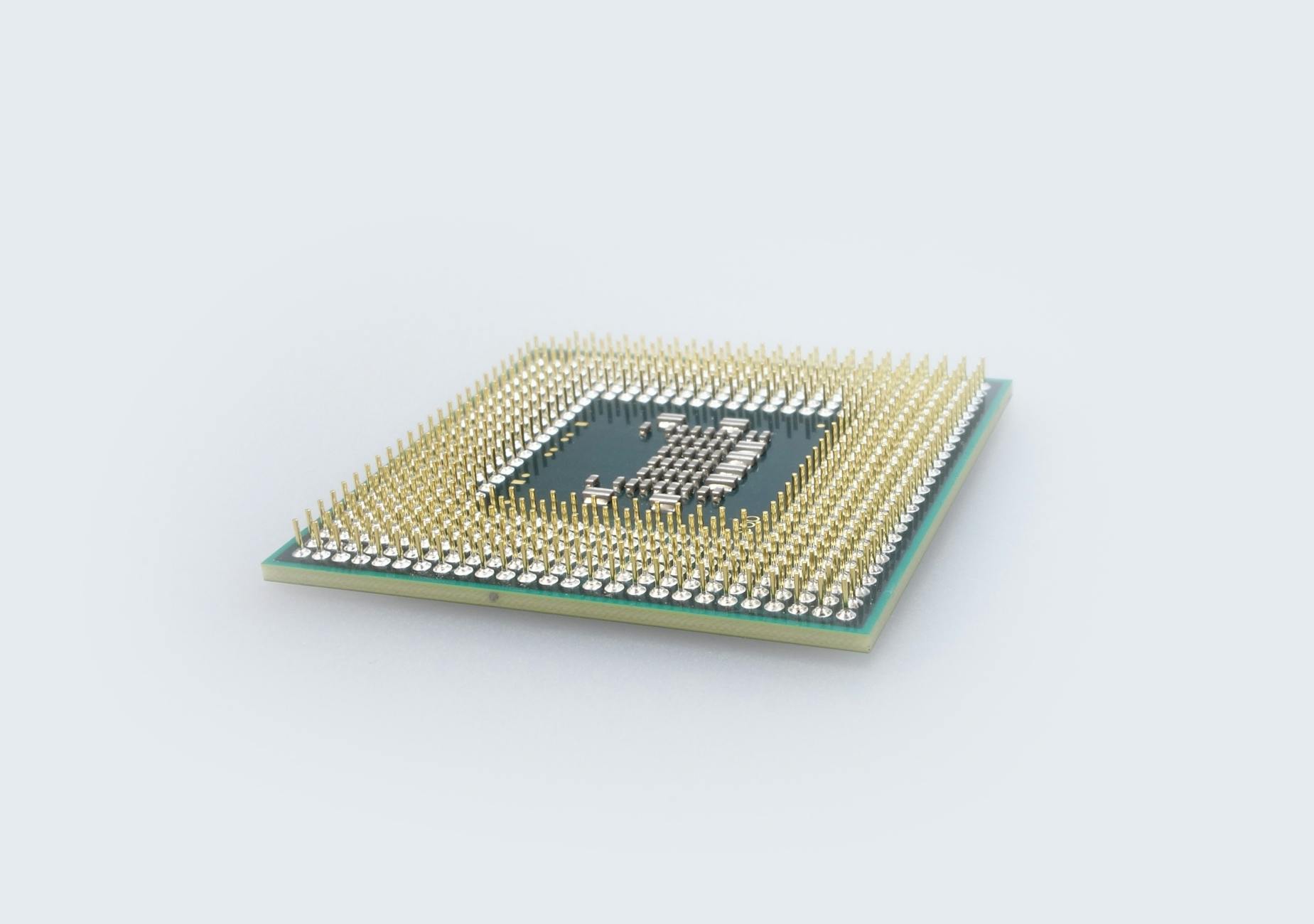
Meta has signed a deal with Amazon Web Services for millions of its in-house Graviton CPUs to power AI agent workloads, a clear signal that chip infrastructure is evolving beyond the GPU-first assumptions that have defined the industry since 2022. GPUs remain dominant for training large models, but agent workloads, including real-time reasoning, code generation, and multi-step task coordination, have different requirements that CPU architectures can handle more cost-efficiently.
Amazon designed its latest Graviton processor specifically for these agentic workloads. The scale of the deal makes it one of the largest CPU commitments in AI infrastructure to date, and the fact that Meta chose it suggests the price-performance case is compelling. For AWS, this is a direct challenge to Nvidia’s dominance in the inference market.
For businesses, the practical implication is gradual but real. As more AI compute shifts toward CPU-based inference, the cost of running agents and automated workflows should fall over the next 12 to 24 months.
Bret Taylor’s Sierra, the AI customer service agent startup, has acquired Fragment, a YC-backed French startup that helps businesses integrate AI into workflows. Financial terms were not disclosed. Fragment’s founders will join Sierra’s team in France and contribute to its European agent development work, according to a blog post by Taylor and co-founder Clay Bavor.
Fragment’s seed round was estimated at around $2 million by PitchBook, making this primarily a talent and technology acquisition. The broader pattern is worth noting: acqui-hires of specialist AI startups with European footprints are becoming routine as larger AI players build out their teams ahead of anticipated enterprise demand.
Anthropic has published a public engineering postmortem addressing recent user reports of quality degradation in Claude Code, its AI coding assistant. Public postmortems are unusual in the AI industry. Most providers manage model quality issues quietly, adjusting models without formal acknowledgement. Anthropic’s decision to publish details of what went wrong and how it was fixed is a notable act of transparency, particularly at a time when developer trust in AI coding tools is commercially significant.
The postmortem is dated 23 April and can be read in full at anthropic.com/engineering/april-23-postmortem. For teams relying on Claude Code in production workflows, it is worth reviewing to understand whether any adjustments to prompting or configuration are warranted.
Worth Watching
Best for: Consumers and SMBs wanting the most capable AI assistant today
GPT-5.5 is live on all paid tiers. Check your model settings to make sure you are running it.
Best for: Developers cutting AI inference costs
V4 Flash at $0.14 per million tokens is the most cost-efficient near-frontier option available right now.
Best for: Reducing news and social media overwhelm
An AI bot that reads the internet for you and surfaces what actually matters, without the scroll.
Here is everything else worth knowing from today’s AI news.
- Nothing launches AI dictation tool. The consumer electronics brand has introduced an on-device dictation tool supporting over 100 languages. TechCrunch
- Era raises $11M for AI gadget platform. The startup is building software infrastructure for AI wearables including glasses, rings, and pendants, betting that AI hardware will fragment across many form factors. TechCrunch
- South Korea arrests man over AI wolf photo. Police charged a man for posting an AI-generated image of a runaway wolf, raising questions about how AI-generated misinformation is handled under existing criminal law. BBC
- Tolaria: open-source markdown knowledge base for macOS. A new open-source app for managing large personal note collections has launched, built by the author of the Refactoring newsletter and tested on 10,000 personal notes. GitHub
- Interactive guide to how LLMs work. A developer has published a free browser-based explainer based on Andrej Karpathy’s foundational language model lecture, useful for anyone building intuition for how these systems actually work. View guide
- MeshCore project splits over trademark and AI code dispute. The open-source LoRa mesh networking project has publicly fractured after a dispute over trademark ownership and the use of AI-generated code contributions. MeshCore blog
- Research: different LLMs converge on similar number representations. A new arXiv paper finds that models from different organisations develop similar internal representations for numbers, suggesting common inductive biases in transformer architectures. arXiv
This is a daily news update for informational purposes only. AI products and policies change rapidly. Verify details directly with providers before making decisions. Nothing here is financial or legal advice.
AI Daily is Cristoniq’s afternoon update on developments in artificial intelligence, published every weekday afternoon.