AI Daily 19 Apr: Claude Design Lands, Agents Can Spend
Anthropic launches Claude Design and Opus 4.7. AI agents gain spending power via Mastercard. World ID 4.0 fights deepfakes. FCA warns on AI signals.
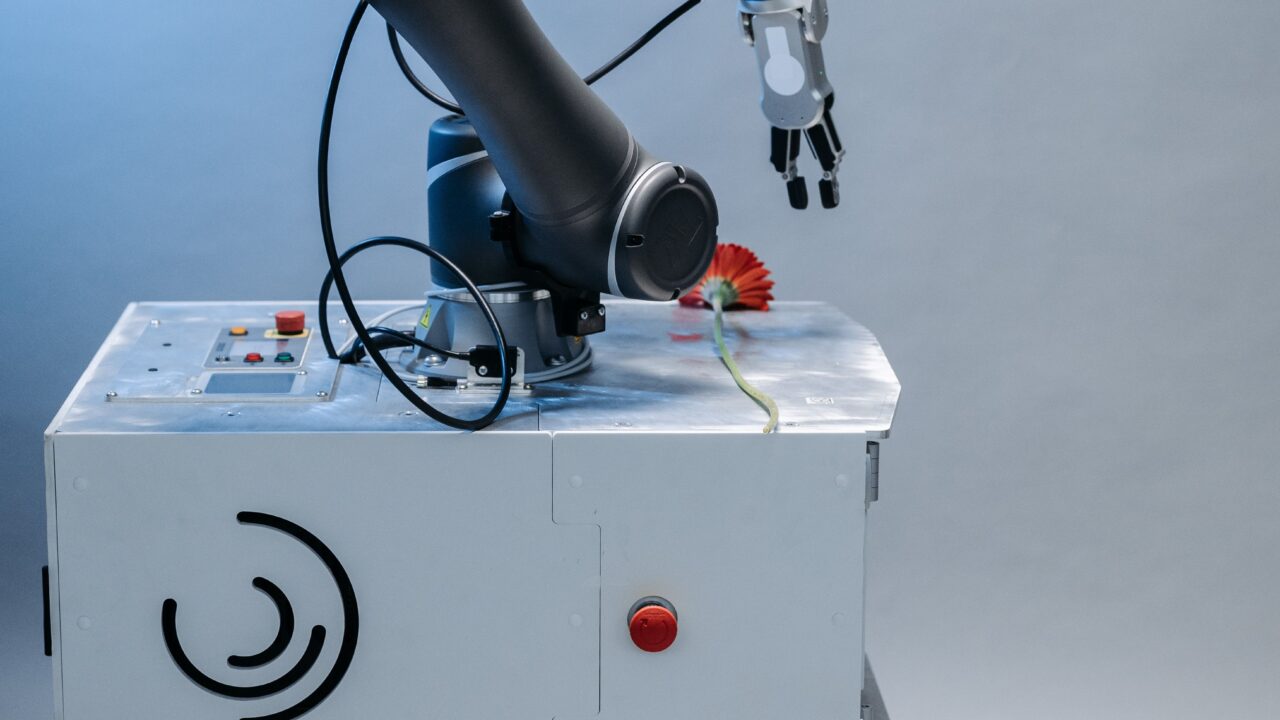
From a new visual design tool at Anthropic Labs to AI agents making autonomous card payments, this weekend’s AI news carried a single clear signal: artificial intelligence is no longer just a chat window. It is becoming an active participant in creative work, financial transactions, and the infrastructure of everyday life.
Anthropic opened the weekend by releasing Claude Design, a new product from its experimental Anthropic Labs division. The tool lets users collaborate with Claude to produce polished visual outputs, including graphics, layouts, and other design work. Unlike the core Claude assistant, which sits squarely in the text and reasoning lane, Claude Design positions the company in territory traditionally held by tools such as Adobe Firefly and Canva’s AI suite. Anthropic Labs has become the company’s dedicated space for exploring products that push beyond the core model, and Claude Design is its most consumer-facing release yet. The announcement follows a pattern: Anthropic builds trust with enterprise developers through its API and safety research, then uses Labs to test what happens when those capabilities reach everyday users.
The release came just a day after Anthropic unveiled Claude Opus 4.7, the latest version of its most capable model. Opus 4.7 brings improvements across coding, multi-step agent tasks, and vision, with the company emphasising greater consistency and thoroughness in long-running jobs. The model sits at the top of the Claude 4 family, above the Sonnet and Haiku variants used in lighter workloads. For businesses running complex automated workflows, the upgrade matters because agent tasks that previously required regular human review can now run further without intervention. Anthropic noted stronger performance on instruction-following across multi-turn conversations, which is increasingly what enterprise deployments rely on.

Sam Altman’s World project announced what it is calling World 4.0, the biggest overhaul yet of its World ID identity system. The upgrade reframes World ID as “full-stack proof of human” infrastructure, targeting a specific and growing problem: AI-generated bots, deepfakes, and synthetic identities are making it harder to know whether the person you are dealing with online is real. World 4.0 ships a dedicated World ID app, adds enterprise integrations with Tinder for matching verification and Zoom for deepfake detection during calls, and introduces ticketing tools designed to prevent bot-driven ticket scalping. The project uses iris-scanning hardware to generate a unique cryptographic proof that a person is biologically human, without storing biometric data. As AI-generated content spreads, demand for that kind of verification is rising fast.
Mastercard and crypto payments startup Lobster.cash announced an integration that lets AI agents make autonomous card purchases. Until now, AI agents could draft emails, book calendar slots, and browse the web, but most stopped short of spending money without a human clicking to confirm. The Mastercard-Lobster.cash setup gives agents a card they can use directly, governed by rules the business or individual sets in advance. The immediate use case is business process automation: an agent handling procurement can order supplies, pay a subscription, or settle a small invoice without waiting for a human approver. The broader implication is that AI agents are beginning to gain something resembling economic agency, and the financial rails being built now will shape how much autonomy they are ultimately granted.
Ethereum co-founder Joseph Lubin used a weekend interview to argue that decentralised infrastructure is essential to keeping AI accountable. Lubin, who runs blockchain company Consensys, warned that autonomous AI agents need to transact and coordinate on open networks rather than platforms controlled by a handful of large technology companies. “We could be in trouble,” he said, if AI infrastructure stays concentrated in too few hands. His argument is that decentralised systems allow AI agents to check on one another, creating accountability that closed platforms cannot replicate. The view is gaining traction in both the crypto and AI safety communities as agentic systems move from demonstrations into real deployments.
The UK’s Financial Conduct Authority is conducting a long-term review into how artificial intelligence is reshaping retail financial services. Sheldon Mills, the FCA’s Executive Director for Consumers and Competition, addressed the review at the regulator’s Supercharged Sandbox Showcase, framing the challenge as designing regulation for a period of deep uncertainty. The FCA is paying particular attention to AI-driven advice tools, personalised financial products, and the risk that algorithmic systems could disadvantage specific consumer groups. Separately, the regulator issued a fresh warning this week against an unauthorised firm calling itself @ProSignals Ai, which was promoting AI-branded trading signals to retail consumers without FCA authorisation. The message is consistent: the regulator is watching closely, moving cautiously, and fully prepared to act against firms using the AI label to obscure a lack of proper authorisation.
Worth Watching
Best for: Visual and graphic design with AI collaboration
Anthropic’s new Labs tool for producing polished visuals. Early access, free to try.
Best for: Proving you are human online in the AI era
World 4.0 expands biometric proof-of-human to Tinder, Zoom, and ticket platforms.
Best for: Businesses automating AI agent payments
Partners with Mastercard to give AI agents a card for autonomous purchasing. SMB-ready.
Here is everything else worth knowing from today’s AI news.
- Ledger publishes AI security roadmap for the agentic economy – The hardware wallet maker appointed its first Chief Human Agency Officer and set out how crypto self-custody must evolve as AI agents gain the ability to sign transactions. The Block
- HIVE Digital raises $75m for GPU and AI data centre expansion – The bitcoin miner is issuing zero-coupon notes to fund AI compute infrastructure as it pivots away from pure cryptocurrency mining. The Block
- FCA consults on guidance for UK’s forthcoming crypto regime – The regulator launched a public consultation on the framework that will govern digital asset businesses operating in the UK. FCA
- FCA sets out vision for open finance – The regulator published a strategy to extend open banking principles to a broader range of financial products and consumer data. FCA
- CFTC using AI to offset a 25% workforce reduction – The US commodities watchdog says artificial intelligence and automation are allowing it to cover its expanded mandate over crypto and prediction markets with significantly fewer staff. CoinDesk
- Anthropic expands compute partnership with Google and Broadcom – The company secured multiple gigawatts of next-generation AI infrastructure capacity in a deal with two of the industry’s biggest hardware players. Anthropic
- Vas Narasimhan joins Anthropic’s Long-Term Benefit Trust board – The Novartis chief executive joins the independent board tasked with ensuring Anthropic remains accountable to its mission of safe AI development. Anthropic
This is a daily news update for informational purposes only. AI products and policies change rapidly. Verify details directly with providers before making decisions. Nothing here is financial or legal advice.
AI Daily is Cristoniq’s daily guide to developments in artificial intelligence – published every evening.