10 September 2026 PM: Crypto losses widen as US producer inflation rises
Bitcoin nears $77,000 as crypto losses widen and US producer inflation rises. Compare the morning prices and the next consumer inflation checkpoint.

Bitcoin has lost the relative calm it showed this morning, slipping towards $77,000 as Ether, Solana and XRP also retreat. The afternoon picture is a broader decline, alongside a fresh US report showing producer prices rising faster in August than July. That gives readers two developments to separate: verified weakness in crypto prices and new inflation information, without assuming one proves the cause of the other.
The market has shrunk further since the morning checkpoint. At around 14:05 BST on 10 September, CoinGecko’s global figures put total crypto market capitalisation, the estimated value of circulating coins, near $2.64 trillion, against roughly $2.68 trillion this morning. Bitcoin dominance, its share of that valuation, is around 58.5%. The lower total describes a change in estimated market value, not the amount of cash withdrawn from exchanges.
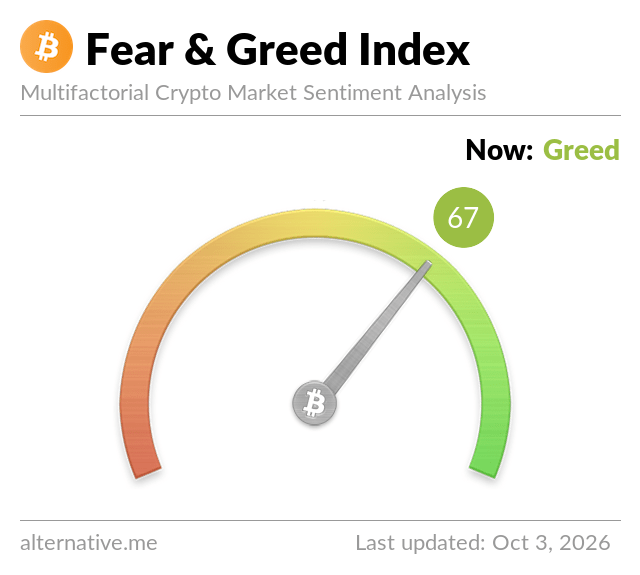
Alternative.me’s Fear and Greed Index, a daily Bitcoin sentiment measure using inputs including volatility and momentum, remains at 69 in Greed. That is the same daily reading used this morning. It does not update with every price movement and is not a forecast, so it can coexist with an afternoon of falling prices.
| Timeframe | Regime | What it means |
|---|---|---|
| 1 hour | Bearish | Price down about 1.30% over this period. |
| 4 hours | Bearish | Price down about 1.49% over this period. |
| Daily | Bearish | Price down about 3.29% over this period. |
| Weekly | Bearish | Price down about 1.40% over this period. |
| Monthly | Bullish | Price up about 19.40% over this period. |
The table describes observed Bitcoin changes using CoinGecko’s percentage data and chart observations for the four hour comparison. Moves smaller than 0.5% either way are labelled Neutral, with larger gains Bullish and equivalent losses Bearish. These are descriptive labels, not trading signals. Weekly and monthly refer to rolling seven and 30 day periods.
Market capitalisation is calculated from prices and circulating supply. A relatively small set of trades can change the price used to value a much larger stock of coins. That is why the difference between two market totals should not be reported as an equivalent cash outflow, even when the overall direction is clearly lower.
Bitcoin is around $77,000, or £57,000, down about 3.2% over 24 hours. The CoinGecko quote is approximately 1.8% below the rounded $78,350 recorded in this morning’s account of Bitcoin holding overnight ground. That is a meaningful change in the day’s story: the limited overnight movement has given way to additional lost ground.
The two percentages answer different questions. The daily return compares now with approximately the same time yesterday, while the morning comparison isolates the interval covered by this update. Both are negative here. Unlike a case where a daily percentage worsens simply because an older comparison drops out, the lower quoted price confirms an actual decline between our two checkpoints.
For UK readers, the pound figure comes from CoinGecko’s sterling quote. Exchange rate changes mean it need not show exactly the same percentage return as the dollar price. The practical reading is straightforward: Bitcoin has weakened during the UK day, and its earlier resilience should no longer be mistaken for stability across the whole session.
Ether has fallen to around $2,420, or £1,790, with a daily decline of roughly 3.6%. Ether, the coin used on Ethereum, is approximately 2.3% below this morning’s $2,476. That places it further from the $2,500 reference discussed in yesterday afternoon’s report on Ether’s recovery. The advance described then has not survived into this snapshot.
This matters because the weakness is no longer mainly a contrast between steady Bitcoin and falling smaller coins. Ether has also lost appreciable ground since morning. These price observations do not establish a change in Ethereum’s technology, use or network health. They establish a market decline, and attaching a more specific explanation would require separate evidence.
Solana and XRP remain the weaker pair on the daily comparison. Solana is near $99.20, or £73.40, down approximately 5.1% over 24 hours and around 2.4% from this morning’s $101.70. XRP is near $1.36, also down about 5.1% over the day, compared with the morning report’s rounded $1.39. Those rounded XRP prices indicate roughly a 2% intraday decline, rather than a precise return.
Solana’s move below $100 is an easy reference for readers following successive updates, but a round number is not proof of a technical barrier or a destination for the next move. Together, these four coins show declines across the sample. They do not establish that every cryptocurrency has fallen, or that every seller shares the same motivation.
US producer inflation has accelerated, adding a concrete development to the afternoon briefing. The Bureau of Labor Statistics reported that its Producer Price Index for final demand, measuring prices received by producers, rose 0.4% in August after 0.1% in July. The monthly figures are seasonally adjusted. Prices were 5.4% higher than a year earlier on the unadjusted annual measure.
The report also shows goods prices rising 1.1% and services prices increasing 0.1%. That distinction helps explain why a single headline does not describe every part of the economy. This is producer inflation, rather than a direct measure of household shopping bills. Tomorrow’s consumer price figures will answer a related but different question.
Inflation matters to crypto because it can influence expectations about interest rates and investors’ appetite for volatile assets. However, the release and the price decline appearing in the same afternoon are not sufficient evidence of causation. Without verified evidence about market expectations and the immediate reaction, calling this an inflation driven sell-off would claim more than these sources establish.
What to watch next: whether today’s lost ground returns and what Friday’s consumer inflation report shows. Compare Bitcoin with the morning’s approximate $78,350 and Ether with $2,476 when the evening update arrives. Recovering those references would mean the intraday losses had been reversed; remaining below them would mean they had persisted. Neither outcome alone establishes a longer trend.
Then check whether Solana returns above $100 alongside improvement in XRP, rather than relying on Bitcoin alone to describe the wider picture. Finally, the BLS calendar schedules August’s Consumer Price Index for Friday 11 September at 13:30 BST. Read that release on its own terms: producer prices are useful context, but they cannot tell us tomorrow’s consumer result in advance.
Crypto Daily is Cristoniq’s afternoon update on cryptocurrency markets, published every weekday for informational purposes only. Nothing here is financial advice. Always do your own research before making any investment decisions.