How to Store Crypto Safely: The One Rule That Matters
Most people think carefully about buying cryptocurrency. Far fewer think about where it lives. Here is what every holder needs to know about wallets, seed phrases, and keeping coins secure.
The big crypto stories are usually about price. Someone bought at the right moment. Someone else sold too early.
What gets far less attention is a quieter kind of loss. Some people bought the right asset at the right time and still ended up with nothing. They lost their holdings not to a market crash, but because they never thought carefully about where their crypto was kept.
Learning how to store crypto safely is not an advanced topic you can come back to later. It is something worth getting right before your holdings are worth protecting. The principles are not complicated. The consequences of getting them wrong can be permanent.
What a crypto wallet actually does
The word “wallet” is misleading. A crypto wallet does not hold your coins the way a physical wallet holds cash. Your crypto never leaves the blockchain. It sits there, assigned to a specific address.
What controls access to that address is a private key. This is a long string of characters that proves you have the right to move the funds. Without the private key, the coins cannot be touched.
With it, they can be moved in seconds to anywhere in the world. There is no way to reverse the transaction. Whoever controls the private key controls the crypto.
The risk of leaving crypto on an exchange
If your crypto is sitting on an exchange, you do not hold the private key. The exchange does. Your account balance is a number in their database. You have a claim on that amount, but the actual asset is held by them.
This is the logic behind a phrase you will hear constantly in crypto circles: not your keys, not your coins. If the exchange is hacked, freezes withdrawals, or goes under, your access to those funds depends entirely on what happens to that business. This is not theoretical.
When FTX collapsed in November 2022, customers were locked out of their accounts. Many lost everything they had stored there. The exchange held the keys, not the customers. What happened at FTX and what it meant for ordinary investors tells the full story of what customers could and could not do.
Exchanges are not always the wrong place to keep crypto. For smaller amounts you are actively trading, a reputable FCA-registered exchange with two-factor login enabled is manageable. But for larger amounts you intend to hold long-term, self-custody is worth understanding.
Understanding how to store crypto safely begins with one distinction. Custodial arrangements mean a third party holds your private keys. Non-custodial arrangements mean you hold them yourself. That single difference shapes everything else about security.
Hot wallets versus cold wallets
To store crypto safely in self-custody, you need a wallet where you hold the private key. There are two broad types: hot wallets and cold wallets. The difference matters because they offer very different trade-offs between convenience and security.
A hot wallet is software connected to the internet. Common examples include browser extensions like MetaMask and mobile apps like Trust Wallet. They are convenient: you can access your funds quickly and manage multiple assets in one place. But because the wallet lives on an internet-connected device, it is exposed to malware, phishing, and browser exploits.
Hot wallets suit smaller amounts you use actively. They are not the right way to store crypto safely for long-term holdings. For that, a cold wallet is the better choice.
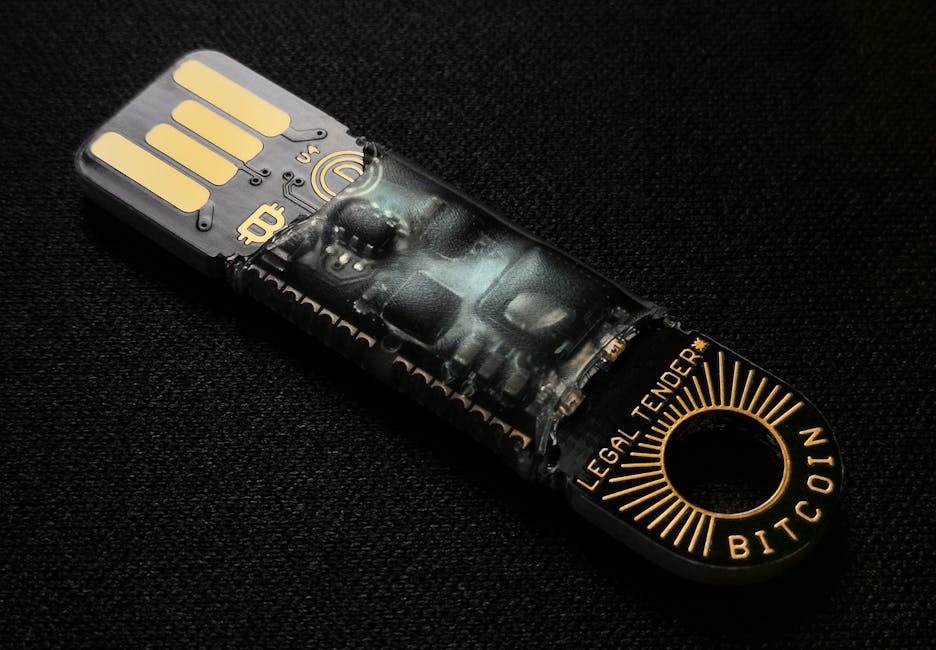
A cold wallet stores the private key offline. The most common version is a hardware wallet: a small physical device with a secure chip that keeps your keys off the internet. To sign any transaction, you must interact with the device directly.
Ledger and Trezor are the two most established brands. Prices range from around 50 to 150 pounds. When you buy one, order directly from the manufacturer. Devices bought second-hand or through unofficial sellers may have been tampered with.
Choosing a hardware wallet is one of the clearest steps you can take if you want to store crypto safely long-term. Setup is straightforward. You connect the device, generate your seed phrase, and transfer your holdings. After that, the private key never touches the internet.
Your seed phrase: the one thing you must get right
When you set up any self-custody wallet, you are given a seed phrase. This is a list of twelve or twenty-four words, generated at the moment of wallet creation. It can reconstruct your wallet on any compatible device if the original is lost, damaged, or stolen.
The seed phrase is the master key. Anyone who has it can access your wallet and move your funds. It bypasses passwords and device access.
Treating the seed phrase with care is the most important part of knowing how to store crypto safely. If someone gets your seed phrase, they get your crypto. There is no way to recover access without it. The full explanation of what a seed phrase is and why it must be protected covers how this works in detail.
The most common mistake is storing the seed phrase digitally. Screenshots, notes apps, emails, and cloud backups all create exposure. A data breach or hacked account is all it takes. The correct approach is to write it on paper and keep it somewhere physically secure.
Many people keep two paper copies in different locations, as a precaution against fire or flood. Metal backup plates that survive extreme conditions are also available. That level of precaution is worth it if the amount at stake is significant.
How to store crypto safely: a practical approach
If you lose your seed phrase and access to the device, your funds are gone. There is no support team to call and no account recovery process. The blockchain does not know who you are. This is the full weight of self-custody: complete control, and complete responsibility.
The UK National Cyber Security Centre guidance on crypto scams is worth reading before you set up any self-custody arrangement. It covers common attack methods and how to protect your holdings from them.
A sensible approach for most people looks like this. Keep small amounts for active use on an FCA-registered exchange with two-factor login. Move larger long-term holdings to a hardware wallet.
Write your seed phrase on paper and store it safely, with a second copy elsewhere. Never share it with anyone, for any reason.
Wherever your crypto is right now, it is worth checking that your arrangement matches what you actually need. The steps to store crypto safely are not complicated. But the cost of getting them wrong can be permanent, and there is no way to undo a mistake after the funds are gone.
Before you get to the question of how to store crypto safely, you need to know how to buy it. The guide to buying cryptocurrency in the UK covers FCA registration and choosing a regulated exchange. Storage is the natural next step after your first purchase.
The question worth sitting with is simple. If the platform you use disappeared tomorrow, what would happen to your funds? If the answer is uncomfortable, act on that discomfort before it becomes relevant. Most people only find out whether their setup was right after something goes wrong.
This article is for informational purposes only and does not constitute financial advice. Cryptocurrency investments carry significant risk. Always do your own research before making any financial decisions.