Platform Fee: Percentage vs Flat Fees Explained Simply
Wondering which platform fee suits your portfolio? This UK guide covers percentage and flat fees, with a worked example and reading tips.
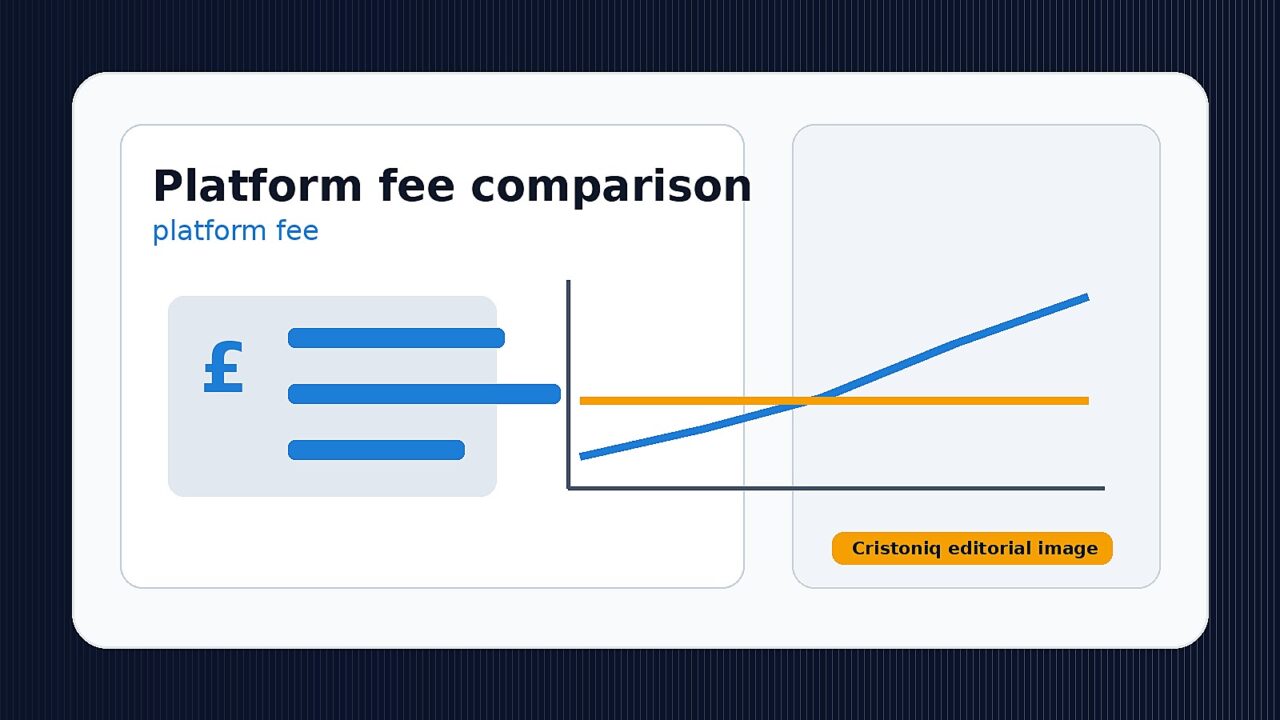
Choosing between a percentage and a flat platform fee looks simple on a comparison table, but the answer can change as soon as your portfolio starts to grow. This guide walks through the two main fee shapes in the UK investment platform market, the trade-offs each carries, and the reading habits that help you compare platforms on like-for-like terms.
The Short Version
Key Takeaways
- Percentage platform fees scale with the value of your portfolio, which can suit smaller balances but become more expensive as the pot grows.
- Flat platform fees stay fixed in pounds, which can look expensive early on but competitive once the portfolio reaches a larger size.
- The useful comparison is the fee in pounds on your likely balance, not the headline rate on a platform table.
- Trading charges, wrapper fees and fund costs still matter, so the platform fee should be read inside the wider cost structure.
Why platform fee shapes look different at different portfolio sizes
If you are comparing UK investment platforms, the platform fee is often the first number you see. Headline figures can look small, yet two investors with very different portfolio sizes can end up paying very different amounts for what looks like the same product. UK platforms still use several fee models: some charge a percentage of assets, some charge a flat annual fee, and some combine the two. For a reader picking between them, the question is not which fee is cheapest in absolute terms but which one suits the balance they actually hold and expect to hold.
The shape of the fee matters because the same headline number can mean very different things to a £4,000 ISA and a £40,000 ISA. Reading the small print, and checking how the provider calculates the fee on smaller balances, is the single biggest step most readers can take to avoid surprises a year in. Many readers also find it useful to keep a simple spreadsheet of their expected balance at the end of each year so they can compare both fee shapes against their actual trajectory rather than the balance they hold today.
What a percentage platform fee means
A percentage platform fee is charged as a set fraction of the value of the assets held on the platform. The amount you pay in pounds rises and falls with your portfolio value. On many retail platforms, percentage fees are quoted as an annual rate, with lower tiers often reserved for larger balances. Most providers also offer a small discount for holding a larger balance or for holding in a specific wrapper such as a SIPP rather than a general investment account.
For example, a 0.25 percent annual platform fee on a £4,000 portfolio is roughly £10 a year. On a £40,000 portfolio, the same percentage works out to about £100 a year. The percentage has not changed, but the pounds have. This is why a percentage fee can be gentle on small balances and heavier on large ones, and why platform comparison sites usually quote percentage fees prominently: they scale with what you have. The trade-off is that as your portfolio grows, the fee in pounds grows with it, which can erode compounding over longer horizons if no tier discount applies.
What a flat platform fee means
A flat platform fee is a fixed amount charged each year, regardless of how much you hold. It might be £40, £60 or £120 a year, sometimes with tiered caps. According to a Moneyfacts comparison published in early 2024, flat-fee platforms tend to be more competitive for larger portfolios, while percentage-fee platforms tend to be more competitive for smaller portfolios once the headline rate is compared fairly across providers.
This shape can suit investors who expect their balance to grow over time, since the fee stays the same while the portfolio may get bigger. It can feel less comfortable in the early years when every pound of fees feels like a noticeable drag on a small pot. The break-even point between a percentage and a flat fee at a given provider is usually disclosed in the platform’s key features document, and is one of the most useful numbers to look up before opening an account. Some platforms also publish a worked example in their fees and charges document, which is worth reading alongside the headline schedule.
Flat fees also need to be read alongside trading charges and fund costs. A platform can look cheap on custody alone but become less competitive if every fund switch, share trade or regular investment carries a separate dealing charge. That is why a fair comparison should include the platform fee, the expected number of trades and the ongoing fund charges in the same simple annual estimate. A reader who rebalances twice a year will face a different answer from a reader who buys monthly. For a fuller distinction, see this guide to platform fees versus dealing fees, then come back to the flat-fee table with both numbers in view.
One final check is to compare the same balance after future contributions. A platform fee that looks marginal today can become expensive if regular saving pushes the account into a new tier, while a flat fee can become more attractive only after the balance is large enough to absorb it comfortably.
A worked example comparing two fee shapes
Consider two readers, Priya and Marcus, each picking between the same pair of platforms. Platform A charges 0.25 percent per year. Platform B charges £60 per year, capped at £120. Priya holds £5,000 in an ISA and expects to add £250 a month. On Platform A she pays about £12.50 in year one, rising as her balance grows. On Platform B she pays £60 in year one and £60 in year two, until her balance crosses roughly £24,000 at which point the flat fee becomes the cheaper option in pounds per year.
Marcus holds £80,000 and adds £500 a month. On Platform A he pays £200 in year one, scaling upward as his balance grows. On Platform B he pays the cap of £120 in year one and £120 each subsequent year. For Marcus the flat fee is clearly the cheaper option. The point of the example is not to recommend either platform but to show that the right answer depends on the balance a reader actually has, not on which headline rate looks smaller.
How to read platform fee tables
Three habits help readers compare fee tables fairly. First, check whether the fee quoted is for the platform wrapper alone or for the underlying funds as well. Fund-level charges can add 0.10 percent to 0.75 percent on top of the platform number, depending on whether the reader picks active or passive funds. According to the lang cat 2024 landscape report, the gap between the cheapest and most expensive fund ranges across mainstream UK platforms is around 0.40 percent per year, which over a 20-year investment horizon can compound into a meaningful difference in pounds.
Second, check whether the percentage fee is calculated on the value at month end, quarter end, or a daily average across the period. The differences are usually small but can show up in the annual figure. Third, check whether the flat fee is per account or per investor, since readers with multiple ISAs and a SIPP can end up paying the flat fee twice. Applied together, those three habits make fee tables much easier to read on like-for-like terms, and they make it harder for a platform to look cheaper than it actually is.
Further reading and sources: For regulatory background on UK investment platforms, see the FCA investment platforms market study. For related Cristoniq background, see Platform Fee Basics: Percentage Fees vs Flat Fees and fund charges.
This article is for general education for UK readers. It is not financial, investment or tax advice.
A Worked Example
Imagine a reader with a £6,000 stocks and shares ISA choosing between a platform charging 0.25 percent a year and a platform charging a flat £48. The percentage fee works out at about £15 in year one, which is meaningfully cheaper while the balance is small.
Now imagine the same reader keeps adding money and the account grows towards £30,000. The 0.25 percent fee rises to roughly £75 a year, while the flat fee stays £48. The better answer changes because the balance changed.
That is why a platform comparison should be tied to the balance you are likely to hold over the next few years, not just the amount sitting in the account today.
What This Means For You
If you are starting with a smaller ISA or junior account, a percentage platform fee can be perfectly sensible because it keeps the cash cost low while the balance is still modest. If you already hold a larger ISA, SIPP or family portfolio, a flat fee may deserve a closer look because the annual pounds saved can become more visible.
Before switching, write down the account size, expected contributions, fund or share trading frequency and any wrapper-specific charge. Then compare the total pounds over one year and over three years. That stops a cheap-looking headline fee from distracting you from the real cost pattern.
In Plain English
A percentage platform fee is usually gentler on smaller balances, while a flat fee can start to win as the portfolio grows. The right answer depends on the size of the pot you expect to hold, not just the rate shown on the marketing page.
This article is for general financial education only. It is not financial advice or personal investment advice. Investments can fall as well as rise, and you may get back less than you invest.