27 June 2026: GPT-5.6 Sol meets the teamwork push (AM)
GPT-5.6 Sol, Claude Tag and Google's latest Gemini business tools all point to the same shift, AI is getting easier to share, govern and use at work.
This morning’s AI story is less about one spectacular launch and more about how quickly useful work is being wrapped into the tools people already pay for. Premium chat models are being refreshed, team sharing layers are getting thicker, and business software is starting to treat AI as an operating surface rather than a side panel.
OpenAI says it is previewing GPT-5.6 Sol for ChatGPT Plus users, with a focus on stronger coding, writing and complex task handling. The update comes from an OpenAI post, so the performance framing is vendor reported and should be treated that way. Even so, the practical point for paying users is straightforward: premium AI subscriptions are increasingly judged on whether they reduce friction in real work, not whether they win one more benchmark chart.
That matters because the premium AI market is now crowded enough that users can compare it directly against alternatives. If a newer model is better at drafting, reviewing code or handling multi step prompts, the gain shows up in time saved rather than in laboratory bragging rights. Cristoniq’s explainer on how AI systems decide when to use a tool is useful context here, because the next layer of value is no longer just better text output. It is better output that can move through a task without forcing the user to restate every step.
The thing to watch is how much of the improvement survives contact with everyday use. Better coding and writing claims are easy to make at launch. The harder test is whether people actually reach for the tool again after a week of real deadlines, messy prompts and documents that need judgement rather than polish.
Anthropic’s Claude Tag pushes in a different but equally important direction, making it easier for teams to package and share Claude work inside an organisation. In Anthropic’s announcement, the emphasis is not only on one more model surface. It is on turning useful AI outputs into something colleagues can pass around, adapt and reuse without rebuilding the workflow from scratch every time.
That shift matters more than it first appears. A lot of business AI still fails because one person finds a clever prompt and everyone else gets a screenshot of the result instead of the working setup. Tools that preserve context, structure and repeatability are far more valuable than tools that simply create a good one off answer. That is also where Cristoniq’s guide to what MCP is becomes relevant, because the practical future of workplace AI depends on how cleanly tools connect to documents, data and permissions around them.
If Claude Tag lands well, the real effect will not be a prettier interface. It will be a lower cost of reuse. Teams will spend less time copying outputs into email threads and more time treating AI work as something that can be reviewed, approved and improved collectively.
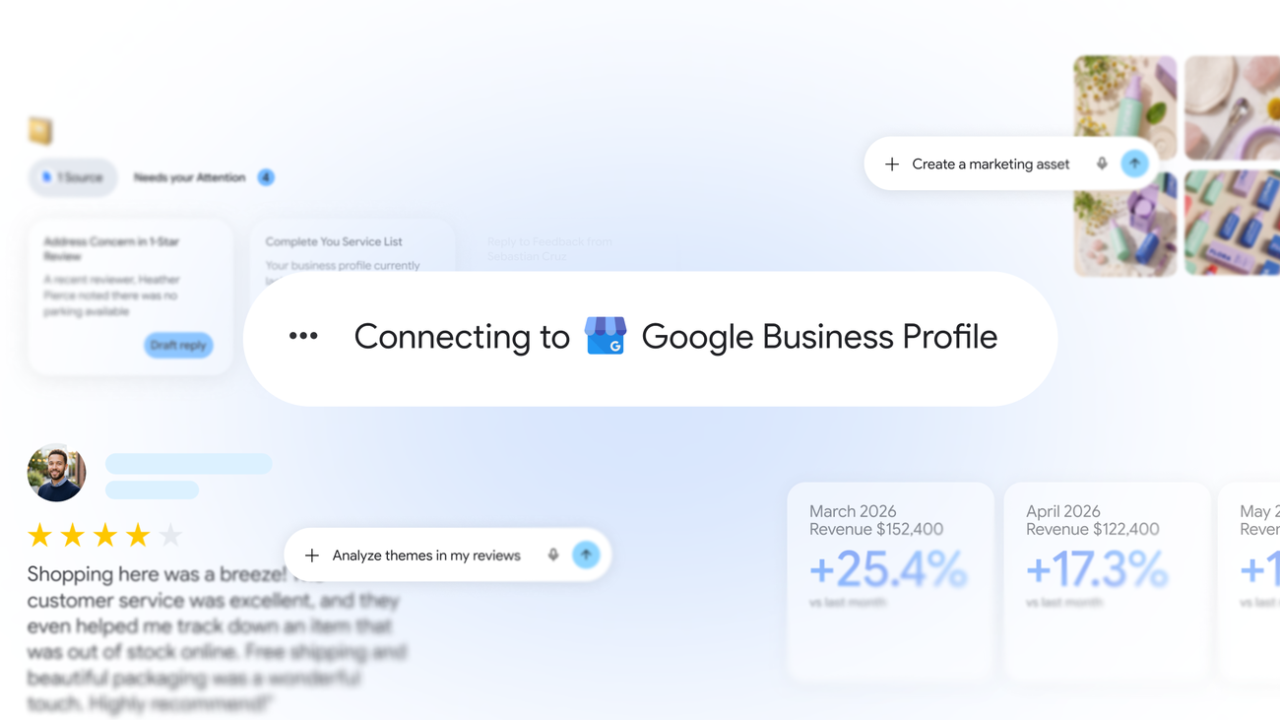
Google is also aiming directly at ordinary business use, adding Gemini features that touch Google Business Profile, Maps, Drive, customer calls and AI Overviews. Google’s official post matters because it moves AI away from a standalone chat experience and into the systems a small company already relies on. For many readers, that is more relevant than a new flagship model, because it changes the places where AI first shows up during the working day.
The small business angle is especially important. A retailer, local service firm or small agency does not need a research lab to benefit from AI if the tools appear where customer messages, files and visibility decisions already live. That is a more realistic adoption path than expecting every company to design bespoke agents from scratch. It also makes review and governance more urgent, because once AI touches customer facing workflows, mistakes stop being theoretical very quickly.
OpenAI’s separate Broadcom inference chip announcement is less visible to end users today, but it may matter more to prices and availability over time. According to the OpenAI announcement, the company is working on a custom chip called Jalapeno to run large language models more efficiently. That is still a vendor reported infrastructure story, not an immediate promise of cheaper subscriptions, but it points in a clear direction.
Inference is the cost of serving the answer after the model has already been trained. If major providers can control more of that stack, they gain room to tune latency, cost and supply rather than depending entirely on general cloud hardware. For users and smaller firms, that matters indirectly but materially. Pricing tiers, rate limits and product availability are often shaped by these back end decisions long before the marketing pages change.
NVIDIA’s NeMo AutoModel workflow on Hugging Face rounds out the picture, because easier model adaptation is becoming part of the mainstream toolkit. The Hugging Face post presents a clearer route to fine tune models with NVIDIA tooling, which is important for teams that want domain specific assistants without building a full research operation. That is not as flashy as a consumer launch, but it is exactly the sort of progress that turns AI from interesting demo into durable infrastructure.
For businesses, adaptation is usually where the real value starts. A general model may be impressive, but it becomes genuinely useful when it can absorb internal terminology, follow review rules and stay inside clear limits. That is why governance matters as much as capability. Cristoniq’s explainer on AI governance is relevant here, because the future winners are likely to be tools that make customisation easier without making oversight harder.
The thing to watch next is whether all of these upgrades actually converge on the same outcome: AI that is easier to compare, easier to share and easier to control. That is a better sign of maturity than any single launch day claim, and it is the standard the next wave of premium and workplace tools will increasingly be judged against.
Worth Watching
Best for: Premium writing and coding work
OpenAI is betting that practical output quality keeps paid users engaged.
Best for: Reusable team AI workflows
Anthropic is treating shareable AI work as a product category, not a side effect.
Best for: Small business customer workflows
Google is placing AI inside the tools many small firms already use every day.
Here is everything else worth knowing from today’s AI news.
- OpenAI’s chip work is a pricing and capacity story before it becomes a user facing feature, which is why it matters even if most readers never see the hardware directly.
- Google’s push into Business Profile, Maps and Drive suggests the mainstream AI battleground is moving into existing software rails, not only into new dedicated assistants.
- Fine tuning is becoming easier to buy into as a workflow, which should matter to smaller teams that need adaptation without hiring a research unit.
This is a daily news update for informational purposes only. AI products and policies change rapidly. Verify details directly with providers before making decisions. Nothing here is financial or legal advice.
AI Daily is Cristoniq’s daily guide to developments in artificial intelligence, published every morning.