Fund risk ratings explained: what 1 to 7 and 1 to 10 mean
Fund risk ratings explained: understand seven-point and ten-point scores, their limits, UK changes and the checks to make when comparing investments.

A fund risk rating is a starting point for understanding an investment, not a safety certificate. Here is how to read the number, what to check beside it, and why UK investors may now encounter both seven-point and ten-point scales.
The short version
Fund risk ratings group investments by a defined measure of risk. Higher numbers generally indicate greater risk within the same system, not better performance. A rating does not tell you the most you could lose or whether a fund suits your circumstances. Always check the scale, its explanation and the underlying investments before comparing two scores.
What does a fund risk rating measure?
Many ratings draw on volatility: how much an investment’s value moves around. A fund with a relatively smooth price history will look different from one with frequent large swings. That is useful information, but a smooth history cannot promise a smooth future.
The first question is which system you are reading. A key investor document, a pension provider’s factsheet and a platform’s comparison tool may not use identical methods. The label and accompanying explanation matter as much as the highlighted number. For the wider document, our guide to reading a fund factsheet walks through holdings, charges and performance alongside risk.
For example, Aviva describes its own fund ratings as running from 1, lowest volatility, to 7, highest volatility. It uses historical performance and information from fund managers, and reviews ratings annually. That describes Aviva’s approach, not a universal rule for every seven-point scale.
How to read a 1–7 fund risk rating
You may see the term Synthetic Risk and Reward Indicator, or SRRI. This is a seven-point indicator of relative fund risk. Fidelity’s explanation of its investment filters distinguishes it from the new UK risk score and stresses that lower risk does not mean no risk.
Read the scale as categories, not percentages. A score of 4 out of 7 does not mean a 4% chance of loss, a maximum loss of 4%, or a forecast return of 4%. Nor is a fund rated 6 necessarily twice as risky as one rated 3: the numbers are category labels, not a simple multiplier.
A higher score is not a star rating or an endorsement of the manager. Choosing the highest number does not identify the best fund. Choosing the lowest does not remove the need to understand what you own.
Why UK documents may show a 1–10 scale
As at 10 September 2026, the UK is in a transition period for Consumer Composite Investments, or CCIs, a category covering products including investment funds. The Financial Conduct Authority’s implementation timetable allows manufacturers to use the new product summary from 6 April 2026 or continue with their existing disclosure requirements during the transition. The new regime comes fully into force on 8 June 2027.
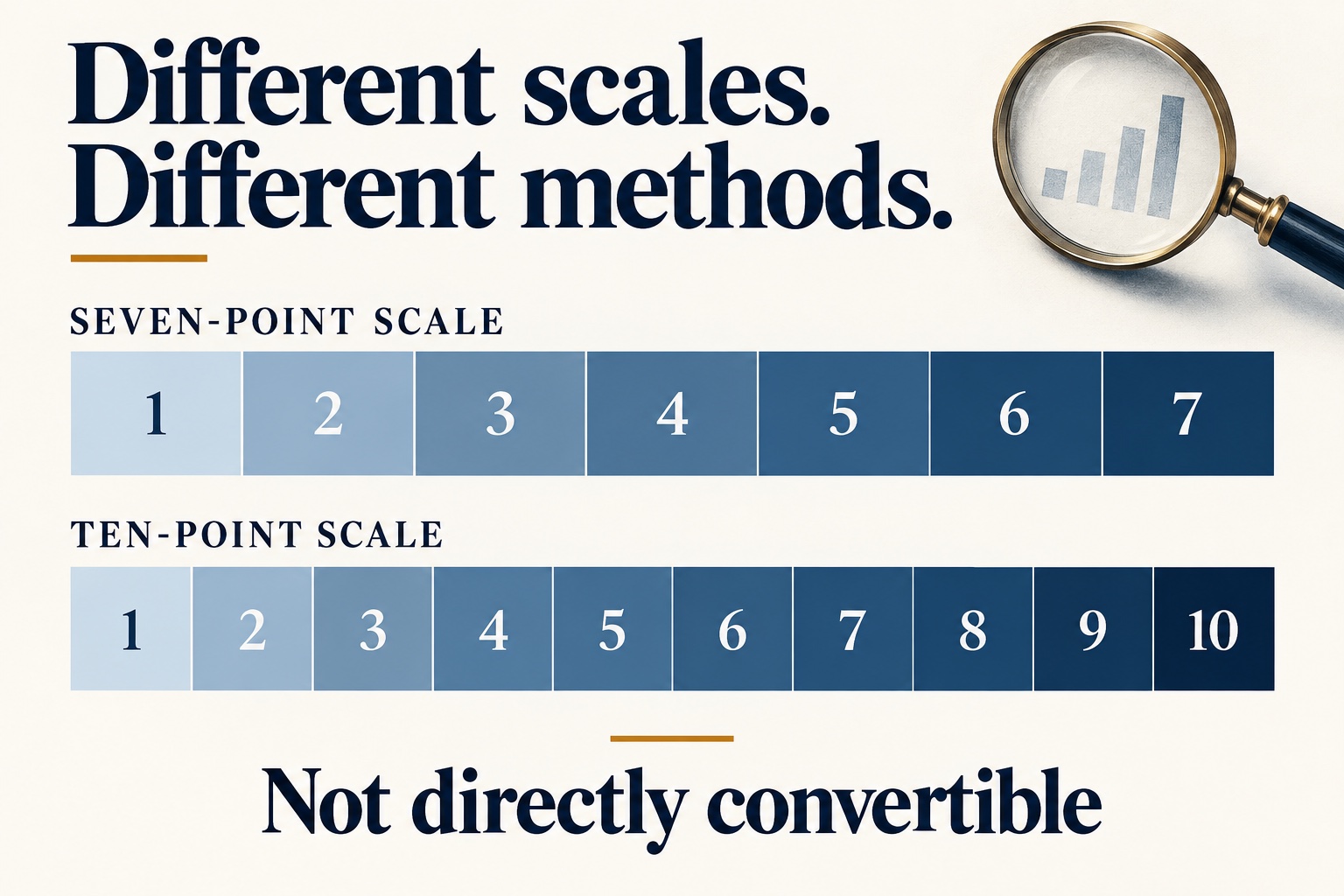
The new product summary displays a risk and return score from 1 to 10. The FCA’s calculation rules use a ten-year volatility track record for the general methodology, with simulated history or an appropriate benchmark where necessary, and require consideration of other material risks. The initial score can be adjusted.
There is no reliable shortcut that converts an old seven-point rating into the new score. If a document shows a different number, check whether the method changed before concluding the investment became safer or riskier. Compare documents for the same fund and share class, meaning the particular version of the fund you hold, and check their dates.
What the number cannot tell you on its own
Your possible loss. A category is not a loss limit. To make the distinction concrete, a hypothetical £10,000 investment falling by 20% leaves £8,000. That arithmetic is not a forecast for any rating. The scale alone cannot tell you whether that fall will happen, or whether the investment will recover.
Why a fund might fall. Read the written warnings. They may describe currency exposure, borrowers failing to pay, or difficulty selling investments when cash is needed. Aviva’s risk notes, for example, distinguish these risks from its headline rating. For bond funds, our explanation of duration and bond prices shows why interest-rate changes can cause losses even without a borrower defaulting.
Whether it adds useful variety. Two differently named funds may hold many of the same investments. Their individual ratings do not describe how they behave together. Our guide to diversification explains why the mix matters more than simply increasing your fund count.
Whether you can afford the risk. A score knows nothing about your bills or when you need the money. The FCA’s risk and returns guidance emphasises understanding the risks and your own circumstances. A willingness to watch prices fluctuate is different from being financially able to absorb a loss.
A worked example: the same rating, different questions
Imagine two hypothetical funds both marked 4 out of 7 under the same rating method. One holds a mixture of shares and bonds. The other mainly holds bonds. These are invented examples, not ratings assigned to real products or recommendations.
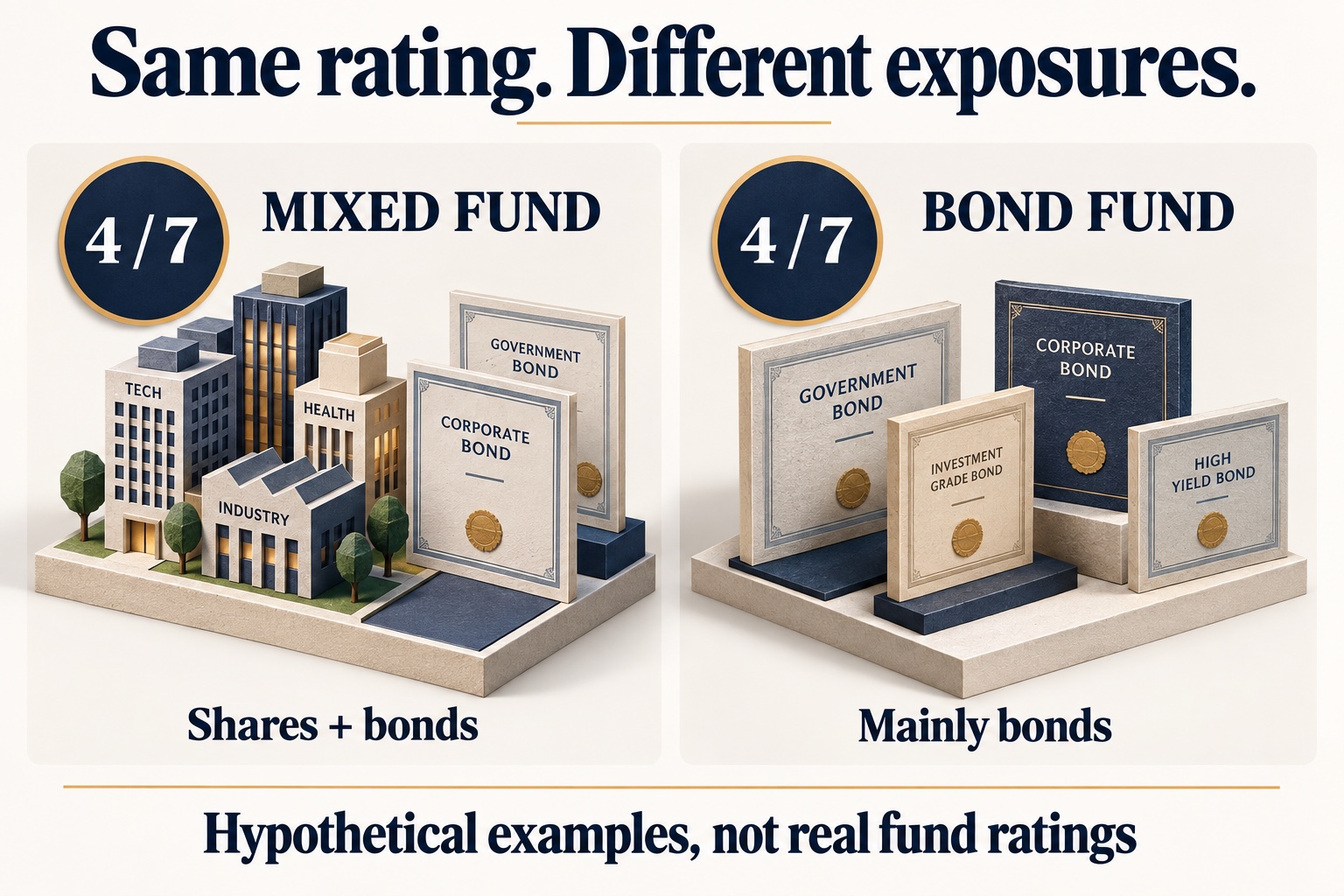
For the mixed fund, you would want to know the share allocation and whether it is concentrated in particular markets. For the bond fund, you would examine sensitivity to interest rates and the financial strength of its borrowers. The matching category does not make these exposures interchangeable.
If your existing investments already resemble the mixed fund, adding it may achieve less diversification than the new fund name suggests. If you need the money soon, neither rating establishes that the fund is suitable. The number narrows the questions; it does not answer them for you.
What this means for you
Open the latest official document for a fund you are researching. Before treating its score as a useful comparison, check:
- The scale: is it 1–7, 1–10, or a provider’s separate system?
- The explanation: what method, date and holding-period assumptions sit behind it?
- The holdings: what would actually drive gains or losses?
- The warnings: could access to your money be delayed, or particular conditions increase losses?
- Your circumstances: when will you need the money, and how does this fit what you already own?
If a provider’s documents appear inconsistent, ask which is current and why the ratings differ. A changed category is a reason to investigate, not an automatic instruction to buy or sell.
In plain English
Think of a fund risk rating as a signpost, not a guarantee. Read the number together with the explanation, the investments underneath and your own needs. During the UK disclosure transition, check which scale you are looking at before comparing scores.
This article is for general financial education, not personal financial advice. Investments can fall as well as rise, and you may get back less than you invest. If you are unsure about suitability, consider speaking to a qualified financial adviser.