8 June 2026: Browser automation becomes the PM signal
Browser automation, AI reliability and open agent training lead today's AI Daily, with Intuned, Notion, OpenAI, OpenEnv and Nvidia in focus for UK readers.

Today’s AI news is less about a single chatbot trick and more about whether AI can do reliable work in messy real systems. Intuned is pitching browser automation that writes and repairs code, Notion’s Anthropic outage showed how dependent AI tools are on one another, and NVIDIA is pushing physical AI deeper into factories and robots.
Intuned is positioning browser automation as code that an AI agent can build, deploy and repair. The company says its Intuned Agent can generate production ready Playwright code from a prompt, deploy it, and help fix automations when websites change. The product page also points to use cases around scraping, crawling, robotic process automation and AI powered web tasks.
This is not a consumer feature in the way a chatbot is, but it is a good example of where business AI is heading. The boring jobs are the valuable ones: logging into portals, extracting records, filling forms, checking pages and keeping workflows alive when a website changes. The hard part is reliability. If tools such as Intuned make browser automations easier to build and monitor, they could matter more to small operations than another general purpose assistant.
Notion restored access to Anthropic models after a temporary service disruption pushed Claude based features offline. TechCrunch reported that Notion disabled use of Anthropic models in Notion AI after degraded performance caused higher failure rates for users selecting Opus 4.7 and 4.8. Notion later said access had been restored, while Anthropic attributed the problem to a brief infrastructure issue that had caused elevated errors on multiple Claude models.
This matters because many AI products now depend on other AI products. A note taking app may rely on a model provider, a workflow tool may rely on a browser automation layer, and a coding platform may rely on a third party inference system. When one layer stutters, the user often sees only that the feature failed. For a practical guide to these dependency chains, Cristoniq’s explainer on what an AI agent is is still the right starting point: useful agents need models, tools, permissions and recovery paths, not just clever prompts.
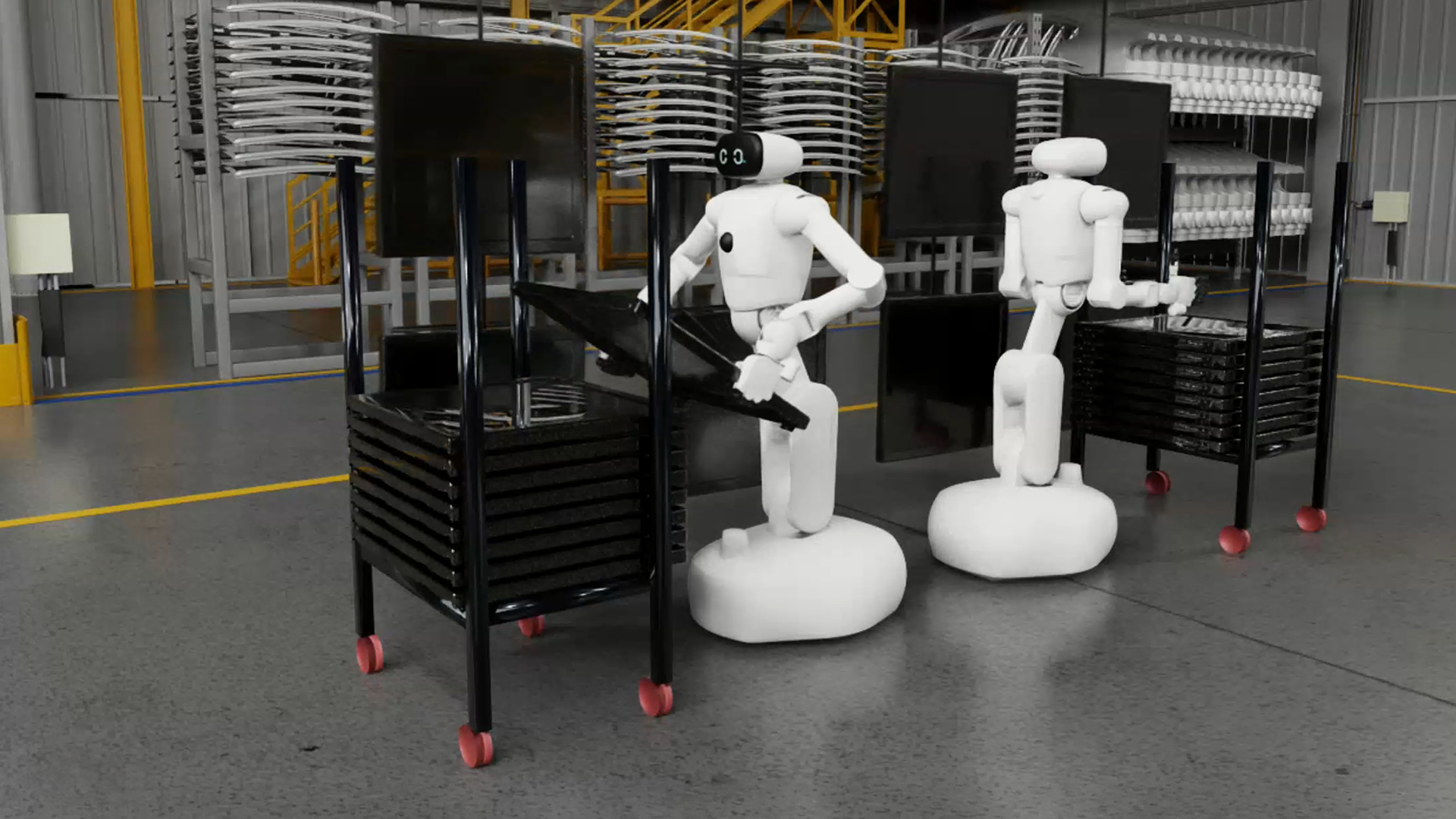
NVIDIA says it is working with LG Group on an AI factory for robotics, autonomous driving, data centres and GPU cloud services. The company described the project as a foundation for LG’s next wave of AI driven businesses, spanning production lines, mobility systems, robotics, cloud infrastructure and sovereign AI work around EXAONE. For readers, the useful signal is not another headline about chips. It is that AI is moving from apps on a screen into industrial systems where simulation, training, validation and deployment all have to sit in one workflow.
According to NVIDIA, the collaboration will use tools including Isaac Sim, Isaac Lab, Isaac GR00T, Cosmos world models and DSX aligned data centre infrastructure. Those are vendor reported details, but the direction is clear enough: companies with factories, vehicles, robots or logistics networks are trying to turn AI infrastructure into something operational. If you run a smaller business, the immediate effect is not a home robot next week. It is that automation suppliers will increasingly sell AI as a managed industrial stack, not as a loose collection of models.
OpenAI is reportedly still working towards a broader ChatGPT “super app” built around coding tools and personal agents. TechCrunch, citing the Financial Times, reported that OpenAI plans a revamped version of ChatGPT in the coming weeks, with coding tools and AI agents positioned as part of a larger product strategy. The report framed the move as a way to compete more directly with Anthropic among business customers and to move more free users towards paid services.
The sensible reading is that ChatGPT may become less like a chat box and more like a work surface. That does not mean every user should wait for OpenAI’s version of everything. It means the big AI platforms are trying to own the place where tasks begin, whether that task is writing code, searching files, planning a project or handing work to an agent. Cristoniq’s guide to ChatGPT, Claude and Gemini is useful here because product fit matters more than brand momentum.
Hugging Face says OpenEnv is being opened up as a shared layer for training software agents. The project is designed to provide agentic execution environments, such as terminals, browsers and other systems an AI agent can interact with. Hugging Face said OpenEnv will be coordinated by a committee that includes groups from Meta PyTorch, Reflection, Unsloth, Modal, Prime Intellect, NVIDIA, Mercor, Fleet AI and Hugging Face, with wider support from other open source AI organisations.
That sounds technical, but the practical point is simple. Agent systems improve when models are trained in the kinds of environments they will actually use. Proprietary tools such as Claude Code, Codex and other coding agents can be tuned around their own harnesses. OpenEnv is an attempt to give open source models a common interface for the same kind of practice. If it works, smaller developers may get better agent behaviour without depending only on closed lab tooling.
Worth Watching
Best for: Robotics simulation
It shows how physical AI systems can be tested before robots reach real environments.
Best for: Agent training environments
The project could give open source agents a common way to practise using tools.
Best for: Browser automation
It turns web tasks into maintained Playwright based automations with monitoring.
Here is everything else worth knowing from today’s AI news.
- AI pricing pressure is moving from theory to bills. TechCrunch connected Microsoft’s GitHub Copilot pricing changes with wider questions about whether AI labs can keep subsidising heavy usage. This was demoted from the lead because today’s AM AI Daily already led on pricing pressure.
- Amazon is testing custom merchandise design through AI. TechCrunch reported that Amazon now lets shoppers generate designs for custom merchandise, a small but visible example of generative AI moving into retail workflows.
- Apple’s WWDC cycle remains the consumer AI watch point. TechCrunch previewed expected Siri and Apple Intelligence updates, but Apple led yesterday’s PM post, so it stays below the main story line today.
- NVIDIA also announced a Doosan Group physical AI collaboration. NVIDIA said the work covers physical AI and AI factory infrastructure, reinforcing that robotics and industrial simulation are becoming a major chip platform story.
- A Hugging Face hackathon post explored multi model simulation behaviour. The post is more experimental than product ready, but it is another sign that developers are probing how multiple model systems behave under pressure.
The thing to watch over the next few weeks is whether the infrastructure stories start showing up as usable products rather than partnership language. If NVIDIA’s physical AI stack, OpenEnv’s agent training layer and tools such as Intuned all move from announcements into repeatable workflows, the next wave of AI may look less like a chatbot race and more like a reliability race.
This is a daily news update for informational purposes only. AI products and policies change rapidly. Verify details directly with providers before making decisions. Nothing here is financial or legal advice.
AI Daily is Cristoniq’s daily guide to developments in artificial intelligence, published every weekday afternoon.