Smart meters and your data: what UK households should understand
Smart meters can send monthly, daily or half-hourly readings. Here is what UK households should know about data settings and consent.
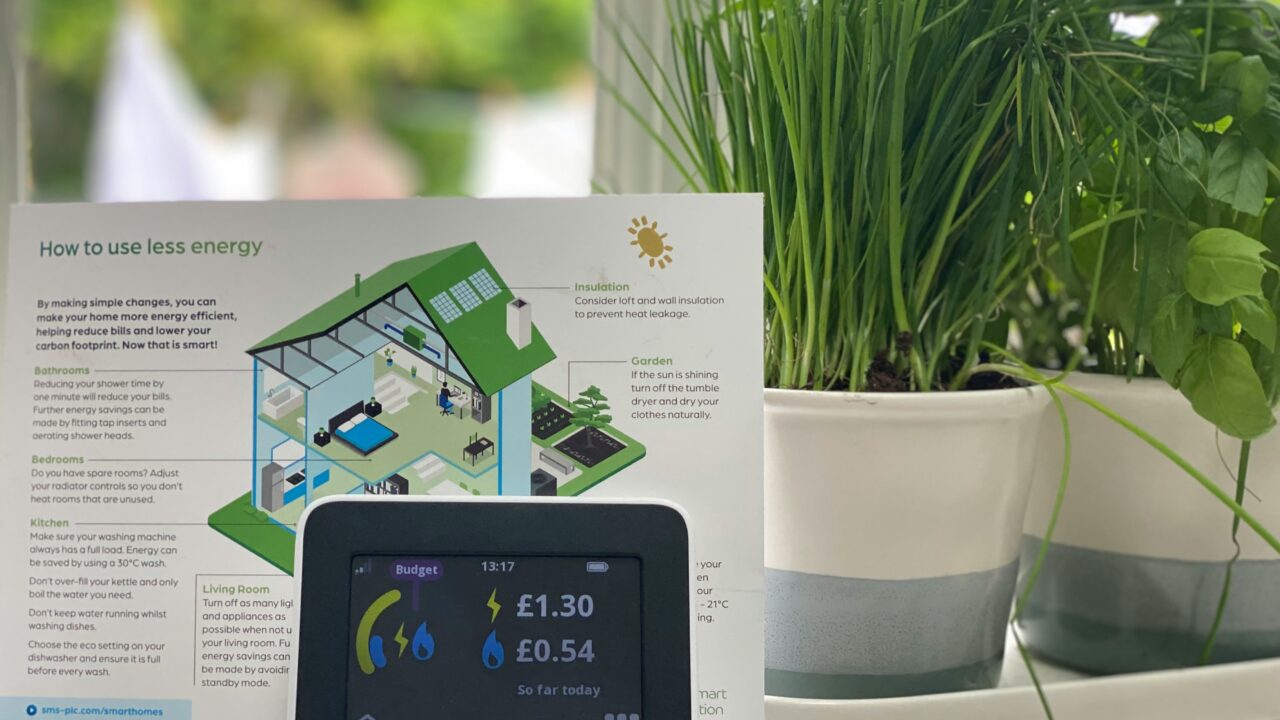
A smart meter is not just a newer version of the old meter in the cupboard. It also changes how often your energy use can be read, who may receive those readings, and which settings you should understand before you ignore the privacy page in your supplier account.
The Short Version
Smart meters measure how much gas or electricity you use and can send readings automatically, usually monthly, daily or half-hourly. Your supplier needs enough data to bill you and meet regulated duties, but more detailed data can reveal more about household routines. UK rules give you choices in some situations, especially around marketing and optional uses, so it is worth checking your smart meter data settings rather than assuming the default is right for you.
What Your Smart Meter Actually Records
A smart meter records energy use. It does not record conversations, video, names, bank details or a room-by-room account of what you are doing. The sensitive part is the pattern.
A monthly reading says how much energy your home used over a billing period. A daily reading shows how use changes from one day to the next. A half-hourly reading gives a finer view of when energy is being used. That can help with billing, tariffs and network planning. It also reveals habits.
This is the same privacy logic that sits behind many everyday digital services. A single data point may look harmless. A pattern can say much more. If you found our guide to data brokers and personal information useful, the same idea applies here.
Who Can See The Readings
Your energy supplier is the main organisation receiving meter readings. The Data Communications Company, usually called the DCC, runs the secure national communications network that carries messages between smart meters and authorised organisations in Great Britain. The DCC describes itself as the processor moving data safely between the meter and the supplier, while the supplier is normally the controller for that data.
Network operators may also use smart meter data to understand demand and manage the electricity system. Ofgem says network operators need approved privacy plans if they want household-level data covering periods of less than one month, with anonymisation controls to protect individual households.
Third-party apps and services are a separate issue. A budgeting app, energy-management service or tariff comparison tool may ask for access to your energy data. Treat it like any other data permission: ask what the service gets, how long it keeps it, whether you can revoke access, and whether the benefit is worth it.
Monthly, Daily And Half-Hourly Data
The practical difference is granularity. Monthly data is enough for ordinary billing in many cases, but it gives little insight into when you use energy. Daily data shows broad patterns. Half-hourly data can support more precise settlement, smart tariffs and usage analysis.
Smart Energy GB says smart meters can send readings half-hourly, daily or sometimes monthly, depending on the arrangement with your supplier. Ofgem’s guidance says sharing frequency can depend on when the meter was installed, whether you have switched supplier, and whether you have agreed a new contract.
So the useful question is not simply, “Is my meter smart?” The better question is, “What frequency is my supplier receiving, and for what purpose?” Your supplier account, app or privacy notice should tell you.
What Changed After November 2022
The date 3 November 2022 matters because market-wide half-hourly settlement changed the default position for some uses of smart meter electricity data. Ofgem explains that domestic customers with a meter installed before that date, who have not since switched supplier or agreed a new contract, automatically share daily data for system purposes, with options to opt in to half-hourly sharing or opt out to monthly. For domestic customers who had a smart meter installed, switched supplier or agreed a new contract after that date, Ofgem says half-hourly sharing is the automatic position for those purposes, with an option to opt out to daily.
That does not mean every use of half-hourly data is fair game. The government’s Data Access and Privacy Framework still separates regulated uses, supplier access, third-party access and marketing. Suppliers need explicit consent to use consumption data for marketing, whatever the level of detail.
Your settings may depend on your history with the meter and supplier. A neighbour’s answer may not be your answer.
The Privacy Trade-Off
Half-hourly data can have real benefits. It can help suppliers support time-of-use tariffs, show when a home is using more energy than expected, and help the wider system understand demand. For some households, especially those with electric vehicles, heat pumps, solar panels or flexible tariffs, more detailed data can be genuinely useful.
The trade-off is that more detail creates a clearer pattern of domestic life. It may suggest when a home is usually occupied, when heating or cooking demand rises, or whether usage changes during holidays. A smart meter has no microphone or camera. But detailed consumption data is still personal data when it can be linked to a household.
This is why calm privacy hygiene matters. Do not treat smart meters as sinister by default. Do not treat them as privacy-free either. If you are already thinking more carefully about everyday data choices, our explainer on what cookie banners really mean is a useful companion piece.
How To Check Or Change Your Settings
Start with your supplier account. Look for wording such as smart meter data preferences, meter reading frequency, privacy settings, settlement data, half-hourly readings, daily readings or marketing consent.
Separate three questions. First, what data does the supplier need for billing and regulated purposes? Second, what extra detail is being used for settlement, tariffs or energy advice? Third, has the supplier asked to use any data for marketing? Those are not the same thing.
If you want less sharing, ask whether you can reduce the frequency from half-hourly to daily, or from daily to monthly, depending on your circumstances and tariff. If you are on a tariff that relies on half-hourly readings, reducing the detail may affect whether that product works for you. If you use a third-party energy app, check how to revoke access there as well.
The habit is similar to reviewing app permissions on your phone. You do not need to panic, but you should avoid leaving sensitive defaults unchecked forever. Our guide to public WiFi security rules makes the same broader point.
A Worked Example
Imagine three households with the same smart meter technology.
Household A shares monthly readings. The supplier can bill accurately over the month, but it sees little detail about daily routines. This may be enough for a standard tariff.
Household B shares daily readings. The supplier can see that energy use is higher on Sundays and lower during a week away, but not the half-hour blocks behind the pattern.
Household C shares half-hourly readings. The supplier can support a time-of-use tariff and show peak usage periods. If the household benefits from a smart tariff, that trade-off may be acceptable. If it does not, the household may prefer a less detailed setting where available.
What This Means For You
If you have a smart meter in a UK home, your next step is not to remove it or ignore it. Your next step is to check your data preferences.
Look at the reading frequency, marketing consent and any third-party app permissions. If you switched supplier or signed a new tariff after 3 November 2022, pay particular attention to half-hourly settlement settings. If you are on a smart tariff, check whether reducing data frequency would affect your tariff before changing anything.
The right answer is not the same for every household. A home using an electric vehicle tariff may share more detail than a household on a simple fixed tariff. The point is to choose deliberately.
In Plain English
A smart meter does not watch you. It measures energy use.
The more often readings are shared, the more detailed the picture of your household routine can become. Monthly is broad. Daily is clearer. Half-hourly is more detailed.
Check your supplier’s smart meter data settings. Keep the data sharing that helps you. Turn off anything you do not need, especially marketing consent.