What Small-Cap Mining Companies Are and Why They Matter
Junior mining companies sit at the most speculative end of the stock market. Here is what they are, how they work, and why some investors keep coming back.
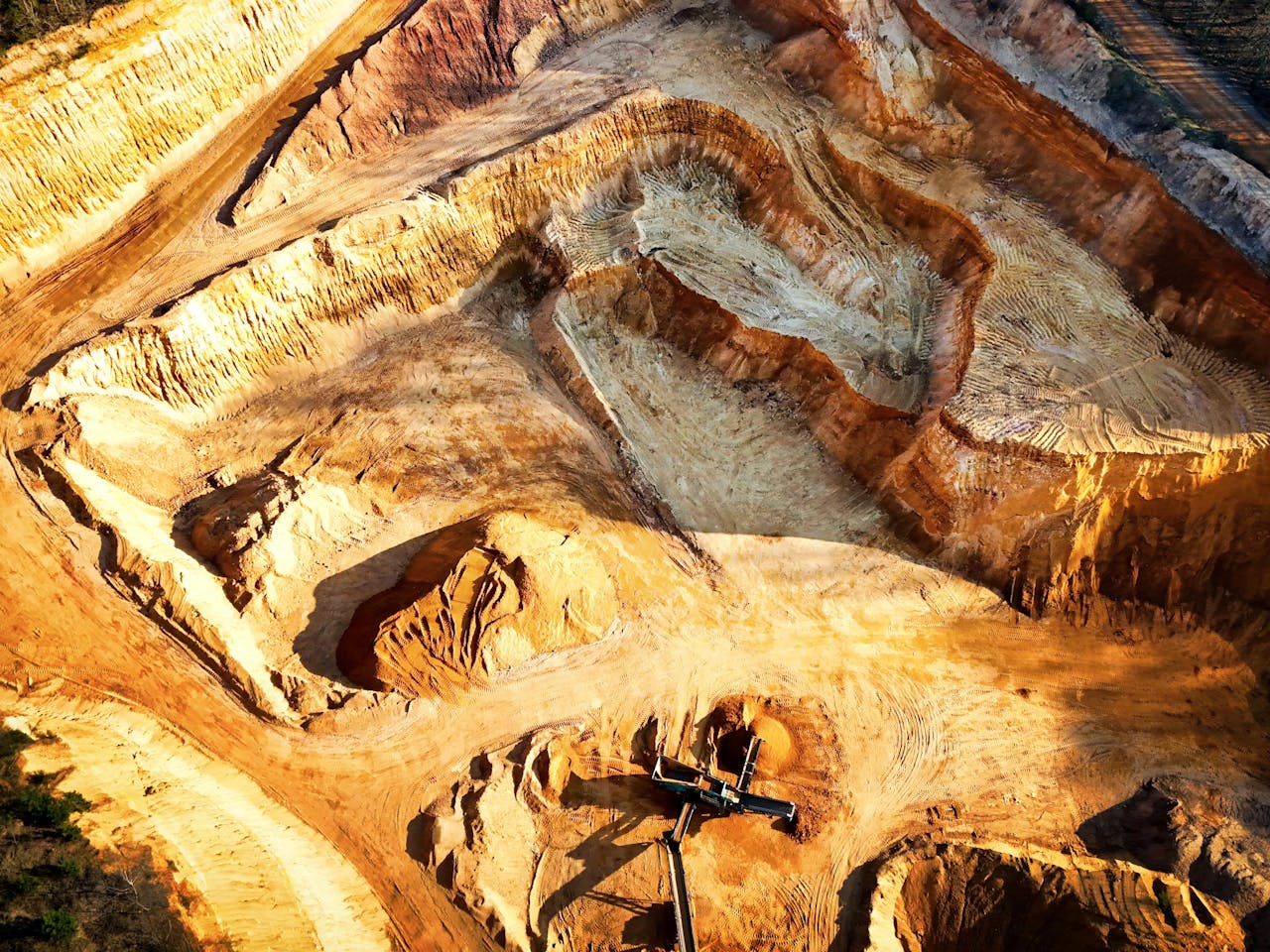
There is something that happens when a small company reports a good drill result. The share price can double in a morning. Not because anyone has dug anything out of the ground yet, not because there is a single gram of metal ready to sell, but because the possibility has just become more real. Junior mining companies trade on possibility. Understanding why that is, and what it actually means for investors, is one of the more useful things you can do before you put any money near the sector.
Mining has always attracted a particular kind of investor. Part of it is the romance of it. The idea that somewhere out in Western Australia or the Atacama or the Canadian Shield, there is a patch of ground that contains something the world needs, and a small company has the rights to go and find out. But underneath the story, there is a serious investment case. The world needs copper for electrical wiring. It needs lithium and cobalt for electric vehicle batteries. It needs rare earth elements for wind turbines and semiconductors. These materials do not come from thin air, and most of the easy deposits have already been found. That is where junior miners come in.
A junior mining company, sometimes called a junior explorer, is typically a small, pre-revenue business whose main asset is a piece of land it believes contains something valuable. Unlike a supermarket or a software company, it may not generate a penny in income for years. Its capital goes into geological surveys, drilling programmes, lab tests and feasibility studies. The whole business model is built around the idea that it will either find something worth extracting, attract a larger company to buy or partner with it, or eventually raise enough capital to develop the resource itself.
The journey from initial hunch to producing mine follows a consistent path, even if the time it takes varies enormously. Exploration comes first. Companies use satellite imaging, geophysical surveys and field sampling to identify promising areas. If those initial signs hold up, they begin drilling. Drilling is expensive and the odds are brutal. Industry estimates suggest that only around one in a thousand early exploration projects ever becomes a producing mine. That is not a misprint.
If drilling produces good results, the company moves into resource definition, running more extensive programmes to estimate the size and grade of the deposit. After that come feasibility studies, starting with a rough scoping study and working through to a full bankable feasibility report. A positive feasibility study changes the nature of the company. It is the point at which institutional investors start paying attention, because for the first time there is a credible financial case for what happens next. Development and production follow, though most junior explorers never reach them. Many raise money at the exploration stage, prove up a resource, and then either sell the asset or bring in a partner with deeper pockets. The exit routes vary, but for many juniors the goal is never to build a mine themselves. It is to derisk the asset enough that someone bigger wants to own it.
The main resource types each have their own drivers. Precious metals like gold and silver tend to perform well when financial markets are uncertain or inflation is rising. Base metals including copper, zinc and nickel are tied to industrial demand and move broadly with the global economy. Battery metals, lithium, cobalt and the rare earth elements used in motors and magnets, have their own dynamics driven by the pace of EV adoption and the energy transition. And then there are energy minerals: uranium has had a notable resurgence as nuclear re-enters the low-carbon conversation. Understanding which bucket a company sits in tells you a great deal about what is likely to move its share price.
The most common misconception about small-cap mining companies is that the investment case is simply about whether there is metal in the ground. There usually is some. That is rarely the question. The question is whether it can be extracted at a profit, in a jurisdiction where the rules are stable, by a management team that knows what it is doing, at a time when the commodity price makes the whole exercise worthwhile. Get any one of those factors wrong and a genuinely interesting geological discovery can still turn into a loss for investors.
Jurisdiction matters more than most people realise. A gold deposit in Western Australia or Ontario sits inside a framework of clear property rights, reasonable permitting timelines and functioning dispute resolution. The same deposit in a politically unstable country may look cheaper on paper for a reason. The geological risk is identical, but the operational and political risk is not, and the market will eventually price that in.
Management quality is similarly underweighted in most retail analysis of mining stocks. This is a sector where technical expertise, capital discipline and honest communication with shareholders are genuinely rare. The history of junior mining is full of companies that found something real and then mismanaged the development, ran out of money at the wrong moment, or lost the market’s confidence through opaque announcements and shifting strategy. When a mining company has a CEO who has built a mine before, that track record is worth examining carefully. Not as a guarantee of anything, but as real signal worth taking seriously.
The practical implication is that before you look at any specific mining small-cap, it pays to build a checklist. What kind of mineral? Where in the world? Who is running it? What stage of development is it at? Where is the commodity price in its cycle? How much cash does the company have and when does it need to raise more? These questions will not always produce clean answers, but asking them is how you move from a speculative punt toward something closer to an informed position.
The sector keeps attracting investors because the upside, when it materialises, is real. De Grey Mining was an obscure Australian junior with a forgotten prospect in the Pilbara region of Western Australia. Its Hemi gold discovery transformed it. Shares went from pennies to dollars. Institutional money followed. A junior became a heavyweight. That kind of story happens often enough to keep the sector populated with hopeful capital. The skill is in knowing the difference between a junior that might become the next De Grey and one that will spend a decade drilling holes, raising money, and never finding anything worth pulling out of the ground.
This post is drawn from The Little Book of Small-Caps by Cameron Oliver. Republished with permission.
Small Caps is a series drawn from first-hand experience of UK and global small-cap markets, updated as each new chapter arrives.
This article is for informational purposes only and does not constitute financial advice. Investment values can go down as well as up. Always do your own research before making any financial decisions.