7 June 2026: Apple WWDC becomes the PM AI test
Apple's WWDC AI test, OpenAI's reported ChatGPT super app plan, Meta creator AI and Supabase lead today's PM AI Daily for UK readers.

The afternoon AI signal is about product shape, not another model score. Apple is one day from a developer conference that has become an AI credibility test, OpenAI is reportedly still trying to turn ChatGPT into a broader work app, Meta is putting AI advice inside creator dashboards, and Supabase is showing how coding agents are changing the infrastructure stack underneath new apps.
Apple’s WWDC26 begins on 8 June, and the AI question is whether Apple can make Siri and Apple Intelligence feel like practical software rather than delayed promises. Apple’s developer page says the keynote starts at 10 a.m. PT on Monday and will reveal new software and technologies. TechCrunch’s preview points to Siri, Apple Intelligence and agent-style app integrations as the areas to watch.
Preview stories need caution because Apple has not made the announcements yet. Still, the pressure is real. Apple controls the default experience for millions of phones, tablets and Macs, so even modest AI features can matter more than a flashy standalone chatbot. The test for UK users is whether Apple keeps useful AI close to the device, makes data controls clear and gives developers enough access to build genuinely helpful tools. Cristoniq’s explainer on on device AI explains why that matters for privacy, latency and cost.
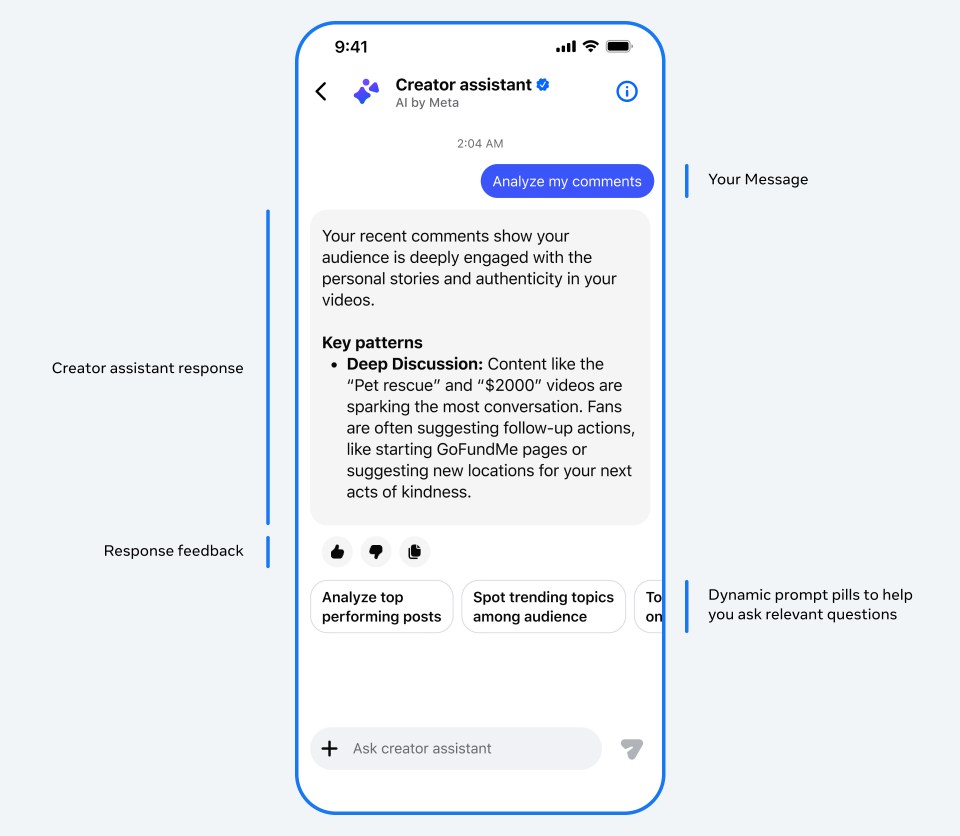
Meta has announced a creator assistant for Facebook that gives personalised recommendations from a creator’s own content, performance and community data. In its official announcement, Meta says creators can ask questions about why content performed well, how audiences have shifted and what they should try next. TechCrunch reported that the assistant is rolling out in the US, Canada and India, with more countries planned later.
This is not just another content ideas tool. It shows how platform owners can turn analytics, recommendations and production prompts into one closed loop. That may help creators who do not want to stitch together dashboards and third party apps, but it also keeps more work inside Meta’s ecosystem. Meta also says more than half a billion Facebook users now watch AI-translated videos weekly. That figure is company reported, so it should be read as Meta’s own measurement, but the direction is clear: AI is moving from optional creation aid to platform operating layer.
OpenAI is reportedly preparing a revamped ChatGPT that looks less like a single chatbot and more like a work app for coding tools and agents. TechCrunch reported, citing the Financial Times, that OpenAI plans to roll out a new version of ChatGPT in the coming weeks as a gateway to products users might pay for, including Codex. The report also quoted OpenAI product lead Thibault Sottiaux describing a personal agent that can help across life and work.
The important word is reportedly. This is not a formal OpenAI launch note, so readers should treat timing and packaging as subject to change. What is already visible, though, is OpenAI’s direction. In its own Codex update this week, the company said Codex is moving beyond developers into role-specific plugins, annotations and shareable workspace apps. For small firms, the buying question is shifting from which chatbot answers best to which assistant can sit safely inside real workflows. Cristoniq’s guide to what can go wrong when AI agents act on your behalf is the useful backdrop.
Supabase says AI-assisted development is now a direct growth engine for database infrastructure, after raising a $500 million Series F at a $10 billion pre-money valuation. In its official funding note, Supabase says more than 60% of new databases on its platform are launched by some sort of AI tool, and that nearly 10 million developers use the service. TechCrunch reported the round and linked that growth to vibe coding tools such as Claude Code, Codex, Bolt, Lovable and Replit.
The useful signal is not only the valuation. If AI agents make it easier to create apps, the pressure moves downstream to databases, authentication, permissions, backups and scaling. Supabase is trying to turn Postgres operations into a managed layer for that world. For founders and small teams, the lesson is practical: AI can help generate the first version quickly, but somebody still has to own the data model, access controls and reliability once real users arrive.
US policy debate around OpenAI is becoming more concrete, with reports of possible public ownership or tax-linked equity ideas around major AI companies. TechCrunch reported that President Donald Trump said he had discussed AI company deals where the American public could benefit, while CNBC and Bloomberg reported discussions involving potential government stakes. The same article also noted Senator Bernie Sanders’ proposal for a one-time stock-based tax on large AI companies.
For UK readers, this is not a rule change. It is a sign that AI economics are becoming political infrastructure. If OpenAI, Anthropic and xAI keep moving toward public markets while requiring huge compute investment, governments may look for ways to share in the upside or steer the industry more directly. The thing to watch is whether these ideas remain campaign language, become financing tools or start shaping the obligations attached to frontier AI companies.
Worth Watching
Best for: Device level AI
WWDC will show whether Apple can turn delayed AI promises into useful software.
Best for: Creator analytics
It turns dashboard data into conversational advice inside Facebook’s own tools.
Best for: AI-built app backends
Its funding round shows how agent coding is changing infrastructure demand.
Here is everything else worth knowing from today’s AI news.
- Instagram is alerting users targeted in Meta AI support attacks; TechCrunch reported that hackers tricked a support chatbot into granting account access, which is another reminder that customer service AI needs strong human escalation paths.
- OpenAI’s Lockdown Mode remains the security setting to watch; this morning’s release-note coverage matters because prompt injection is now visible to ordinary ChatGPT users, not only security teams.
- Apple’s developer week will matter beyond Siri; app integrations, privacy controls and developer APIs will tell us more about Apple’s practical AI position than keynote wording alone.
- Meta’s AI-translated Reels push is expanding language coverage; according to Meta, Arabic, Bahasa Indonesian, French, Thai and Vietnamese are next in line, which keeps AI translation near the centre of social distribution.
The thing to watch next is whether the assistant becomes the app, or whether users keep demanding clear boundaries between chat, search, coding, analytics and payments. The companies that make those boundaries visible will be easier to trust than the ones that hide every workflow behind one magic box.
This is a daily news update for informational purposes only. AI products and policies change rapidly. Verify details directly with providers before making decisions. Nothing here is financial or legal advice.
AI Daily is Cristoniq’s daily guide to developments in artificial intelligence, published every weekday afternoon.