How the stock market actually works
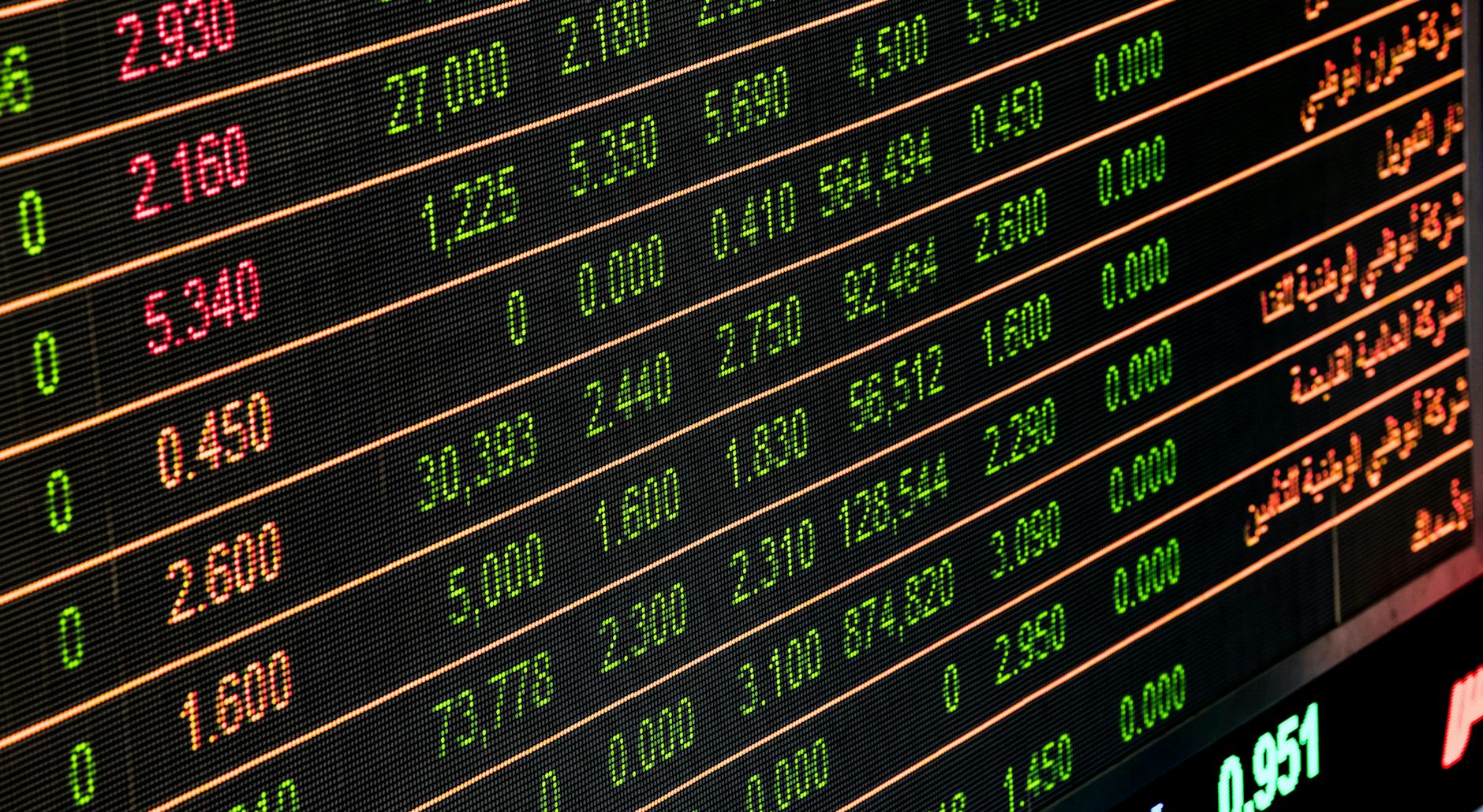
Most people have a vague idea that the stock market exists and that it is important. They hear about it on the news, usually when something dramatic has happened. The FTSE fell two hundred points. Markets rallied on jobs data. Investors fled to safety.
But ask someone to explain what actually happens when a share is bought or sold, and most will shrug. Which is fair enough. Nobody really teaches you this stuff. So here it is, from the beginning.
Think of it like a market. An actual one.
The easiest way to understand a stock market is to think about a market stall. Someone has apples to sell. Someone else wants to buy apples. They agree on a price, money changes hands, and the transaction is done.
A stock market works on exactly the same principle, except instead of apples you are buying and selling tiny pieces of ownership in companies. Those pieces are called shares. And instead of a market stall, the whole thing happens electronically in milliseconds.
The London Stock Exchange, or LSE, is the marketplace where most UK shares are bought and sold. It does not set the prices of shares. It simply provides the platform and the rules that allow buyers and sellers to find each other and do business. The prices you see are simply the last price that a willing buyer and a willing seller agreed on.
Who is actually buying and selling
When you place an order through a broker to buy a hundred shares in a company, you are not buying them from the company itself. You are buying them from another investor who has decided to sell. That seller might be another private individual like you, or it might be a pension fund, an insurance company, or an investment manager.
In the middle of the transaction sits a market maker. Market makers are specialist firms whose job is to quote a price at which they will buy shares and a price at which they will sell them, at any given moment. The buying price is always slightly lower than the selling price. That gap is called the spread, and it is how market makers make their money.
Think of a currency exchange booth at an airport. They will buy your euros at one rate and sell them back at a slightly worse rate. The gap between the two is their profit. Market makers do the same thing with shares, but they also serve an important function. Because they are always willing to quote a price, you can almost always buy or sell a share when you want to, rather than waiting to find someone who wants to do the exact opposite trade.
Where UK shares actually trade
The LSE has two main markets. The Main Market is home to large, established companies including all of the FTSE 100 businesses. To list on the Main Market, a company has to meet strict requirements around its size, track record, and governance. There are currently over 1,300 companies on the Main Market.
AIM, the Alternative Investment Market, is a separate market for smaller and younger companies that do not yet meet the requirements for the Main Market. AIM has lighter regulation, which means more opportunity but also more risk. Many of the UK’s most exciting growth companies started on AIM. Many have also failed spectacularly on AIM. It is not a place for the fainthearted.
There is also Aquis Stock Exchange, or AQSE, a newer, smaller exchange for very early-stage companies. Most private investors are unlikely to spend much time here, but it is worth knowing it exists.
One thing worth knowing about the LSE in 2026: it has been losing companies. In 2024 alone, the LSE saw its highest number of delistings since the 2008 financial crisis, with a number of well-known companies choosing to move to the New York Stock Exchange instead, citing higher valuations and lower costs in the US. The exchange is still one of the most important in the world, but it is a smaller universe than it used to be, and that debate about London’s competitiveness is ongoing.
How a trade actually happens
When you log into your broker app and search for a company, you will see a price. That price is usually the mid price, which is the midpoint between what someone is willing to pay and what someone is willing to sell for. Click buy, enter the number of shares you want, and your broker will show you the exact price it can execute at. Confirm the order and the whole thing happens in fractions of a second.
The trade is matched electronically. Your broker sends the order to the exchange, the exchange matches it with a willing seller, and the deal is done. You will not receive the shares immediately though. Settlement, which is when the shares officially transfer to you and the money officially leaves your account, takes two business days. This is known as T+2, meaning the trade date plus two days.
It sounds like a lot of machinery for something that takes less time than sending a text. But that machinery is handling millions of transactions a day, for buyers and sellers all over the world, continuously from 8am to 4.30pm every weekday. Most of the time, it works flawlessly.
What all of this means for you
None of this changes what you actually do as an investor. You still pick a company, you still click buy, and your broker handles the rest. But understanding what is happening behind the scenes makes you a better investor. You understand why the price you see might differ slightly from the price you pay. You understand why AIM shares can be harder to sell quickly than FTSE 100 shares. You understand that the market is not a machine with a fixed correct answer but a continuous negotiation between millions of people about what things are worth.
Markets are, at their heart, a very human invention. And they behave like one.
TL;DR — the short version
- The stock market is just a place where buyers and sellers agree on prices for shares. That is genuinely all it is.
- When you buy shares you are not buying from the company. You are buying from another investor who wants to sell.
- Market makers sit in the middle, always ready to trade. The gap between their buy and sell price is called the spread, and it is how they make their money.
- UK shares mostly trade on the London Stock Exchange. Big companies are on the Main Market. Smaller ones are on AIM.
- When you place a trade it happens in seconds, but the shares and money do not officially change hands for two business days. This is called T+2.
- Understanding all of this does not change what you do. It just means fewer surprises when you do it.
Nothing in this article is financial advice. Tax rules change frequently. Check the current ISA allowance, CGT exemption and relevant rules on HMRC’s website or consult a qualified financial adviser for your specific situation.
Money & Markets is a guide to personal finance and investing for people who want to understand the world they live in, updated as rules and markets change.
This article is for informational purposes only and does not constitute financial advice. Investment values can go down as well as up. Always do your own research before making any financial decisions.